


105 million signals and all from Earth: UCLA concludes decade-long study
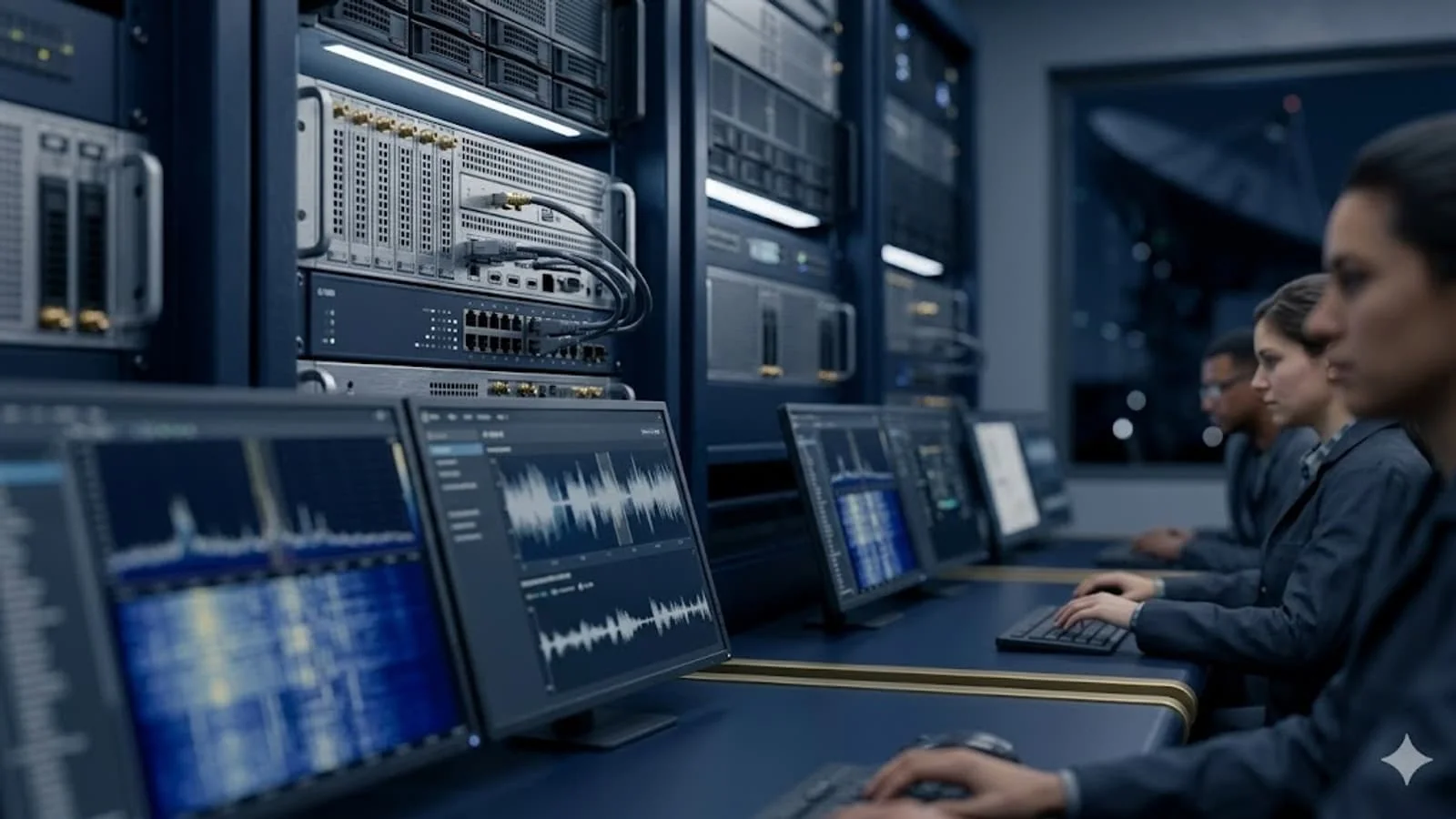
Radio astronomers at the University of California, Los Angeles (UCLA) have announced the results of a decade-long program aimed at searching for technosignatures of extraterrestrial civilizations. The research was conducted using the 100-meter Green Bank Telescope at frequencies between 1.15 and 1.73 GHz. During the observations, scientists analyzed over 70,000 star systems and recorded approximately 105.7 million candidate signals. This is reported by Ixbt.com reports .
Despite the massive volume of data, not a single signal passed verification. All candidates ultimately turned out to be terrestrial radio interference from satellite communications and other anthropogenic sources. However, researchers consider this not a failure, but an important scientific result. To test the reliability of the search methods, artificial test signals were introduced into the system, and the algorithms managed to detect them with an accuracy of 94% to 98.7%.
During the analysis, machine learning methods were used, including convolutional neural networks from the ResNet family. These technologies helped to automatically separate useful signals from noise. Volunteers from the Zooniverse platform also actively participated in preparing the dataset for training the algorithms. The study also accounted for complex effects such as Doppler frequency shifts caused by planetary rotation.
According to the results, it became clear that powerful radio transmitters are very rare in our local part of the galaxy. Calculations show that with 95% probability, less than one in 16,000 star systems can emit a powerful signal up to a distance of 20,000 light-years. For comparison, the sensitivity of this search was sufficient to detect a signal at the level of the famous Arecibo Observatory at a distance of several hundred light-years.
The authors also drew attention to the limited government funding for projects like SETI. Currently, such research is mainly carried out through private foundations. Although extraterrestrials were not found this time, the project proved how important the role of artificial intelligence and volunteers is in processing astronomical data.


Comments 0
…