


Treatment Without Neurosurgery: Scientists Find Way to Stimulate Deep Brain Layers
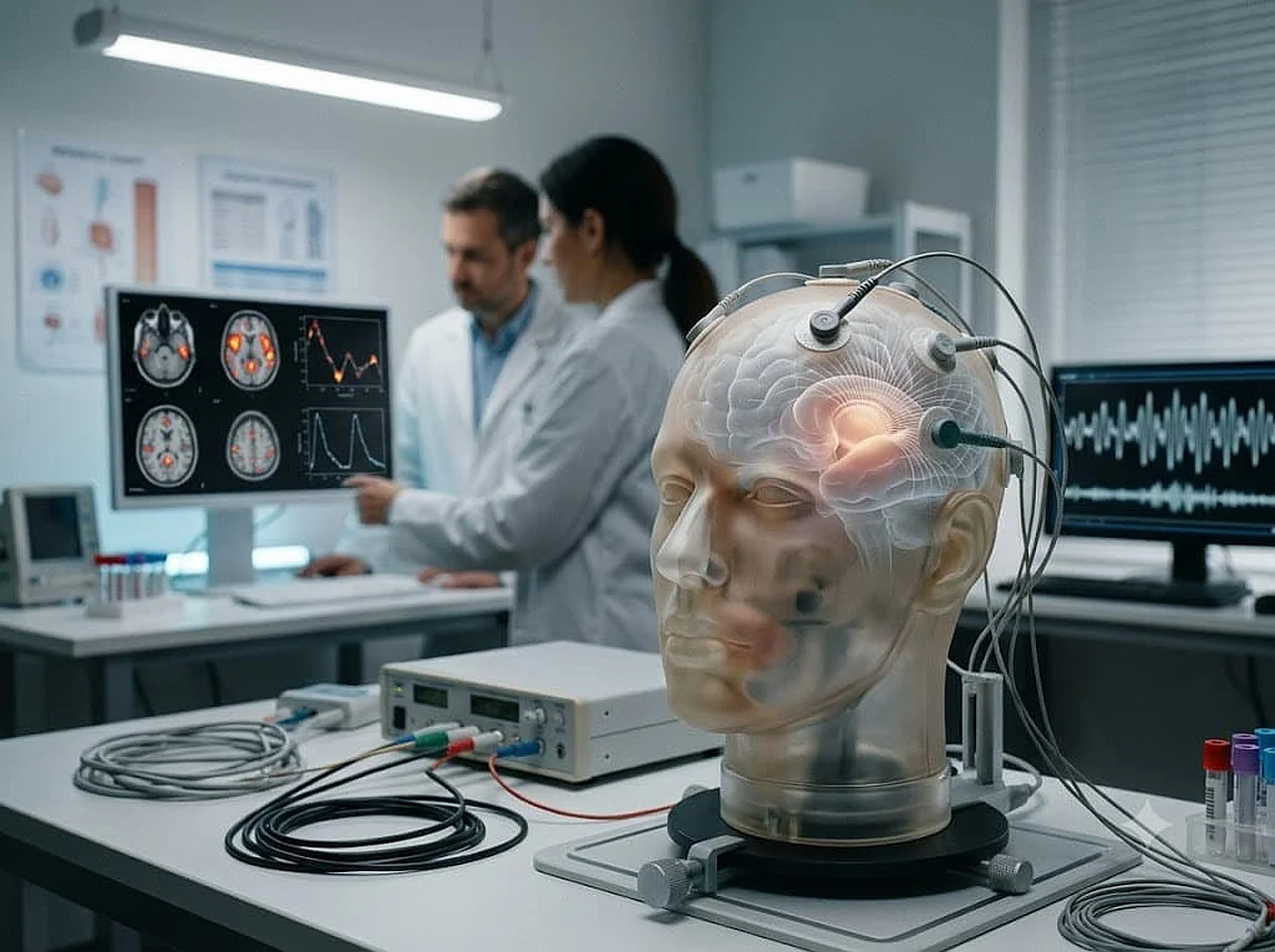
In modern medicine, electrical stimulation of the brain is widely used to treat Parkinson's disease, depression, and obsessive-compulsive disorders. However, until now, affecting the deep layers of the brain required complex surgery and the implantation of electrodes. A group of Swiss scientists is proposing a new non-surgical and non-invasive method that could solve this problem. This is reported by Ixbt.com news reports.
Researchers from the University of Geneva, ETH Zurich, and EPFL Lausanne have jointly developed "temporal interference stimulation" (TIS) technology. The uniqueness of this method is that it sends two high-frequency electric fields through electrodes placed on the scalp. While neurons do not respond directly to these frequencies, they react to the low-frequency signal created as a result of their collision (interference).
Working mechanism of the new technology
Theoretically, the TIS method allows for targeted impact on the deepest structures without damaging the upper layers of the brain. To test this theory in practice, scientists conducted experiments on mice using electrophysiology, neuron activity visualization, and functional MRI. The results showed that TIS can indeed activate targeted areas.However, an unexpected problem arose during the experiments: the electrical pulses stimulated not only the required point but also other surrounding areas. This indicated the need to increase the precision of the method. Valerio Zerbi, a study participant, noted that functional MRI made it possible to see all activated regions and quantitatively assess side effects, which was an important step in refining the method.
Future prospects and clinical application
To increase selectivity, engineers added a third electrode configuration. This additional electrode serves to cancel out excess electrical interference outside the target area. Such an approach is expected to make stimulation more precise and safer.The authors note that the new approach cannot yet fully replace deep brain stimulation (DBS), which requires neurosurgical intervention. However, in the future, it could become a non-invasive alternative or supplementary tool for treating depression and other neurological diseases. The current primary task is to fully control the side activation zones.
The research results indicate significant growth in the field of targeted and non-surgical neurostimulation. If this technology successfully passes clinical trials, a new era of non-surgical treatment for severe neurological diseases could begin in countries like Uzbekistan.


Comments 0
…