


Revolution in Medicine: Unitree G1 Humanoid Robot Participates in Surgery for the First Time
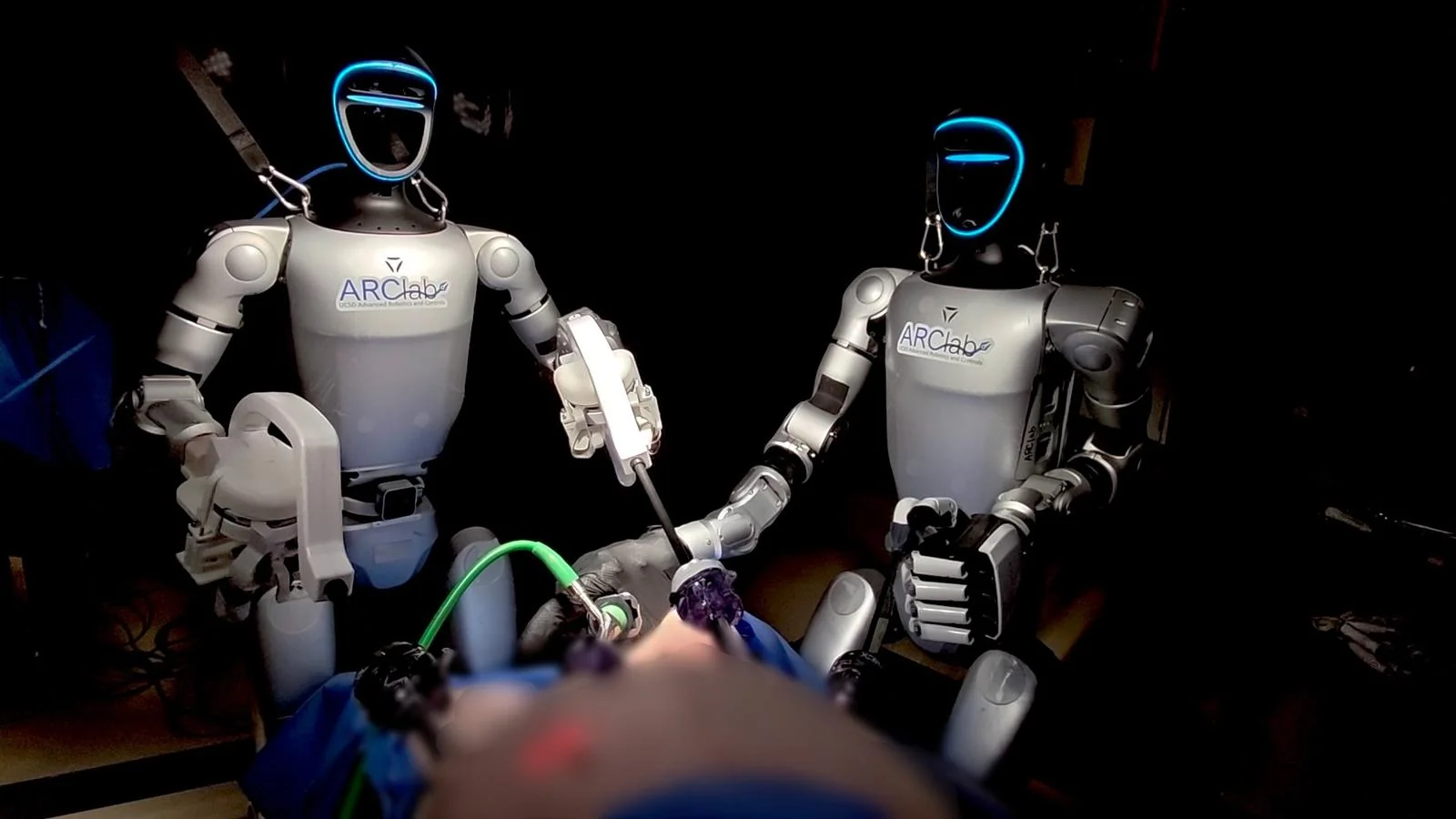
A historic event has occurred in the world of medicine and high technology: the Unitree G1 humanoid robot has successfully participated as an assistant in a complex surgical procedure on a human body for the first time. This experiment marks a giant leap in robotics, opening up the possibility of widespread use of human-like robots in hospitals in the future. This is reported by Ixbt.com reports .
Researchers at the University of California San Diego involved the Unitree G1 robot in a series of gallbladder removal surgeries. This was recorded as the world's first documented case of a humanoid robot participating in a real medical procedure. The tests were conducted in early July at the university's Advanced Robotics and Controls Lab (ARCLab).
Human Control and Robotic Precision
According to ixbt.com, the Unitree G1 did not perform the operation autonomously. The device was fully controlled by a human using motion-tracking sensors, foot pedals, and specialized monitoring systems. This setup allowed the surgeon to transmit their movements to the robot remotely and coordinate both of the robot's arms simultaneously. For example, while the robot held tissue with one hand, it performed a surgical incision with the other.The project was led by Professor Michael Yip and surgeons Charles Goldberg and Preetham Suresh. The scientists emphasized that in these tests, the robot acted not as an autonomous decision-making system, but as a technological extension of the surgeon's hands. This method expands the doctor's physical capabilities and serves to maximize the precision of movements.
Differences from Traditional Systems and Future Prospects
Currently, specialized surgical robots (such as the Da Vinci system) are used in medicine, but they require special infrastructure and customized equipment. The advantage of humanoid robots is that they are adapted to work in environments designed for humans. In the future, such robots could work in existing operating rooms with standard medical instruments without the need to re-equip hospitals.The development of this technology is expected to take remote surgery to a new level. In this scenario, a highly qualified specialist could perform complex operations with the help of a robot from thousands of kilometers away. However, experts believe that it will still be several years before humanoid robots are widely used in operating rooms.
For the technology to become mainstream, it must undergo years of clinical trials, receive approval from government regulatory bodies, and fully prove its safety. Additionally, new standards for training specialists to work with robotic surgeons and medical insurance regulations will need to be developed. Nevertheless, the experiment involving the Unitree G1 has once again confirmed that the future of medicine is closely linked to robots.


Comments 0
…