


NASA Finds Strongest Evidence of Life on Mars: Perseverance Update
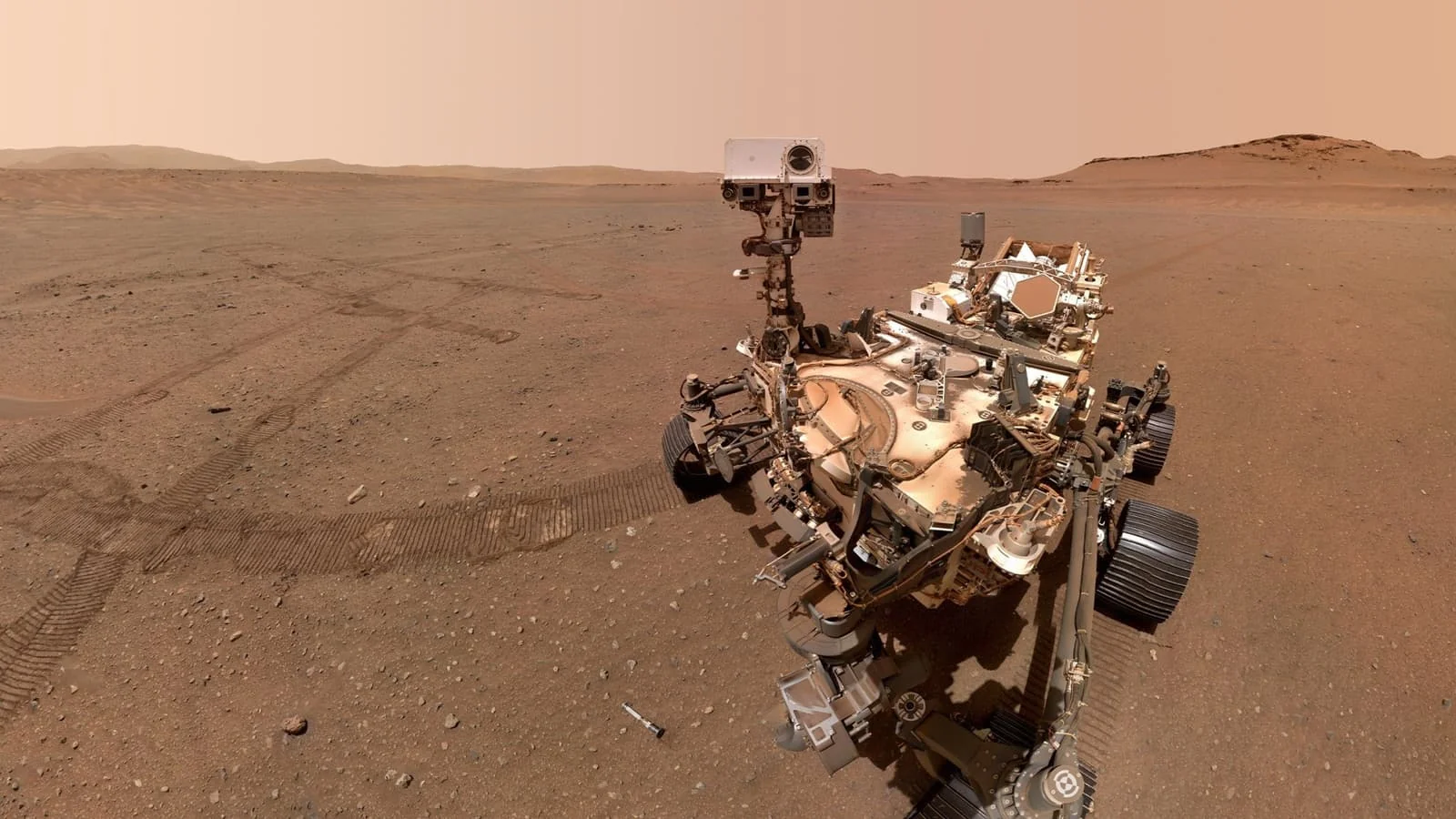
NASA's Perseverance rover has made one of the most significant discoveries in the history of the Red Planet. According to a new study published in the journal Science Advances, scientists have confirmed the presence of complex organic compounds in the site of an ancient lake and river system in the Jezero crater. This finding takes theories about Mars once having habitable conditions to a new level. This is reported by Ixbt.com news provides.
The focus is on macromolecular carbon (MMC) — complex structures consisting of many interconnected carbon atoms. On Earth, such compounds are often found in rocks containing remnants of ancient biological activity. According to ixbt.com, this is the first instance of macromolecular carbon detected directly on the Martian surface and is considered the most reliable evidence found during the exploration of the Jezero crater.
"Leopard Spots" and Chemical Processes
During the study of the samples, scientists were drawn to strange structures called "leopard spots." These circular shapes, with diameters ranging from 0.25 to 1.2 millimeters, may have emerged as a result of the interaction between water and minerals in the past. Analyses conducted using the SHERLOC (Scanning Habitable Environments with Raman & Luminescence for Organics & Chemicals) instrument on board Perseverance showed clear spectral signatures of complex carbon structures in these areas.Research indicated that organic substances were not randomly distributed within the rocks. For example, in the Apollo Temple samples, carbon was closely linked with carbonate and sulfate minerals, while in the Walhalla Glades samples, it was preserved within a primary silicate matrix. This suggests that the formation and preservation of organic substances are linked to different geological processes.
The most surprising part is that these organic compounds were preserved almost in the uppermost layer of the rock — just a few micrometers from the external environment. The current surface of Mars is exposed to strong radiation and oxidizing agents, which usually destroy organics quickly. Scientists speculate that these compounds are either extremely resilient or that surrounding minerals have protected them for billions of years.
The Future of the Discovery and the Mars Sample Return Mission
It should be noted that the discovery of macromolecular carbon does not automatically mean there is life on Mars. Such compounds can arise from hydrothermal reactions or via cosmic dust and meteorites, in addition to biological processes. Nevertheless, the evidence found by Perseverance is far more complete and better preserved in its natural state than the samples found by the Curiosity rover 3,200 kilometers away.To definitively determine the origin of this finding, the samples must be brought back to Earth and examined using the most modern laboratory equipment. However, NASA's Mars Sample Return program is currently at risk. The administration of US President Donald Trump has effectively halted funding for this mission, which could delay humanity's answer to the question of whether there was life on Mars for many years.


Comments 0
…