


Main module installed for ITER thermonuclear reactor
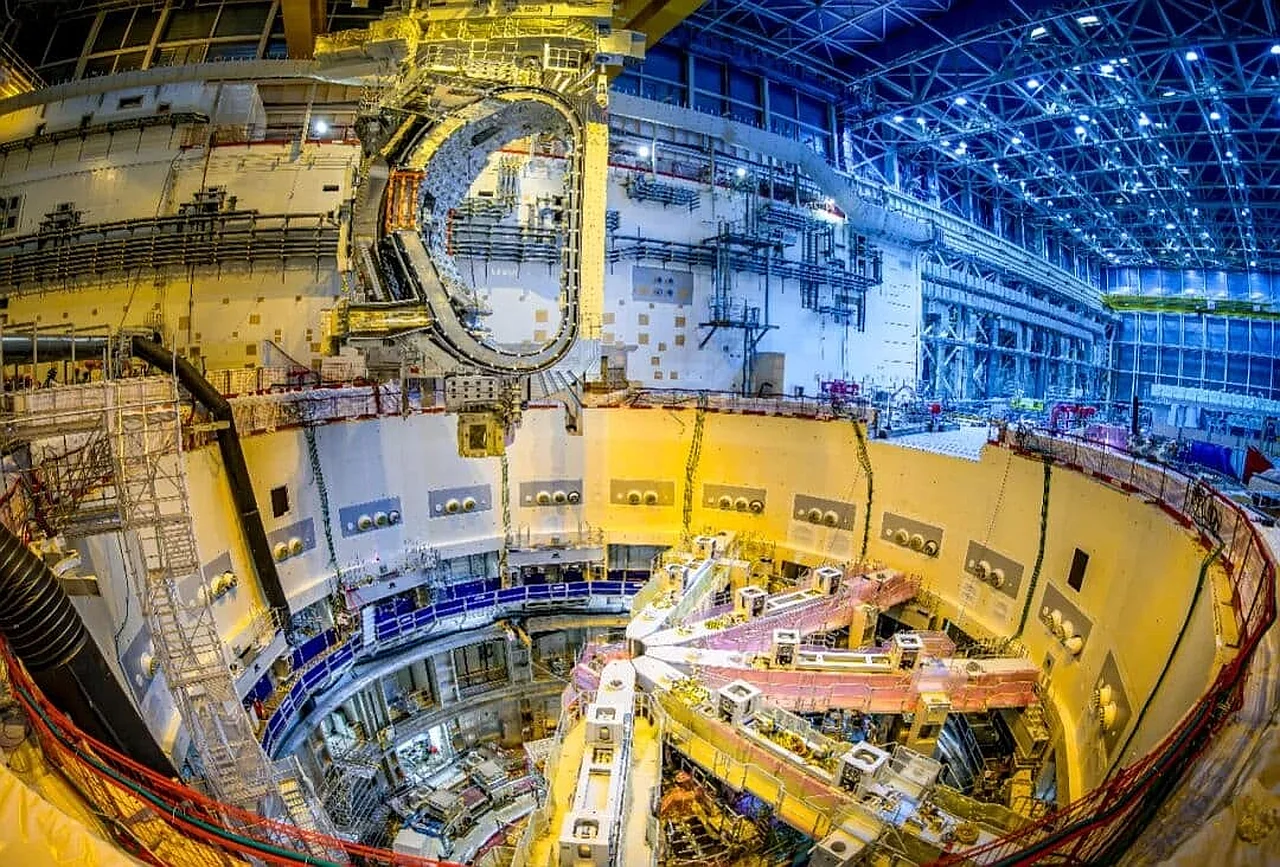
An important milestone has been achieved within the framework of the international scientific project being implemented in Cadarache, France. According to the China National Nuclear Corporation (CNNC), the lifting and installation of the next major module of the vacuum vessel for ITER, the world's largest thermonuclear reactor, has been successfully completed. This process is evaluated as a crucial step towards creating a clean and virtually inexhaustible energy source for humanity. This is reported by Ixbt.com reports .
The vacuum vessel is the core part of the tokamak, consisting of nine large sector modules. Transporting, lifting, installing into the pit, rotating, and positioning each such element with millimeter precision requires extremely complex engineering solutions. The narrow workspace in the pit and the simultaneous overlapping of multiple processes further complicated the overall coordination.
Complex engineering operation and international cooperation
This lifting operation was carried out by the CNNC engineering consortium in close cooperation with teams from various countries around the world. The equipment installation process lasted for almost 30 hours in a relay mode without any interruptions. All work was fully completed without any emergencies or quality defects, and the task of installing major core components with high precision was successfully accomplished.As a reminder, the ITER (International Thermonuclear Experimental Reactor) project started in 1985, with seven parties participating in its construction and financing: the European Union, China, the USA, Russia, Japan, South Korea, and India. The main goal of the project is to practically test the commercial viability of controlled thermonuclear fusion.
How the "artificial sun" works and its future
According to the project, this device is designed to generate 500 MW of thermonuclear power while consuming only 50 MW of power. This ensures a tenfold increase in energy, paving the way for future commercial thermonuclear power plants. China has actively participated in this project, manufacturing over ten key equipment items, including magnets and vacuum vessel components, and performing the assembly of the tokamak.Often referred to in the media as the "artificial sun," ITER’s working principle is based on the nuclear fusion reaction inside the sun. Here, the collision and fusion of two hydrogen isotopes — deuterium and tritium — release a huge amount of clean energy. One liter of deuterium obtained from seawater can provide energy equivalent to 300 liters of gasoline.
Experts note that these fuel reserves are practically inexhaustible and will prevent harmful radioactive waste and greenhouse gas emissions in the long term. Therefore, it is recognized as humanity's ultimate and most promising solution for carbon-free energy.


Comments 0
…