


NASA Discovers Astonishing Vast Field of Polygons on Mars
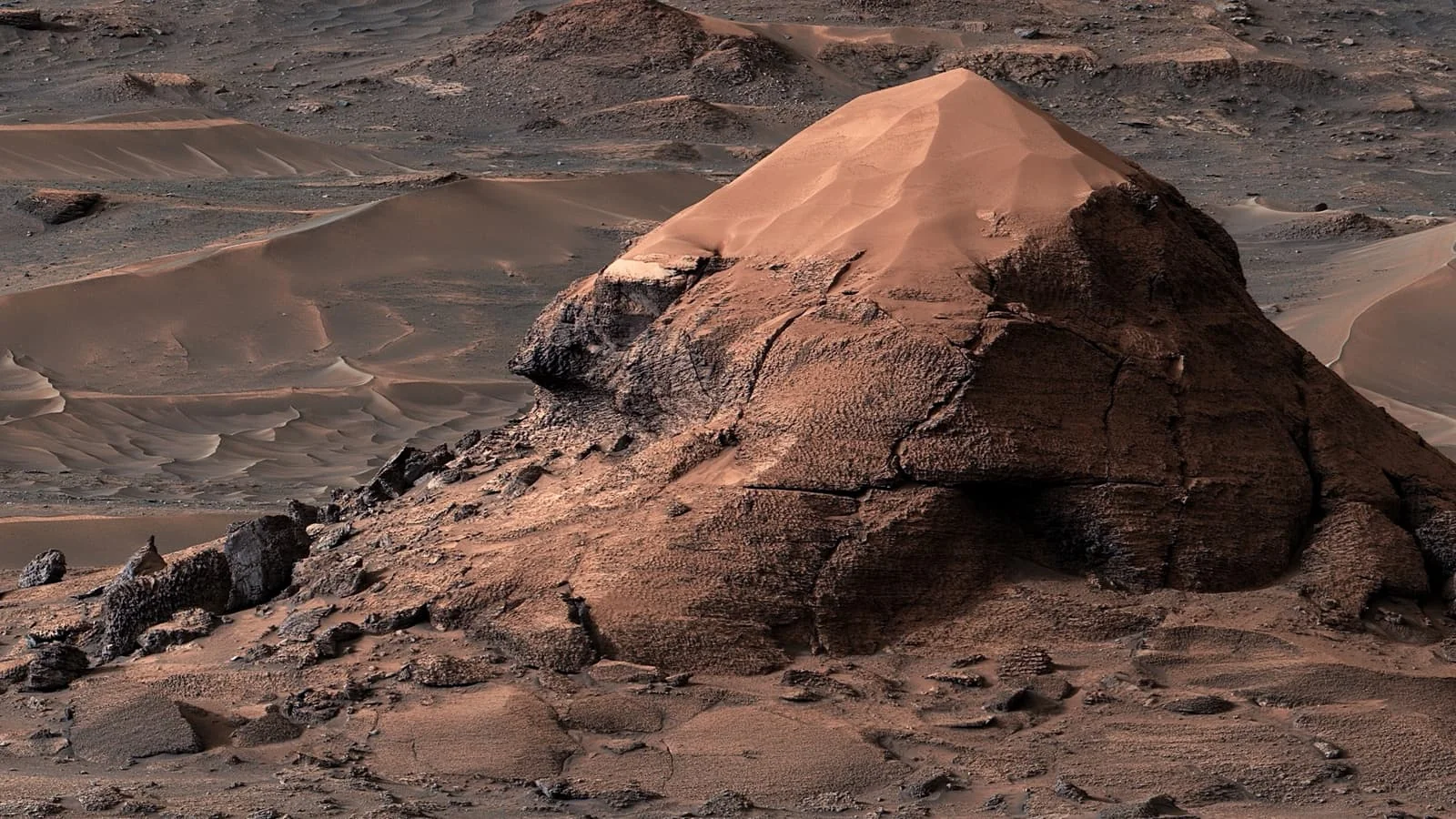
NASA's Curiosity rover has sent its most unique and comprehensive panoramic images of the Red Planet back to Earth. This scientific discovery is a significant step in studying planetary geology and helps understand climate changes from millions of years ago. This is reported by Ixbt.com reports .
According to ixbt.com, the device provided a new 360-degree panorama from an area called Valle Grande at the foot of Mount Sharp. The photo clearly captures the latest mesh-like structures — polygonal cracks measuring 4 to 8 centimeters.
The scale of the unique find
Experts note that smaller plots of such geometric shapes have been found several times before during the mission. However, polygons covering such a vast scale and an entire area, as in the Valle Grande region, have never been observed before.The mosaic images taken on June 19 and 20 of this year, specifically on sols 4930 and 4931 of the mission, show that the polygonal shapes stretch in all directions within the camera's field of view. They even wrap around the slopes of a nearby outcrop called "Miraflores," which stands 6 meters high and has its peak covered with a thick layer of sand.
According to Ashwin Vasavada, project scientist at NASA's Jet Propulsion Laboratory in Southern California, this landscape is truly breathtaking. Experts are carefully measuring the shape and chemical composition of these formations and hope to unlock the secrets of ancient planetary processes through them.
Scientific research and future plans
Scientists believe that some of the previously found polygons were formed as a result of drying mud cracking. However, their unusual grid-like structure could also have been caused by other complex processes, such as sharp temperature fluctuations or the expulsion of water from sedimentary rocks.This finding remains one of the many unexpected gifts provided by the Curiosity rover over the 14 years since it landed on Mars on August 5, 2012. In turn, as part of research and future space missions, particularly noted by SpaceX founder Elon Musk, humanity's first step on Mars is planned to take place just five to seven years from now.


Comments 0
…