


The 'Masha and the Bear' Controversy in the British Parliament: Why Do MPs Want to Ban the Cartoon?
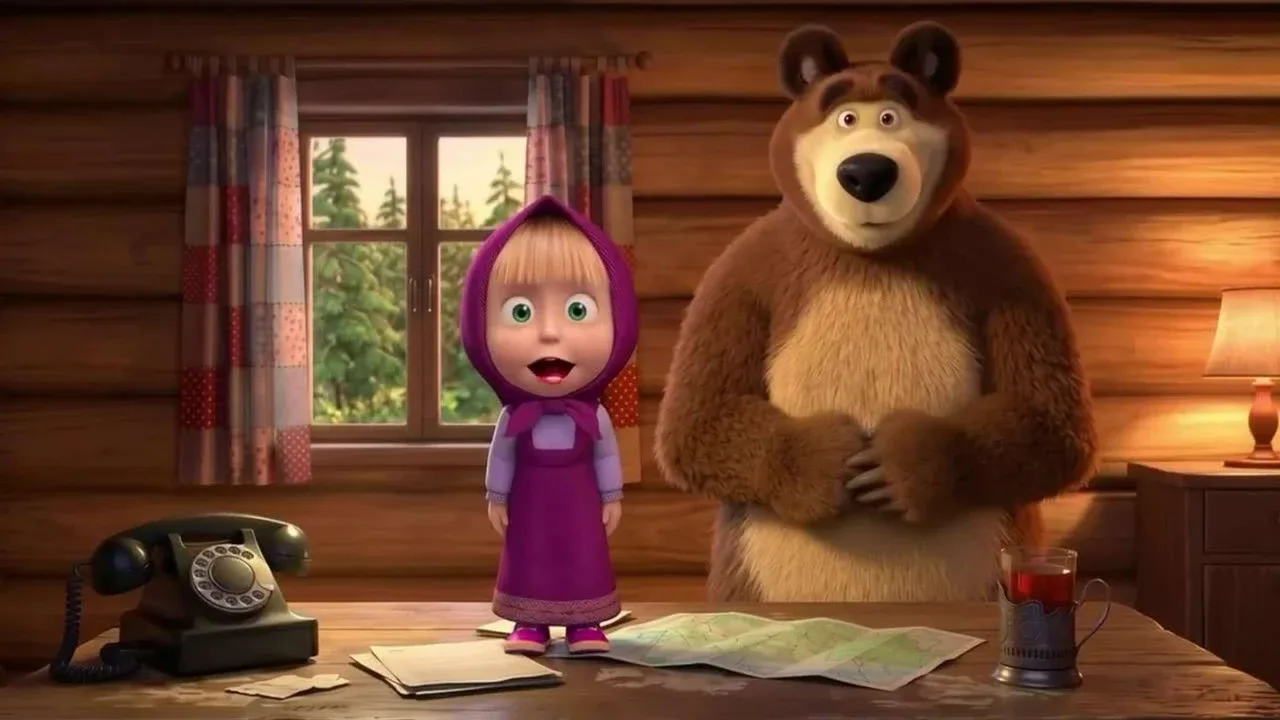
An unexpected and surprising geopolitical clash has erupted in British political circles. Members of the UK Parliament have demanded an immediate ban on the popular animated series 'Masha and the Bear'—loved by millions of children worldwide, including in the West—within the country, specifically on platforms like Netflix and ITVX. On one side are over 50 British parliamentarians who see traces of Kremlin propaganda and funding for the Russian military machine behind the little protagonist's military caps. On the other side are the animators and producers, who call these accusations baseless slander and firmly insist that the project is a purely private media business that has never received state funding. As government officials promise to take personal control of the matter, the borders of the culture war have reached the nursery.
The first side: British MPs and the accusation of 'soft power'
In London, 50 MPs joined forces to send an official letter to ministers, declaring a firm stance against cultural exports:
Resistance to the Netflix deal: The fact that the US company Netflix acquired the rights to show two more seasons of 'Masha and the Bear' has caused great outrage among British politicians;
Claims of justifying Soviet military symbols: According to 'The Guardian', MPs are calling the scenes where Masha wears a tanker's cap and Soviet-era military clothing, as well as the display of a Soviet border guard's hat historically associated with the NKVD, a normalization of Soviet military symbols;
Financing the military machine: The group, led by Liberal Democrat MP Tom Gordon, argues that the proceeds from the cartoon are indirectly replenishing Russia's military expenditures and notes that Ukraine has already imposed sanctions against it;
Government approval: Government representatives welcomed this initiative and promised to take the matter under personal control at the cabinet level and take measures in coordination with relevant agencies.
'Cultural export products like 'Masha and the Bear' are serving to directly finance Russia's military actions. We must take comprehensive measures against this,' emphasized members of the British Parliament.
The second side: A scathing rebuttal from the cartoon's creators
The 'Animaccord' company, which handles the creation and distribution of the animated series, firmly rejected the politicians' claims:
Private business independent of the state: The company's founders officially stated that the brand is a completely independent private enterprise product and has never received a single penny of financial aid from the state budget in its history;
Denial of propaganda accusations: The creative team assessed the attempt to politicize a simple children's fairy tale and cartoon as an act that defies common sense;
Statement against defamation: Company spokesperson Melanie Bonvicino stated that such claims are a deliberate attempt to damage the cartoon's global reputation.
'My client categorically rejects the false and defamatory assumptions about any involvement of 'Masha and the Bear' in propaganda,' stated 'Animaccord' spokesperson Melanie Bonvicino.
The balance scale: A political attack or a real cultural threat?
The debate surrounding the children's cartoon demonstrates how sharp the boundaries have become in Western politics and the global media space:
Evaluation criteria | Position of British MPs | Defense by 'Animaccord' and creators |
Nature of the cartoon | 'Kremlin propaganda under a cute mask' | Non-political, pure family and children's content |
Financial flows | Cartoon revenues are financing the war | Private business with no state funding |
Visual symbols | Normalization of militarization through Soviet caps | Harmless adventures and games of fairy-tale characters |
Proposed measure | Complete removal from Netflix and ITVX platforms | Respect for viewer choice and separating art from politics |
On one side of the scale stand political structures that view every cultural product as a geopolitical weapon and attempt to exert pressure through bans, while on the other side stand authors who are defending creative projects created over years and far removed from politics in a free market.
Do you think the demand to ban 'Masha and the Bear' in Britain is a logical security measure or a clear example of bringing political madness into children's art? Can a simple fairy tale made for children really influence the policies of major states? Leave your thoughts in the comments and share this analysis of the clash between pop culture and politics with your friends!



Comments 0
…