


The lie about Greenland exposed: Secrets of the deal between Trump and Denmark revealed
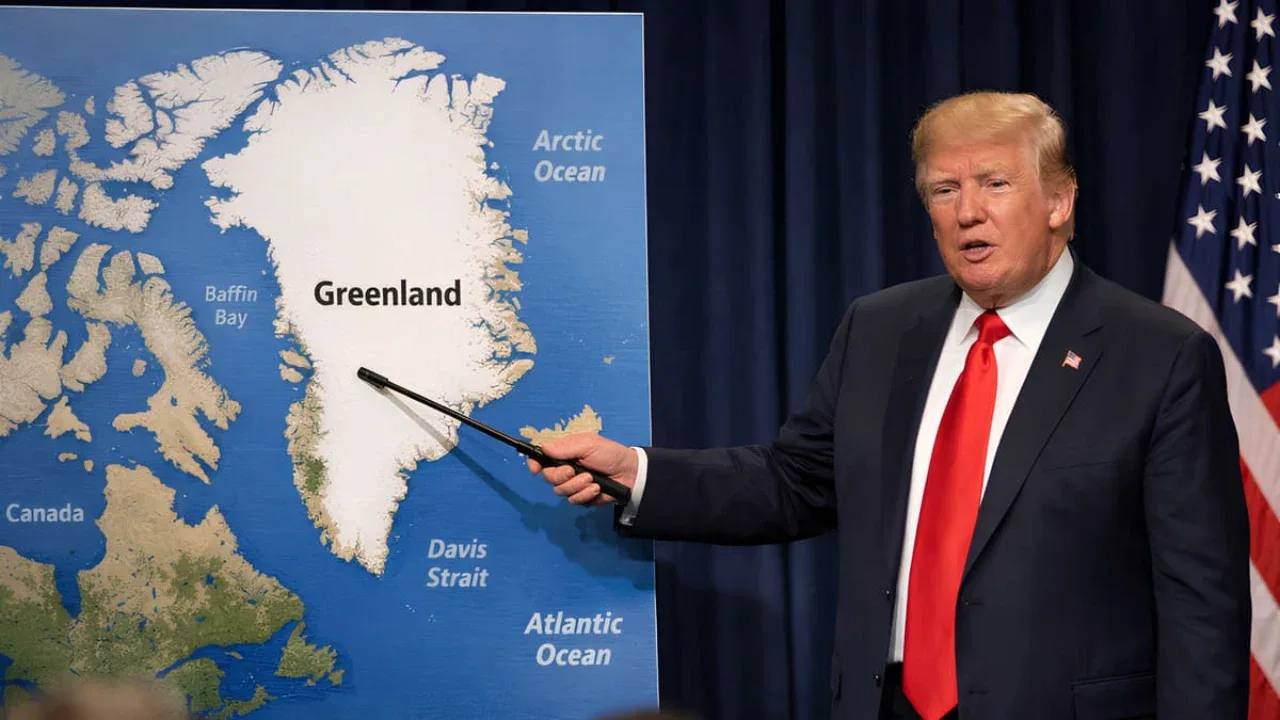
US President Donald Trump's statements regarding a "historic" security agreement reached over Greenland, a strategic island in the center of the Arctic, have sparked a major international political conflict and debate. In his speeches, Trump announced that through a new agreement concluded with the Danish and Greenlandic administrations, the US had gained "permanent and full control" over the island's security. However, the influential The New York Times published a sensational investigation based on sources close to the negotiations and military officials: the American leader has greatly exaggerated the scope of the powers the new document provides.
In reality, the US military will not establish control over the island but will act in equal partnership with the Danish and Greenlandic defense forces. Most importantly, Danish Prime Minister Mette Frederiksen emphasized that the agreement unconditionally recognizes the Kingdom's full sovereignty and territorial integrity—which shows that Trump's long-standing ambitions to fully own Greenland have not been realized.
So, why did the White House leader boast about "absolute dominance" that does not exist in practice, how does the old 1951 treaty differ from the new agreement, and in whose favor was the real struggle in the Arctic resolved?
"Full control or simple partnership?": An open contradiction in the parties' statements
Details of the negotiations and official statements revealed by The New York Times:
Trump's sensational claim: The US leader announced that through this agreement, Washington has guaranteed "permanent control over security and all other needs" in Greenland;
Copenhagen's firm response: Danish Prime Minister Mette Frederiksen stated that the new agreement fully preserves and confirms the sovereignty and territorial integrity of the Kingdom of Denmark;
Military admission: A Pentagon spokesperson announced that under the agreement, US forces would not establish command over local structures but would work as partners with Danish and island officials;
Psychological defeat: Although Trump said earlier this year that owning the island was "psychologically important" to him and that he would not settle for less, in practice, he was forced to settle for a partnership agreement.
"A closed zone for rivals and the 1951 bases": What does the new agreement actually provide?
Facts regarding the White House administration and Arctic security:
A shield against China and Russia: The main achievement of the agreement is that without the US's written consent, no rival state can build a military base, deploy a contingent, or invest in critical infrastructure in Greenland;
Natural protection of NATO territory: Military experts note that since Greenland is already NATO territory, the probability of any non-alliance foreign state building a base there was already almost zero;
The 1951 indefinite right: The previous treaty signed between the US and Denmark in 1951 was itself indefinite, allowing Washington to maintain large-scale military facilities and radars on the island without restrictions;
Expansion of military presence: The new document only officially allows for a certain increase in the number of US military personnel and infrastructure on the island.
Geopolitical analysis: Experts on Trump's political move
Assessments by international security analysts and diplomats:
Pre-election PR: Analysts believe that by presenting a document on expanding simple defense cooperation to the public as "capturing all of Greenland," Trump attempted to score major political points for himself;
Denmark's diplomatic resilience: The European nation managed to preserve its national sovereignty by firmly rejecting the demand to directly sell or fully surrender its territory;
Global race for the Arctic: Against the backdrop of melting glaciers and the opening of the Northern Sea Route, Greenland remains the hottest strategic staging ground between the US, China, and Russia.
The New York Times investigation concludes that behind Donald Trump's high-flown statements lies not a plan to fully occupy the Arctic, but a pragmatic compromise forced by the need to respect Danish sovereignty.
Do you think Trump's claims about establishing permanent control over Greenland are simple political PR, or is the US truly on the path to achieving total dominance over the Arctic? How do you rate Denmark's ability to maintain its sovereignty in the face of White House pressure? Leave your analytical thoughts in the comments and share this sensational investigation into world geopolitics with all your loved ones and politics enthusiasts!



Comments 0
…