


An important warning for those working in the heat...
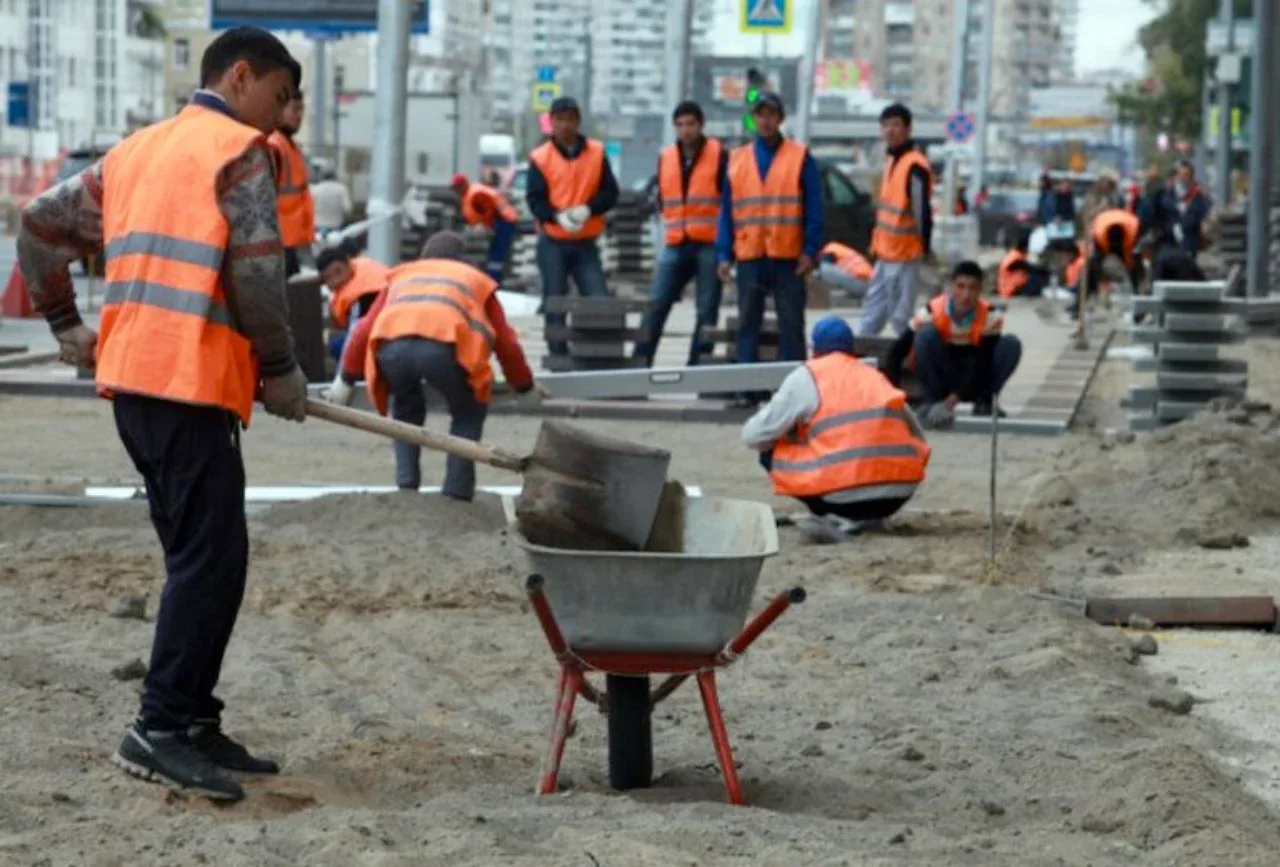
In Uzbekistan, against the backdrop of the anomalous hot weather, the State Labor Inspectorate has issued an important reminder to employers regarding the health and safety of their employees. It is recommended, in particular, to revise work schedules for employees working outdoors and those engaged in heavy physical labor.
The most dangerous time — from 11:00 to 16:00
The Inspectorate states that on days with high air temperatures, the work process must be organized based on occupational safety requirements.
Specifically, it is recommended to reduce or temporarily suspend outdoor work during the hottest part of the day — from 11:00 to 16:00.
This is especially important for construction, road work, agriculture, market activities, loading and unloading, and other tasks performed in open areas.
Heavy physical labor should be limited
In anomalous heat, the body fatigues faster than usual. Employees engaged in heavy physical labor are at an increased risk of heatstroke, dehydration, blood pressure fluctuations, and fainting.
For this reason, it is advisable for employers to limit heavy work during the hottest hours and shift working hours to cooler times in the morning or evening.
Measure | Why is it necessary? |
|---|---|
Reducing outdoor work between 11:00–16:00 | reduces the risk of heatstroke |
Limiting heavy physical labor | lowers the load on the body |
Rescheduling work hours | maintains productivity and safety |
Providing regular breaks | helps the employee recover |
Water, shade, and a place to rest are mandatory
Workplaces must have a sufficient supply of clean and cool drinking water for employees.
Furthermore, employers must organize cool or shaded rest areas and provide employees with the opportunity for regular breaks.
This is not a minor convenience. On hot days, water and shade become key factors in preserving an employee's health.
Special clothing and medical supervision are also important
The State Labor Inspectorate also reminded employers that they should not involve employees who have not undergone a medical examination in work.
Additionally, workers must be provided with lightweight, breathable, and heat-protective special clothing.
In particular, for employees working in open areas, headwear, lightweight uniforms, sun protection, and adequate water supply are crucial.
Employees must know the signs of heatstroke
The Inspectorate recommended that employers conduct awareness-raising activities among employees.
Employees should know the main signs of heatstroke and dehydration:
• dizziness;
• severe weakness;
• nausea;
• rapid heartbeat;
• sudden increase or cessation of sweating;
• blurred vision;
• fainting.
If such signs are observed, the employee should be immediately moved to a cool place, given water, and, if necessary, medical assistance should be called.
If health deteriorates, first aid is mandatory
According to the State Labor Inspectorate, if an employee's health deteriorates, they must be provided with immediate first aid.
In necessary cases, the employee must be sent to a medical facility.
The attitude of "it will pass if I rest a little" can be dangerous here. In anomalous heat, wasting time can lead to severe consequences.
The main task for employers
During days of anomalous heat, the main task for an employer is not just to continue the work plan, but to organize it safely.
To do this:
What should the employer do? | Practical result |
Reviewing the work schedule | reduces the load during the hottest time |
Providing water and a shaded area | lowers the risk of dehydration |
Increasing rest breaks | keeps the employee's condition stable |
Paying attention to medical examinations | protects employees in high-risk groups |
Providing instructions on first aid | helps to act quickly in an emergency |
Working in the heat is not about "enduring it"
Working in anomalous heat conditions is not just a simple summer inconvenience. It is an issue related to employee health, workplace safety, and the employer's responsibility.
Therefore, it is necessary to revise work schedules for those working outdoors, those doing heavy physical labor, and employees in places with insufficient cooling conditions.
The most important rule is simple: work is important, but there is no work more valuable than health.



Comments 0
…