


A Step Toward Artificial Sun: ITER Magnet Cooled to -269 Degrees
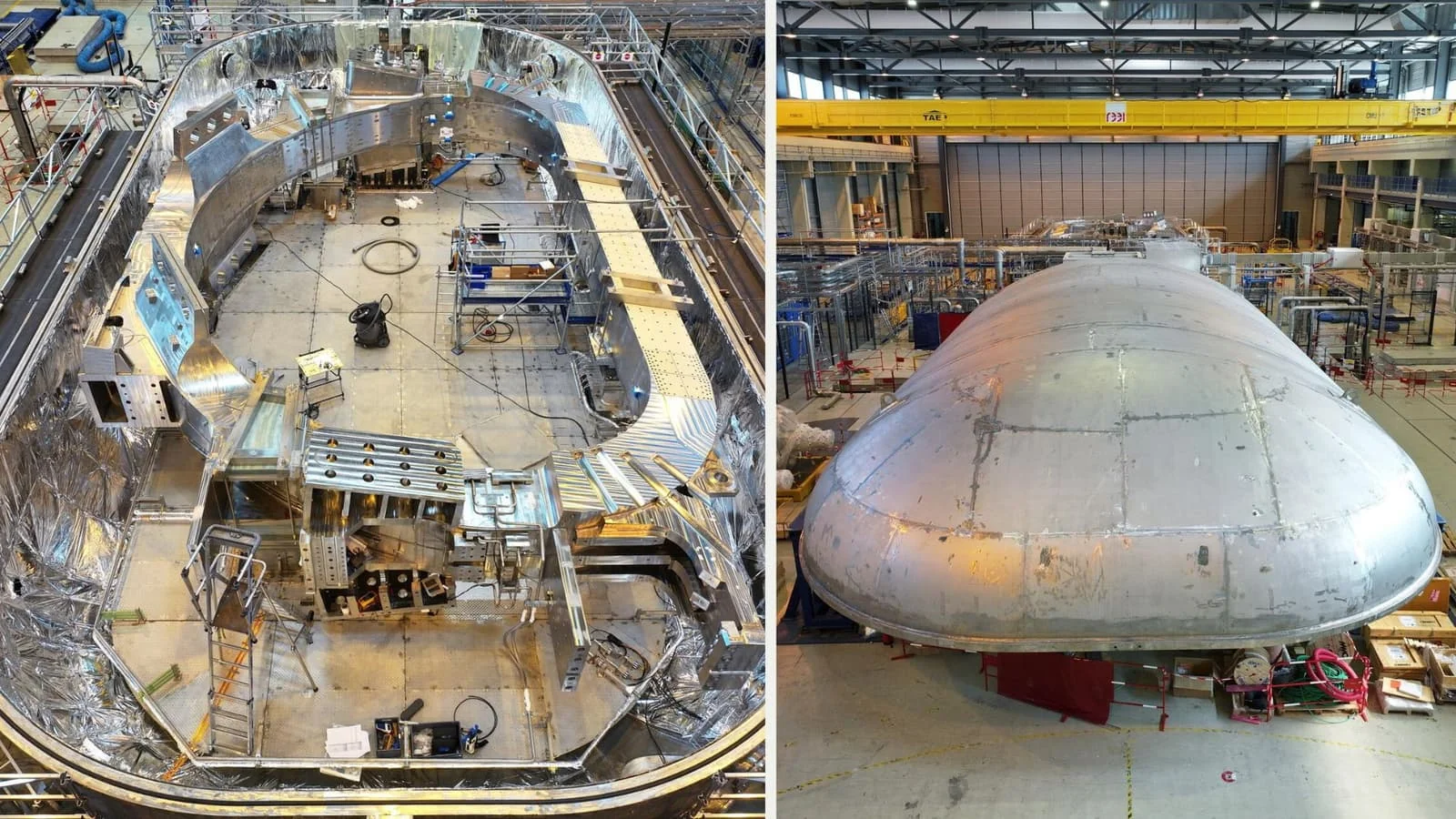
Engineers at the international fusion project ITER have begun one of the most critical stages of reactor preparation: testing the superconducting magnets. At the Magnet Cold Test Facility, the first massive 330-ton toroidal field coil was successfully cooled to its operating temperature of 4 Kelvin (-269 °C). This is just a few degrees above absolute zero. As reported by Ixbt.com reports .
The main goal of the tests is to ensure the flawless operation of the magnetic system before its final installation inside the reactor. Testing each magnet takes between four and six months. During this process, specialists apply currents of up to 68 kA to the coils to simulate their future operating modes. This magnetic system is designed to contain plasma heated to tens of millions of degrees inside the reactor.
The ITER project uses 18 massive D-shaped toroidal field coils, six poloidal coils, and six modules of a central solenoid. The entire system has a storage capacity of up to 51 GJ of energy. The magnets are made of niobium-tin and niobium-titanium alloys, which lose almost all electrical resistance when cooled with liquid helium. This allows for the creation of powerful magnetic fields with minimal energy consumption.
The superconducting state requires very precise conditions. If the temperature or current exceeds the allowed limits, a "quench" phenomenon—a sudden loss of superconductivity and the release of a large amount of heat—can occur. Therefore, the tests also verify the ability of safety systems to detect such events in fractions of a second.
ITER Director-General Pietro Barabaschi noted that this approach helps mitigate risks before the final assembly of the reactor. This experience serves as a foundation not only for the ITER project but also for future commercial fusion power plants being developed worldwide.


Comments 0
…