


Satellites learn to move without fuel: new magnetic technology
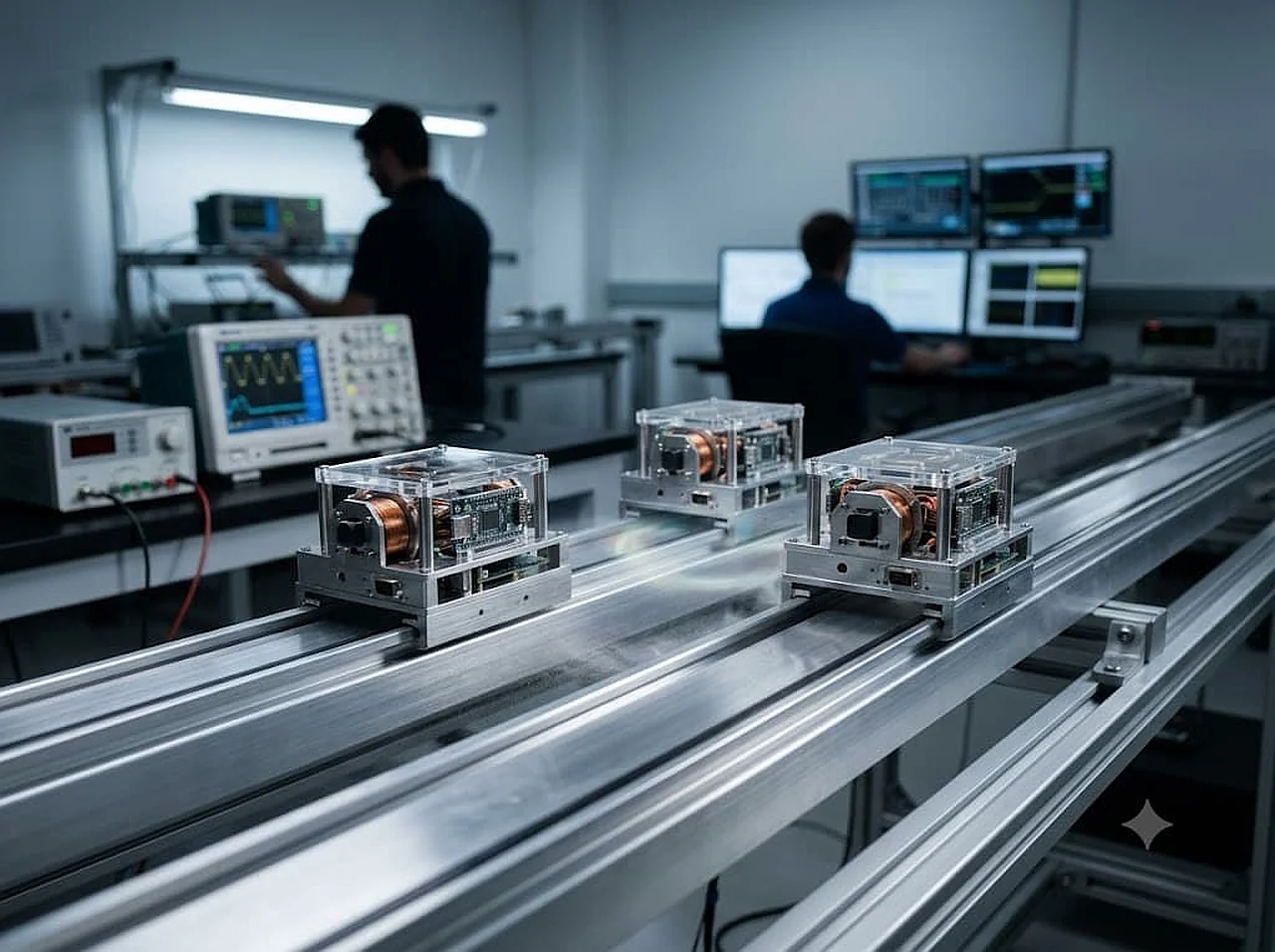
Engineers at the University of Kentucky have demonstrated a technology that could allow future satellites to maintain precise relative positioning without engines or fuel consumption. In a laboratory experiment, three devices maintained formation by interacting solely through magnetic fields. This research, supported by NASA and the U.S. National Science Foundation, is expected to be published in the September 2026 issue of the Aerospace Science and Technology journal. This is reported by Ixbt.com .
The technology belongs to the Electromagnetic Formation Flight (EMFF) field, with the core idea being to equip each satellite with electromagnetic coils. When current flows, they generate magnetic fields that interact with the fields of neighboring devices. As a result, satellites can attract or repel each other without physical contact or firing thrusters. Previously, such systems were only considered for two devices, as the control process became overly complex with an increasing number of participants.
The authors of the new work proposed using alternating magnetic fields. Instead of direct current, the coils are powered by sinusoidal signals of different frequencies. Satellites only interact if they use the same frequency. This approach allows for the abandonment of a single central controller: each device makes decisions based only on information about its nearest neighbors, making it easier to scale the system for large groups.
To verify the concept, researchers created an experimental setup consisting of three mobile modules equipped with an Arduino Due microcontroller, laser distance sensors, and a wireless communication system. During tests, the system managed to reach the target configuration in less than 30 seconds. The average error in maintaining formation was less than one millimeter, which fully matched the computer modeling results.


Comments 0
…