


NASA tests supersonic X-59 aircraft at a new stage
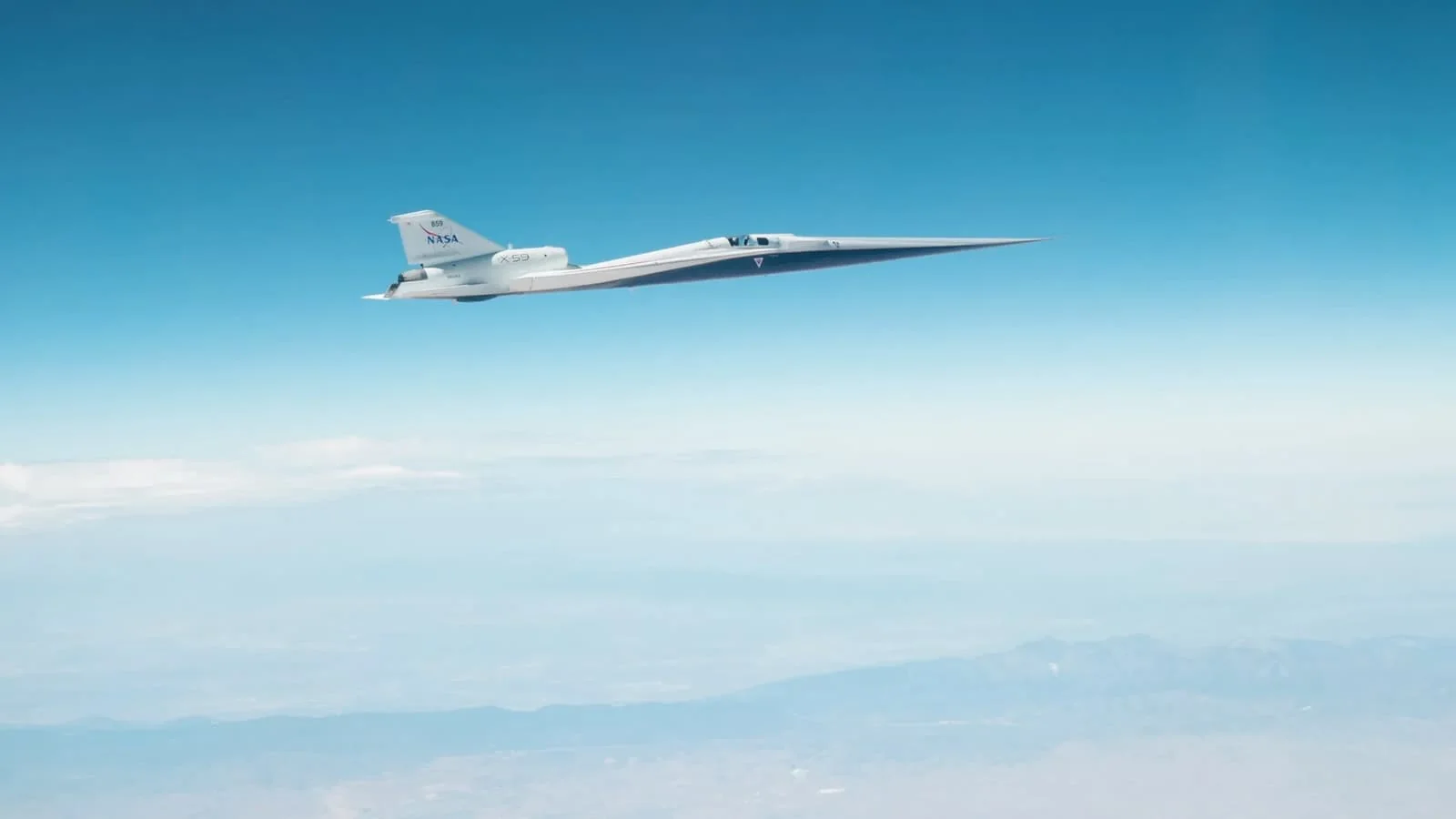
The U.S. National Aeronautics and Space Administration (NASA) has achieved a significant milestone in testing the experimental X-59 aircraft, which is expected to revolutionize the world of aviation. Created as part of the Quesst program, this aircraft approached its maximum speed capabilities and reached its target altitude during its latest flight. This is reported by Ixbt.com reports .
According to ixbt.com, during tests conducted on June 12, the X-59 aircraft reached a speed of 1.4 Mach (approximately 1487 kilometers per hour) for the first time. The flight took place at an altitude of nearly 17 kilometers above sea level. Notably, these figures will serve as a foundation for future key research.
Quiet supersonic flight technology
The primary task facing the project is to eliminate the loud, explosion-like sound (sonic boom) that occurs during supersonic flight. Typically, such aircraft create loud noise that rattles windows when flying over populated areas. Due to its special design, the X-59 is intended to reduce this noise to a soft "thump."In the current testing phase, the X-59 is being accompanied by NASA's F-15 research fighter. The F-15 is equipped with special instruments to measure shock waves in the air and analyze airflow around the experimental craft. Acoustic indicators are not yet being fully evaluated because the escort fighter itself generates noise.
Future plans and commercial prospects
Once the flight envelope expansion program is complete, experts will move to the acoustic validation phase. In this process, the aircraft's actual noise level will be measured using ground-based sensors. After that, NASA plans to fly the aircraft over various U.S. cities.Surveys conducted among city residents and the collected data will be presented to international aviation regulators. This information could serve as a basis for reconsidering bans on commercial supersonic flight over land. If the project is successfully completed, a new era in passenger aviation will begin.
Experts believe that next-generation passenger aircraft based on X-59 technology will allow for cutting transcontinental flight times in half. This will not only save time but also play an important role in increasing the efficiency of global logistics and business relations.


Comments 0
…