


Japan Revolutionizes the Moon: Tiny Robot Moved Autonomously for 100 Minutes
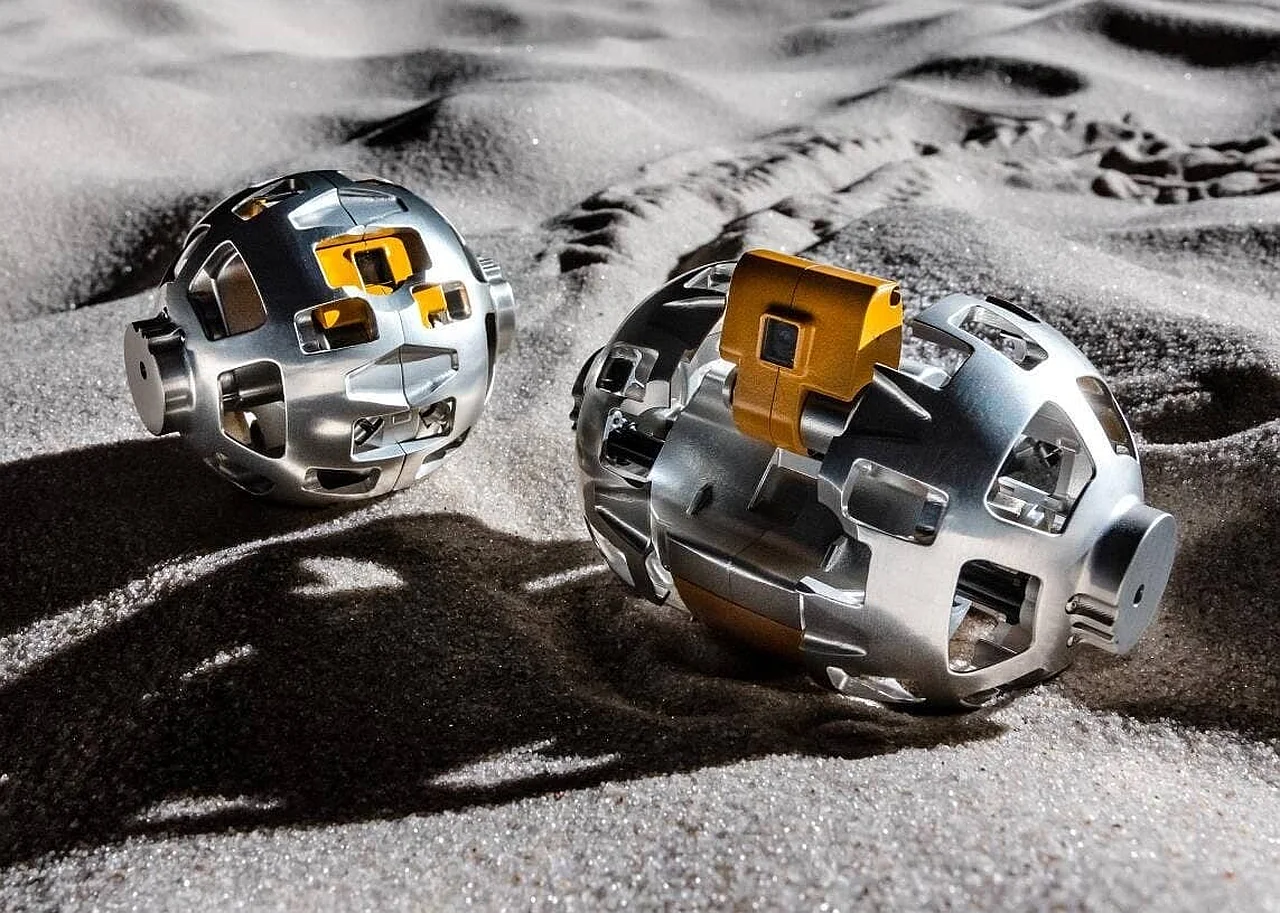
The Japan Aerospace Exploration Agency (JAXA) has announced a significant milestone in the history of space exploration. The tiny SORA-Q robot (also known as LEV-2), developed by the agency, moved fully autonomously on the lunar surface for over 100 minutes and successfully transmitted unique images back to Earth. This experiment is a practical proof of a new concept that could completely change the future of lunar missions. This is reported by Ixbt.com news reports.
According to ixbt.com, this tiny device was tested as part of the SLIM mission, which landed near the Shioli crater in January of this year. The main goal of the experiment was to test the possibility of using a group of dozens of small, inexpensive robots instead of a single large and expensive rover. Such an approach increases the stability of missions: if one small robot fails, the others continue the research.
From Toy to Space Technology
The SORA-Q robot is a sphere-shaped device with a diameter of only 8 centimeters. After landing on the lunar surface, it unfolds into a wheeled platform. Interestingly, JAXA engineers developed the construction of this robot based on transformer toys in collaboration with Sony and the toy manufacturer TOMY. This is a unique example of harmony between space technology and everyday industrial design.Moving on the lunar surface is considered an extremely difficult task. Lunar soil — regolith — consists of very fine and abrasive dust, which makes wheel traction difficult. To solve this problem, SORA-Q engineers decided to rotate the wheels around a slightly offset axis. As a result, the robot moves as if it is "jumping" with each rotation and does not sink into the soft regolith. This method allowed the tiny device to cover a distance of 24 meters.
Fully Autonomous Control
Due to the communication delay between Earth and the Moon, remote control in real-time is a risky and slow process. Therefore, LEV-2 possesses a high level of autonomy. Through its built-in image processing system, the robot can recognize the SLIM lander and use it as a reference point to independently calculate its coordinates.This successful mission is expected to start a new era in space exploration. If such tiny systems are produced on a large scale, future lunar missions will use a "swarm" of robots (swarm robotics) instead of a single large apparatus. This will not only reduce costs but also allow for a more detailed study of the Moon's complex terrains.
This news is also of great importance for Uzbek space enthusiasts and young engineers. It demonstrates that simple and compact solutions can be found for complex problems, and that even toy design can be useful in conquering space.


Comments 0
…