


NVIDIA accelerates cosmic discovery by 15,000x using AI
NVIDIA has introduced new software tools that are revolutionizing scientific computing. Unveiled at the ISC 2026 conference in Hamburg, these technologies enable data processing speeds thousands of times faster in complex fields such as astronomy, high-energy physics, and materials science. These breakthroughs not only save time but also help detect cosmic signals previously hidden from humanity. This is reported by Ixbt.com reports .
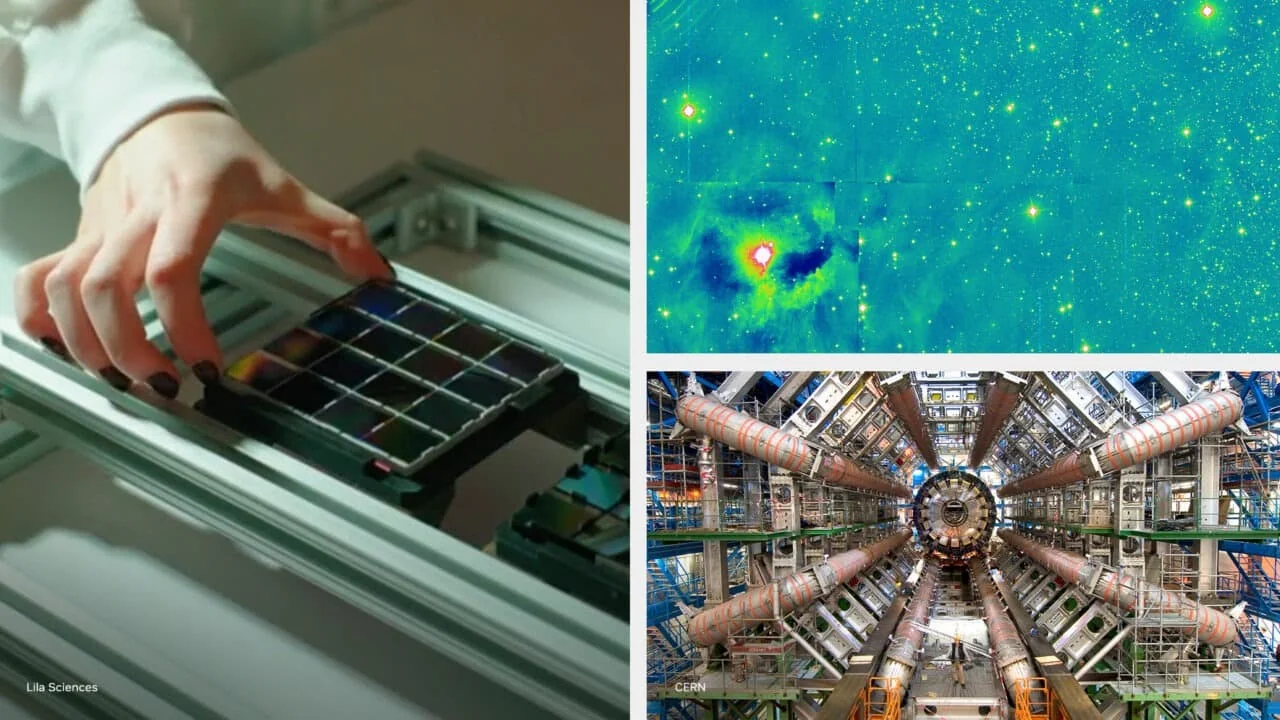
Among the new developments, the most notable is the cuPhoton package, designed to handle multidimensional data from telescopes and X-ray instruments. According to ixbt.com, astronomical file loading and reading speeds on NVIDIA GB200 NVL72 systems have increased by 14,900 times. Signal analysis is being performed 8,400 times faster using 32 Grace Blackwell superchips. This technology plays a crucial role in the Vera Rubin Observatory's project to image billions of galaxies.
Cosmos and Particle Physics: Lost signals are returning
Another major innovation is the DAQIRI library, which ensures real-time transmission of massive data streams from scientific sensors. Typically, traditional systems are forced to discard some data due to memory constraints. However, the A-GHOST project, created in collaboration with CERN experts, has begun using AI to analyze data from the ATLAS experiment at the Large Hadron Collider. While 99 percent of events were previously discarded due to storage limitations, AI can now detect even the rarest signals, including traces of dark matter.In chemistry and materials science, NVIDIA is developing the ALCHEMI platform. This system allows for the simultaneous modeling of millions of molecular compounds. This, in turn, drastically accelerates the creation of next-generation batteries, catalysts, and even cosmetic products. For example, Lila Sciences has used ALCHEMI to accelerate new material discovery by 50 times and magnetic property calculations by 30 times.
As a result of technological optimization, TensorNet model training has accelerated sixfold, and memory consumption has been reduced by three times. This allows scientists to complete calculations that previously took weeks in just a few days. NVIDIA aims to turn its compute accelerators not just into GPUs, but into universal tools for modern science.
These achievements are also relevant for countries focusing on scientific research and the digital economy. This leap in NVIDIA technology shortens the time required to verify complex scientific hypotheses on a global scale, taking technological progress to a new level. Humanity now has the ability to "hear" and analyze even the faintest signals coming from the furthest reaches of the universe.


Comments 0
…