


NASA Perseverance Confirms Presence of Complex Organic Compounds on Mars
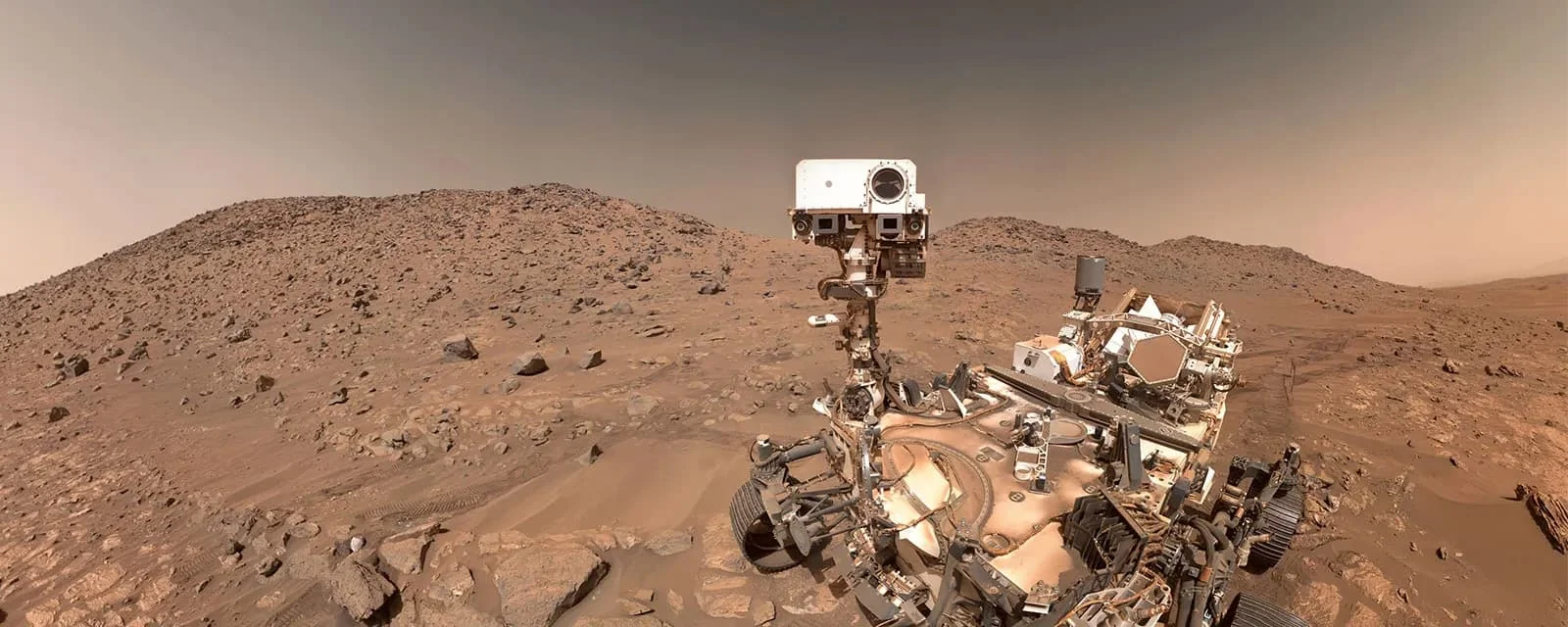
NASA's Perseverance rover has detected complex organic molecules in the Jezero Crater on the Red Planet, in an area that was a lake several billion years ago. This discovery opens a new chapter in understanding how habitable Mars was in the past. Research results published in the journal Science Advances showed that organic matter can be preserved in the planet's geological layers for a long time. This is reported by Ixbt.com news says.
The research was conducted in the western part of the crater—the Neretva region, considered an ancient river delta and lake bed. Using its high-precision SHERLOC spectrometer, Perseverance analyzed hundreds of samples and rocks. As a result, the presence of large carbon macromolecules and complex organic compounds was found, even in layers exposed to the open environment.
Sign of life or chemical process?
Scientists emphasize that it is too early to draw a final conclusion regarding the origin of these organic substances. They could have been formed by both biological (vital) and abiotic (geochemical) processes. However, the preservation of such complex molecules despite Mars' harsh radiation and inhospitable climate surprises experts.According to the TASS agency, these findings are consistent with data obtained from various points on Mars. Previously, the Curiosity rover had also found organic matter in another region located 3,000 kilometers away from the Jezero Crater. This suggests that complex organics may be widespread across the entire planet.
As part of the Perseverance mission, the discovery of unusual minerals and potential biosignatures (traces of life) in this specific area in 2025 prompted further deepening of the research. If these substances are indeed the result of ancient microorganism activity, it would completely change humanity's perception of its place in the universe.
At the current stage, scientists are continuing their research in the following main directions:
- Studying the exact chemical composition of the organic compounds;
- Analyzing how they were preserved in the layers;
- Checking the probability of a biological origin of the substances;
- Preparing for laboratory analyses to be conducted when these samples are brought to Earth in the future.
This discovery further strengthens the hypothesis that life once existed on Mars. Although it is currently impossible to state definitively that "life has been found," the complex molecules discovered are the basic building blocks of life. The Perseverance mission continues to unlock the secrets of the Red Planet, and each new sample brings us closer to finding the answer to the fundamental question.


Comments 0
…