


Space Revolution: Zenno Astronautics Tests Fuel-Free Magnetic Engine
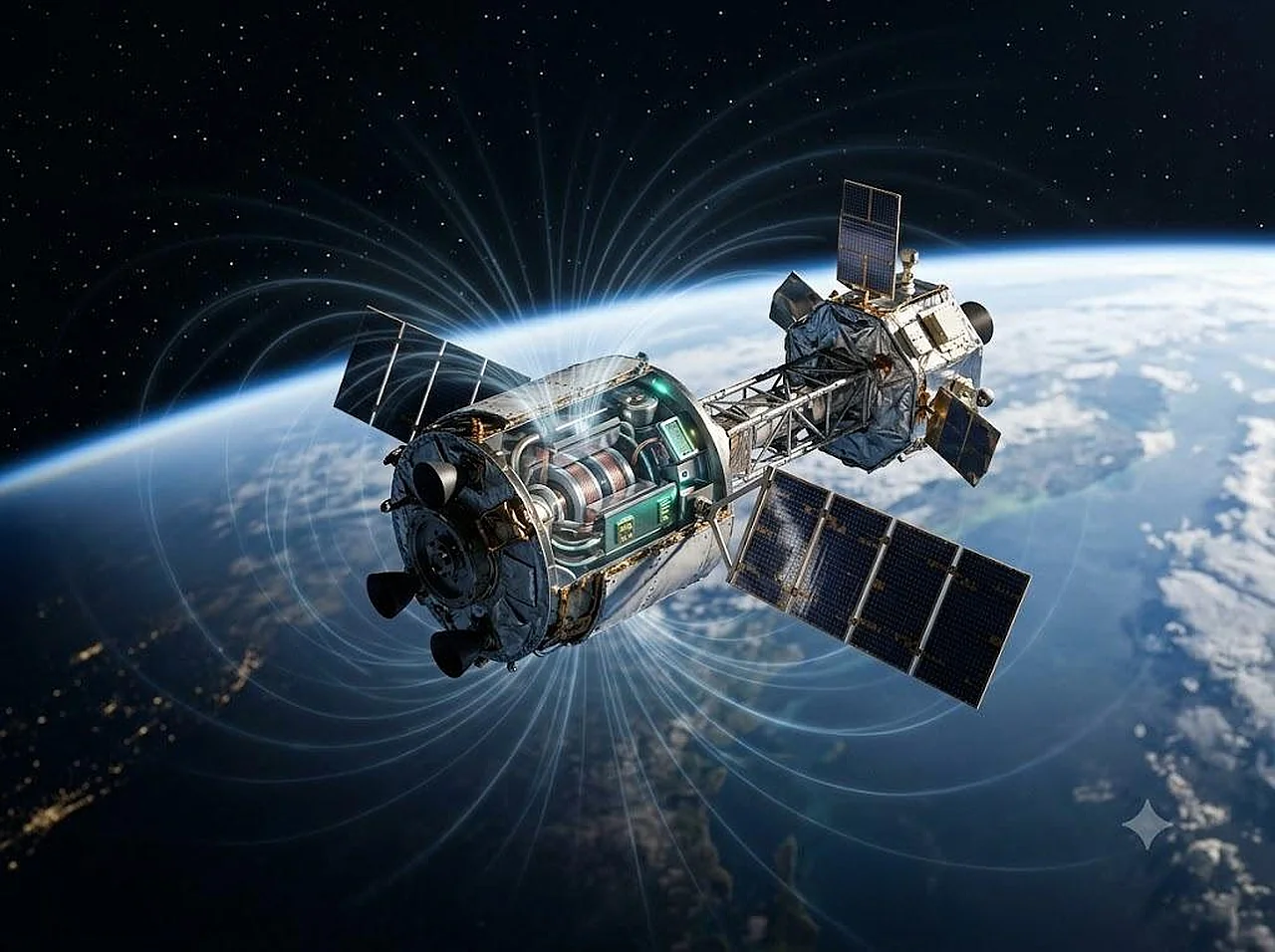
New Zealand-based startup Zenno Astronautics has successfully tested a technology expected to cause a massive shift in the space industry. The company performed the first-ever in-space practical application of a system that uses superconducting magnets to maneuver satellites without the need for traditional chemical fuel. This technology could significantly extend the service life of satellites and reduce space exploration costs. This is reported by Ixbt.com reports .
This system, called Supertorquer, was installed on the Mira satellite by the company Impulse Space. The device was launched into orbit last November as part of a SpaceX mission. During the tests, the system proved it could successfully change the satellite's orientation by interacting with Earth's magnetic field.
Operating principle and advantages of the technology
Unlike traditional engines, the Supertorquer uses electrical energy obtained from solar panels. This energy powers superconducting coils and generates a controllable magnetic field. This field interacts with Earth's magnetic field, creating the force necessary to rotate the craft in the desired direction. No fuel is consumed in this process, which helps reduce the satellite's weight.To achieve a superconducting state, the coils must be at a very low temperature. Zenno Astronautics engineers developed a special cooling system adapted for space conditions. This system maintains the coils at -196 °C using a heat pump and multi-layer insulation. Most importantly, this complex cooling process consumes only 48 watts of energy.
Future plans: From the Moon to Mars
According to Max Arshavsky, founder and CEO of Zenno Astronautics, solar energy is available in infinite amounts in space, making the use of magnetic systems the most efficient way to control satellites. The company plans to further expand this technology in the future. Future goals include:- Improving proximity operations and docking systems for spacecraft;
- Creating solar-powered magnetic engines for ships flying to the Moon and Mars;
- Designing magnetic shields to protect against cosmic radiation.


Comments 0
…