


Hidden HotSpot sensor on NVIDIA GeForce RTX 50 graphics cards activated
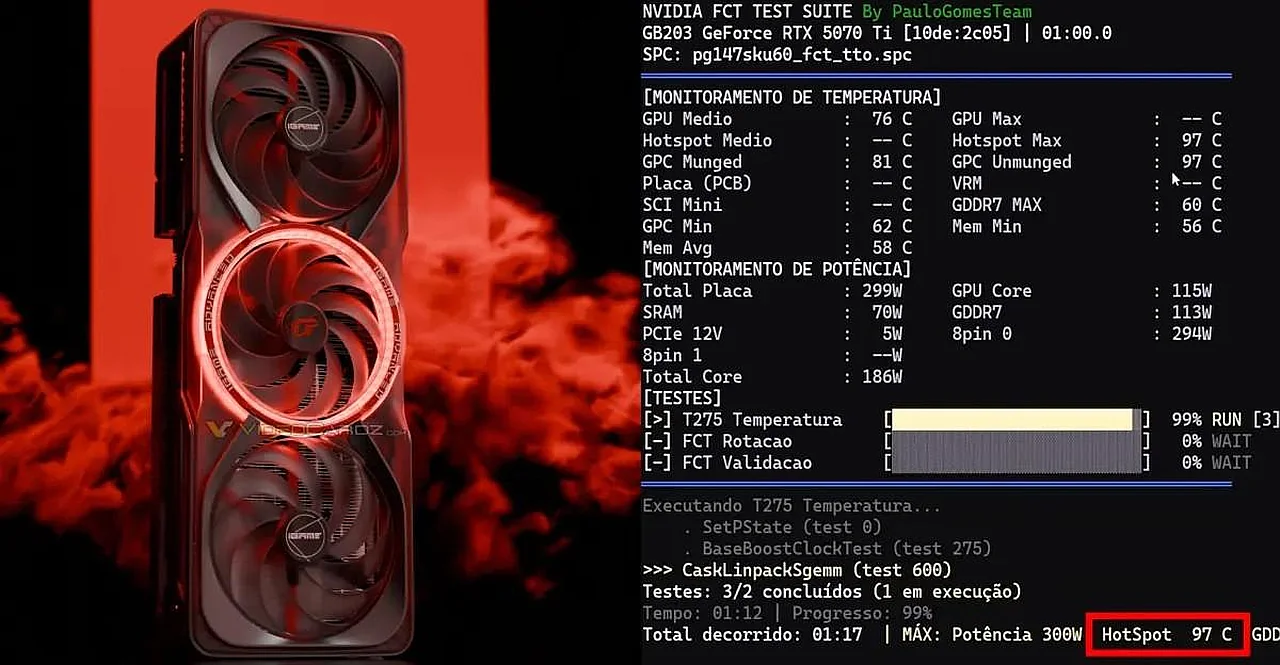
NVIDIA had decided to hide information about the GPU HotSpot temperature from users on its new generation GeForce RTX 50 series graphics cards. However, technology enthusiasts found a way to bypass this restriction and obtained alarming data about the device's real operating state. This discovery raises serious questions about the long-term stability of the new graphics processors. This is reported by Ixbt.com reports .
Initially, many experts believed that the HotSpot sensor was completely absent in GeForce RTX 50 models because popular diagnostic software like GPU-Z, HWiNFO, and MSI Afterburner could not detect this metric. According to ixbt.com, experts from the Brazilian channel Paulo Gomes proved that the sensor exists at the hardware level and was simply blocked via software.
To obtain this information, enthusiasts used a modified version of NVIDIA's internal-only NVIDIA MODS (Modular Diagnostic Software). This software is typically used during the manufacturing process to test graphics chips and memory modules and is not publicly available.
Dangerous temperature readings
A GeForce RTX 5070 Ti graphics card was selected for the experiment, and the results were unexpected. While standard sensors showed the graphics processor temperature around 67-68 degrees, the hidden HotSpot sensor recorded temperatures exceeding 100 degrees, even reaching 107 degrees. Such high temperatures are considered critical for electronic components.Experts note that temperatures above 100 degrees can lead to unstable operation of the graphics card, unexpected shutdowns, or performance drops. Worst of all, an average user cannot understand where the problem lies through standard software, as the general temperature reading appears normal.
When the graphics card was disassembled to determine the cause of the problem, it was discovered that the factory-applied thermal paste had partially dried out. After replacing the thermal paste with a new one, the HotSpot temperature dropped to 100 degrees. Although this figure is still high, stability in the device's operation was observed.
Although the NVIDIA GeForce RTX 50 series, which is entering the market, promises high performance, this situation urges users to be cautious. If your graphics card "freezes" for no reason during heavy gaming or graphic tasks, the problem may be due to this hidden overheating. So far, NVIDIA has not provided an official comment on why it blocked this sensor.


Comments 0
…