


NASA begins assembly of SLS rocket for historic Moon mission
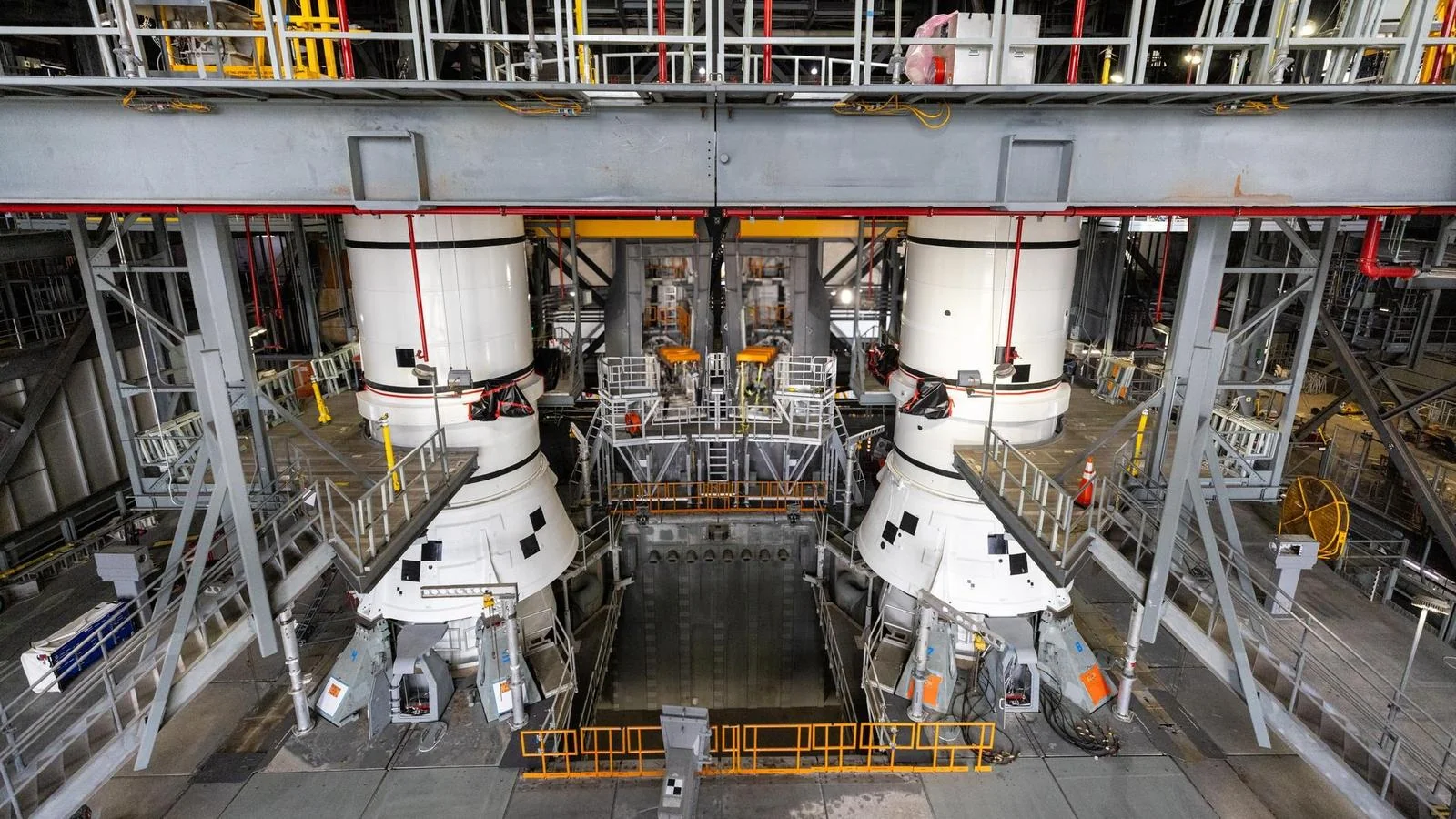
The U.S. National Aeronautics and Space Administration (NASA) has begun the assembly process for the massive Space Launch System (SLS) rocket for the Artemis III mission, which aims to return humanity to the lunar surface. This process, which started at the Kennedy Space Center, is expected to usher in a new era of space exploration. After completing preparations for the Artemis II mission, engineers have shifted their focus to the third stage. This is reported by Ixbt.com reports .
Currently, specialists have begun installing the initial segments of the rocket's left solid rocket booster in the Vehicle Assembly Building (VAB). The remaining parts, delivered by rail in June, are undergoing inspection and being coated with special protective layers. Afterward, all elements will be installed step-by-step onto the mobile launcher platform. It is worth noting that this platform has been modernized based on experience from previous missions.
Technical improvements and testing
Assembly work on the rocket's core stage is also in full swing. While the main tank was integrated with the engine section in May, the first two RS-25 engines were delivered to the space center in June. Once the remaining two engines arrive, the core stage will be fully assembled and integrated into the overall system. NASA specialists are repeatedly checking the reliability of every detail.At the same time, important steps have been taken in preparing the Orion spacecraft. Engineers have finished installing the ship's heat shield. This shield consists of 186 blocks made of Avcoat material. Based on data obtained during the Artemis I mission, the shield's design was improved, increasing its ability to withstand high temperatures during atmospheric reentry.
A step toward the future: Artemis III and IV
As an integral part of the preparation process, large-scale training exercises are held monthly at the Rocco Petrone Launch Control Center. Teams are practicing fueling the rocket and the final 10-minute pre-launch countdown procedures. Such rehearsals serve to reduce potential errors during the actual launch to zero.According to NASA's plan, the Artemis III mission is expected to take place next year. During this flight, the Orion crew will conduct proximity and docking tests with commercial lunar landers in low Earth orbit. These technologies will serve as the foundation for the Artemis IV mission, scheduled for 2028, which envisions astronauts landing directly on the lunar surface.
According to ixbt.com, this project is of strategic importance not only for the U.S. but for the global space industry. The SLS rocket is currently the world's most powerful rocket system, and it is expected to be a key link in humanity's plans for Mars missions.


Comments 0
…