


China completes world's first 2000 MW subsea supercable installation
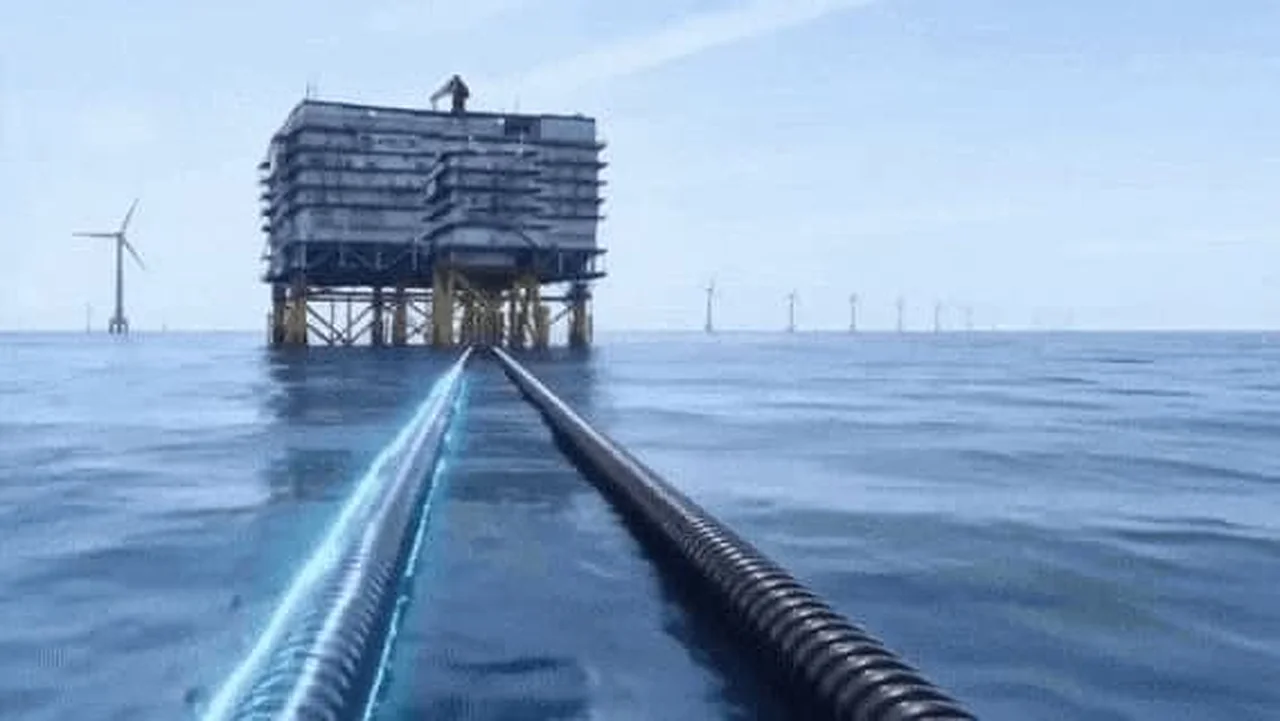
China has achieved a breakthrough in the energy sector, successfully completing the construction of the world's first ±500 kV DC subsea power transmission line. According to ixbt.com, this massive project was implemented off the coast of Yangjiang, Guangdong Province, and is designed to transmit eco-friendly energy generated by large offshore wind farms to the onshore grid. This is reported by Ixbt.com news.
The total length of the new subsea line is 88.8 kilometers. The system is based on a bipolar scheme where two cables operate simultaneously: one transmits current through the positive pole and the other through the negative. This complex architecture allows for the lossless transmission of up to 2000 MW of electricity from offshore wind farms to the shore.
Innovative technology and unique infrastructure
The project's key technological feature is the use of VSC-HVDC (Voltage Source Converter High Voltage Direct Current) technology. Conventional AC lines significantly lose efficiency over distances exceeding 70 kilometers due to capacitive losses. DC lines are free from this drawback, and experts note that this new solution reduces electricity transmission losses by nearly 60 percent.The subsea substation, dubbed the "Heart of Offshore Wind," is also notable for its scale. Installed this summer, it is the world's first offshore converter platform with a ±500 kV class and a 2000 MW capacity. It was specifically designed to connect large offshore wind farms to the main grid.
Environmental efficiency and prospects
Once the project enters full industrial operation, the energy generated by 163 wind turbines from the Qingzhou Phase V and Phase VII offshore wind farms will be directed to the Guangdong-Hong Kong-Macao Greater Bay Area. It is estimated that this line is capable of transmitting approximately 6 billion kWh of "green" electricity annually.This figure is sufficient to provide millions of households with a continuous power supply. At the same time, experts estimate that the launch of this infrastructure will reduce annual carbon dioxide emissions into the atmosphere by 5 million tons.


Comments 0
…