


History of Science: Neutrino Echo of a Shut-Down Nuclear Reactor Recorded
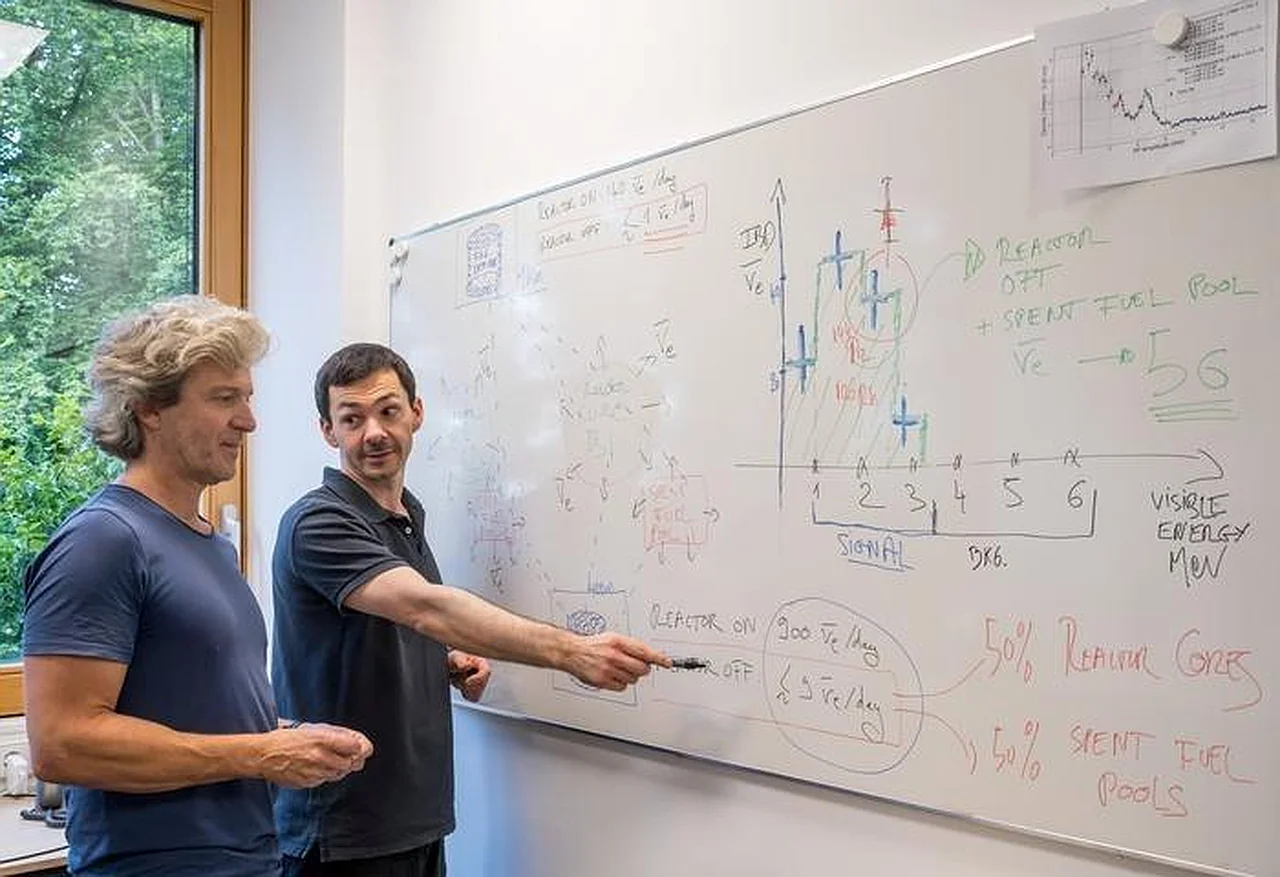
According to a scientific study published in Physical Review Letters, the Double Chooz international scientific collaboration has, for the first time in history, succeeded in measuring the residual electron antineutrino flux from fully shut-down nuclear reactors. This unique experiment was conducted using an ultrasensitive detector located 400 meters from the reactor units of the Chooz nuclear power plant in France. Reported by Ixbt.com reports .
Experts conducted an in-depth analysis of 17.2 days of clean-time data collected during four periods in 2017 when both reactors were shut down simultaneously. A total of 106 events were recorded in the 1–3 MeV energy range, where the maximum antineutrino signal was expected, fully matching scientific predictions and achieving high statistical significance.
What causes the neutrino flux?
Scientists explain that this residual antineutrino flux is not produced by a chain reaction, but by the beta decay of isotopes accumulated in reactor fuel. Radioactive isotopes such as cesium, ruthenium, and strontium remaining in spent or shut-down fuel continue emitting particles for months and years after the reactor is switched off.The modeling carried out made it possible to determine the precise sources of this radiation. According to the results, 56% of the recorded antineutrino flux came from the reactor cores, while the remaining 44% originated in dedicated pools where spent fuel is stored. This fully confirms scientific theories in practice for the first time.
Technical Solutions and Noise Suppression System
The Double Chooz detector uses 10.3 cubic meters of liquid scintillator coated with gadolinium. Antineutrinos are detected through inverse beta decay: the positron produces a prompt flash, while the subsequent neutron capture generates a delayed signal.A complex of auxiliary particle detectors surrounding the main detector successfully eliminates cosmic muons and other external disturbances. A specialized neural-network-based classifier filters out false events, enabling the extraction of accurate statistical results.
Nuclear Safety and Future Practical Significance
The significance of this discovery extends beyond fundamental physics to nuclear safety and monitoring systems. The International Atomic Energy Agency (MAATAG) has discussed the possibility of monitoring reactors via antineutrinos for decades, since this flux cannot be concealed by any shielding.Scientists have now demonstrated that this method can be applied not only to operating reactors but also to decommissioned facilities and repositories storing nuclear waste. The next step is to develop more affordable, portable detectors for installation near storage sites.


Comments 0
…