


NASA Changes Moon Station Plan, Moving Technologies to the Lunar Surface
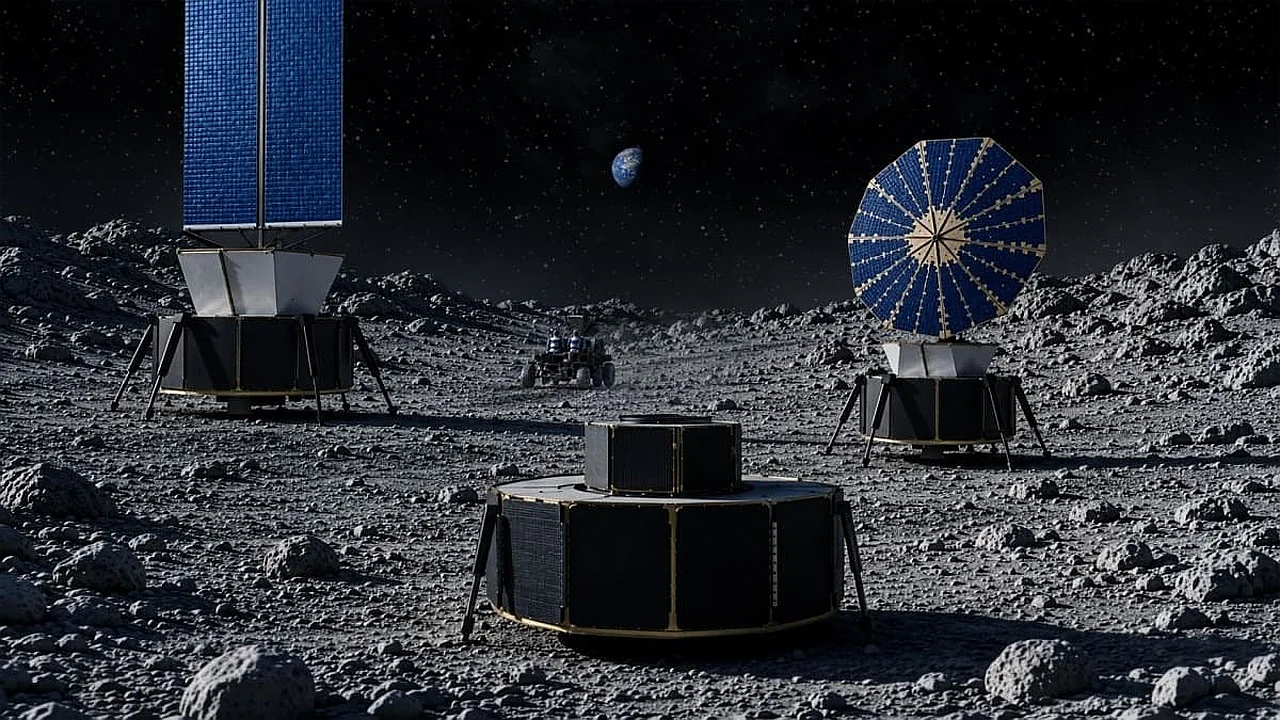
The U.S. National Aeronautics and Space Administration (NASA) is fundamentally changing its lunar program strategy, redirecting technologies originally developed for the planned Gateway orbital station toward building infrastructure directly on the Moon’s surface. These changes are significant because they could enable the creation of a permanently operational base near the Moon’s south pole and support long-term expeditions. This was reported by Ixbt.com reports it.
Northrop Grumman and New Lunar Missions
According to ixbt.com, Northrop Grumman has begun adapting technologies originally intended for Gateway’s HALO habitation module for use on the lunar surface. On August 4, the company announced that it was preparing three specialized missions called Lunar Infrastructure Demo (LID). These missions will deliver power supply, data transmission and mechanical interface systems to the Moon’s surface.The main task of the LID program is to test these systems’ ability to operate in extremely harsh conditions, including the severe lunar night and prolonged shadowed regions. Northrop Grumman plans to test power supply, thermal regulation, autonomous control and communications technologies before scaling them up. Flight dates and detailed descriptions of the landers have not yet been disclosed.
NASA aims to include these payloads in the first phase of its lunar base program, planned through 2029. The missions will be carried out under the Commercial Lunar Payload Services (CLPS) program, which involves commercial companies. Although some elements of the HALO module have encountered corrosion problems, Northrop specialists are working to reuse the technologies.
Changes to Canada’s Canadarm3 System
The United States is not the only country reconsidering its plans; international partners are doing so as well. On August 6, the Canadian Space Agency (CSA) announced that the Canadarm3 robotic system being developed for Gateway could now be adapted not only for lunar missions but also for commercial stations in low Earth orbit.MDA Space, the company developing the Canadarm3 system, signed a contract worth 1 billion Canadian dollars, approximately 717 million U.S. dollars, in 2024. Following changes to the U.S. program, the possibility of using this robotics system on the lunar surface is also being studied, although its exact architecture has not yet been fully confirmed.
At this stage, NASA is not discussing the construction of a completed lunar base or its precise timeline. Instead, it is transferring existing developments from an orbital station to surface infrastructure. The initial tests by Northrop Grumman and other contractors will lay the groundwork for major future space projects and humanity’s long-term presence on the Moon.


Comments 0
…