


Orbital Mechanics: Northrop Grumman Extends Satellite Lifespans
New-generation robots designed to extend the lifespan of spacecraft in Earth orbit are beginning to replace their predecessors. According to ixbt.com, the Mission Extension Vehicle (MEV) spacecraft belonging to Northrop Grumman has successfully disconnected from Australia's Optus communication satellite. This device kept the satellite in the required position for over a year, ensuring it could continue its operations. This is reported by Techcrunch.com reports .
As known, the main reason communication and observation satellites stop functioning is not computer or transceiver failure, but the exhaustion of fuel needed to maintain their required position in orbit. Launched in 2009 with a 15-year design life, the Optus satellite was able to continue its operations and generate profit for another six years with the help of MEV.
New generation space robots and missions
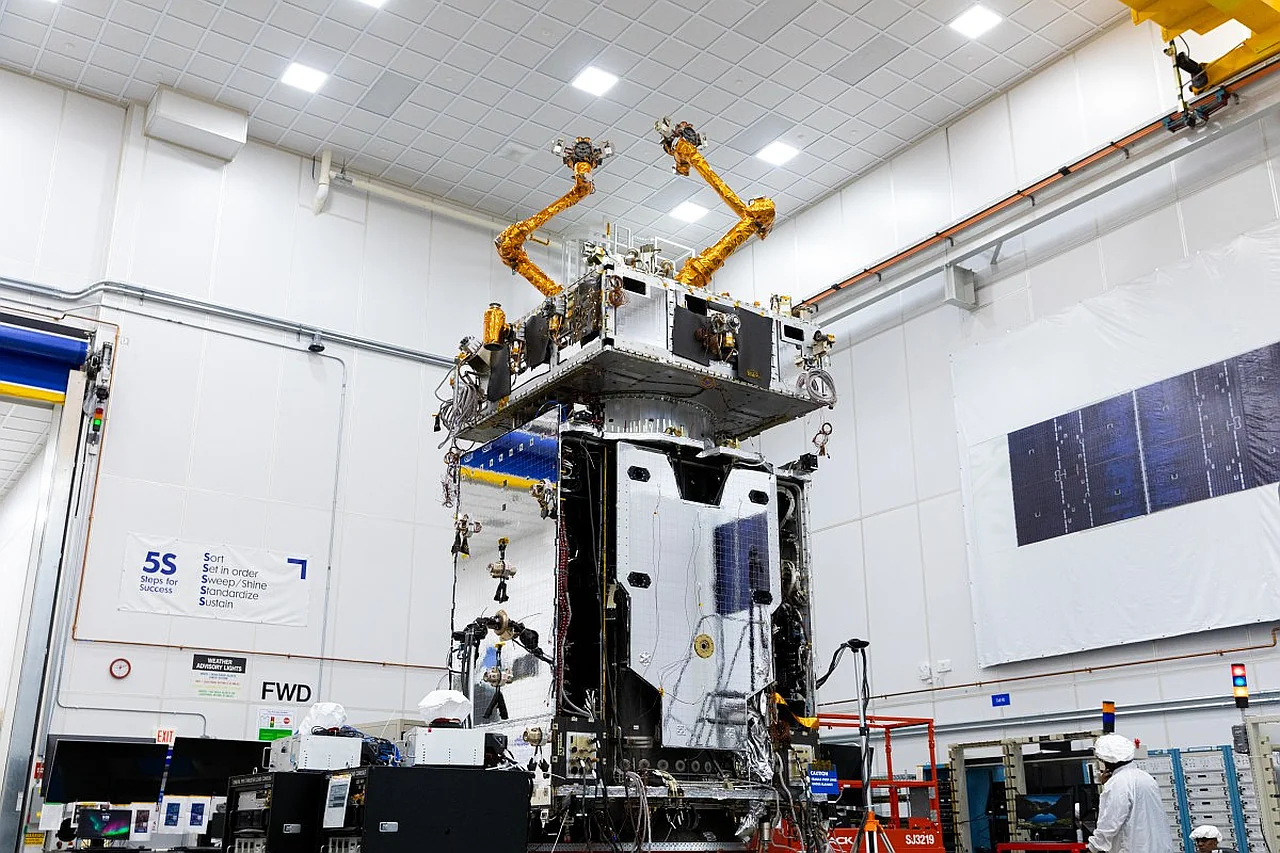
In July of this year, four new spacecraft from Northrop were launched into orbit using a SpaceX Falcon rocket. One of them is the Mission Robotic Vehicle (MRV), equipped with two advanced manipulators and developed by the US military research organization DARPA. The other three are smaller satellites called Mission Extension Pods (MEP), consisting of modular propulsion systems.Currently, these four spacecraft are heading to target orbits approximately 27 000 miles above Earth's surface. According to the plan, in 2027 the MRV will use its robotic arms to attach one of the MEP pods to the Optus satellite. This will ensure the device operates in orbit for many more years.
Sustainability in space and a new business model
Lower launch costs and decreasing prices of space components are turning in-space servicing missions into reality. According to Cassie Wong, director of logistics and servicing at Northrop, the main goal is to turn space into a sustainable environment and create infrastructure that allows for repairing satellites, extending their lifespans, or modernizing them.Currently, there are two MEV spacecraft in orbit, launched in 2019 and 2020, providing a decade of service life to three customers, including two Intelsat spacecraft and one Optus spacecraft. MEV-1 remains in a parking orbit to await its next client, while MEV-2 remains attached to its Intelsat client until 2030.
The new MRV spacecraft represents a significant evolution of the business model. Satellite operators now purchase MEP pods that attach directly and permanently to their spacecraft. This allows the MRV device to service multiple other vehicles simultaneously, lowering the cost of the service.
Such complex operations require high technological capabilities. Two spacecraft, moving at speeds of thousands of miles per hour, must autonomously approach each other and dock safely. While MEV devices use a special probe to connect to the satellite's thruster nozzle, MRV devices must carefully attach MEP pods using robotic arms.


Comments 0
…