


The Abu Dhabi talks between Ukraine, Russia, and the United States have concluded
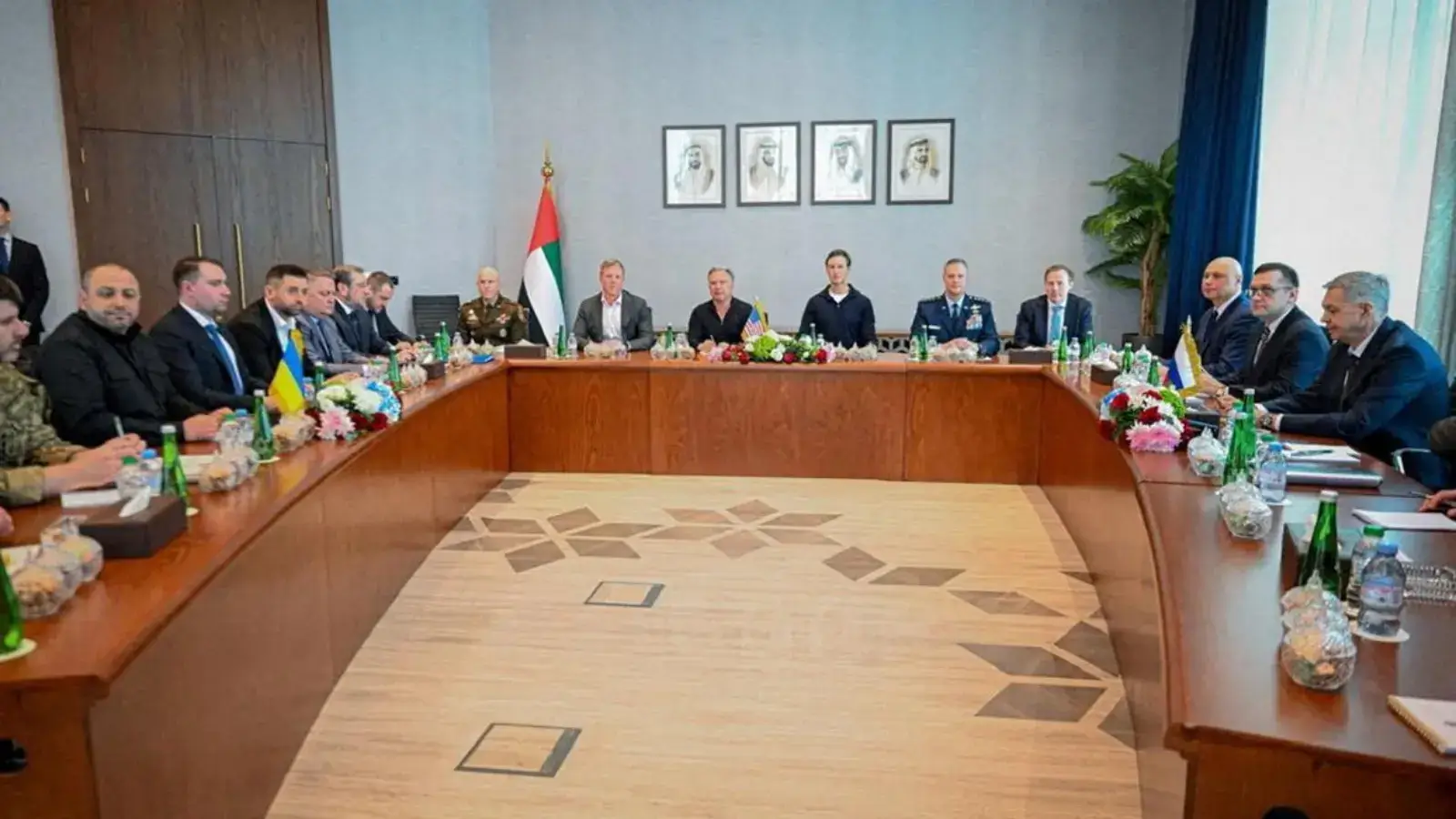
On February 4-5, the second round of trilateral negotiations was held in Abu Dhabi, United Arab Emirates, with the participation of delegations from Russia, Ukraine, and the USA. The meetings were held in a closed format, and discussions mainly revolved around mechanisms that could lead to a ceasefire and further steps.
The composition of the parties was also noteworthy. The US delegation included the president's special representative, Stephen Whitkoff, Donald Trump's son-in-law, Jared Kushner, and US Secretary of Defense, Daniel Driscoll. The Ukrainian delegation was headed by MXMK Secretary Rustem Umerov. From the Russian side, the delegation was headed by the head of the General Directorate of the General Staff of the Armed Forces of the Russian Federation, Admiral Igor Kostyukov.
The most important aspect is that, following the results of the negotiations, each side made its own statement, and a general picture is gradually forming from them: there is an approach to an agreement, but the key issues are still hotly debated.
What did the USA say?
According to a brief but substantive statement by the president's special representative, Stephen Whitkoff, the delegations raised issues that remained open. Among them are monitoring methods that allow monitoring ceasefire and cessation of hostilities.
One of the biggest signals was that negotiations would continue in the coming weeks. In addition, it was noted that Russia and Ukraine have agreed for the first time in five months on the exchange of prisoners of war: in the format of 157 to 157.
There is another important point in Whitkoff's statement: the US also mentioned the issue of restoring the severed high-level ties with the Russian military as an agreement. This means that in subsequent stages, communication "channels" may become more open.
What is Ukraine's position?
President Volodymyr Zelenskyy stated that the Ukrainian negotiating group had spoken with the US and Russia for two days. He emphasized that he is waiting for a full report and that it is impossible to discuss everything by phone.
Zelenskyy also stated that further meetings are planned for the coming days and did not rule out the possibility of them taking place in America.
The main emphasis in the Ukrainian statement was on one thing: peace should end in such a way that it is not "rewarded" for Russian aggression. Kyiv sees this as a fundamental principle ensuring real security. That is, the idea was put forward that peace should not only be a stop, but also a solution that eliminates subsequent threats.
Russian official opinion
The statement of the special representative of the Russian president, Kirill Dmitriev, showed a different angle. He noted that "war instigators" in Europe and Great Britain are trying to interfere with the negotiations and the process.
According to Dmitriev, the more such attempts are made, the more positive movement and progress in the negotiations "shows." At the same time, he emphasized that active work is underway to restore relations between Russia and the USA in the economic sphere.
What do unofficial Russian sources say?
The state agency TASS and its sources covered the discussed topics in more detail: economic aspects, the territorial issue, and the ceasefire mechanism.
According to the sources, Russia sees the Donbas issue as part of a key agreement, and the position that all countries should declare it Russian is mentioned.
It was also noted that the "peacekeeping forces" option is not perceived equally for everyone. Alternatively, the rapid response mechanism of multinational forces is mentioned as a security guarantee for Ukraine.
There is another point in the unofficial part: it is noted that Europe has repeatedly tried to join the process, but is currently absent from the negotiating table.
What is the most important thing?
After the meetings in Abu Dhabi, one thing became clearer: the parties had no intention of cutting off communication, and even an agreement on the exchange of prisoners was mentioned as a practical step. But still, the "big hub" - the territory, security guarantees, and a real-world ceasefire mechanism - is at a critical juncture.
For now, the negotiations are going like a "roadmap": everyone keeps their red line, but doesn't close the door. So, everyone is now interested in whether the next meetings will really become a "stage of decisions" or whether the debates will continue for a long time.



Comments 0
…