


Xi Jinping Concludes Historic Two-Day State Visit to the DPRK
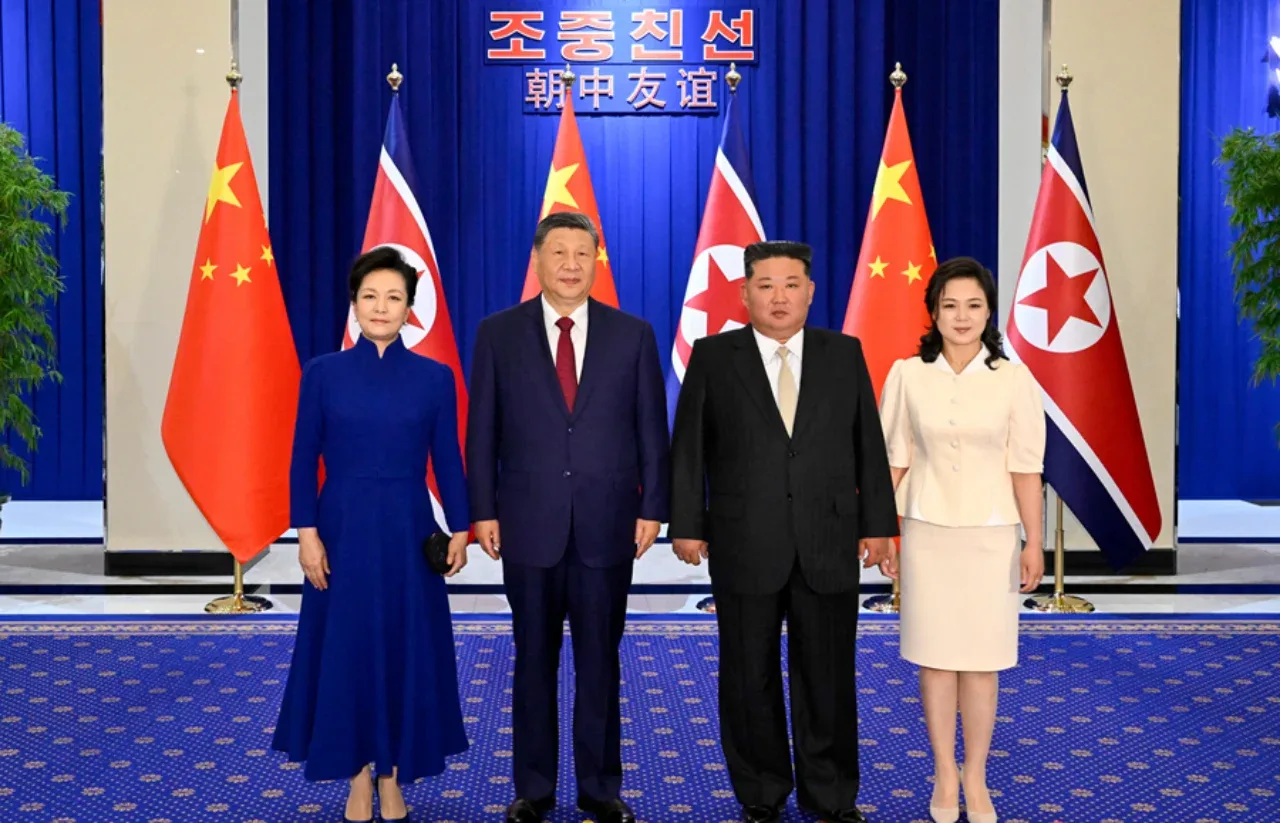
A historic and sensational event that resonated deeply across the Asian continent and global geopolitics has come to an end. President of the People's Republic of China Xi Jinping has successfully concluded his long-awaited two-day official state visit to the Democratic People's Republic of Korea (DPRK). This was the Chinese leader's second high-level visit to North Korean soil (following his June 2019 visit). Most importantly, this mission marks Xi Jinping's first foreign visit of 2026. This high-level meeting was dedicated to the 65th anniversary of the historic 'Treaty of Friendship, Cooperation and Mutual Assistance' signed between the two powerful nations in 1961.
The visit, which was the focus of Western and international media, took place in an atmosphere of unprecedented solemnity, grandeur, and deep symbolism, characteristic of North Korea's unique diplomatic protocol. Demonstrating to the world that they share identical and unanimous views on the most important and pressing international issues, the leaders of the two countries outlined strategic plans to further deepen their bilateral partnership.
Detailed chronology of the meetings in Pyongyang
June 8, 2026:
First meeting: President Xi Jinping's private plane landed successfully at Pyongyang International Airport. The high-ranking guest and his wife, Madame Peng Liyuan, were greeted with great respect at the airport exit by DPRK leader Kim Jong Un and his wife, Ri Sol Ju.
A parade of thousands: A magnificent welcoming ceremony was organized at the country's main square, Kim Il Sung Square. It featured a special honor guard, a military band, a ceremonial parade of troops, and thousands of Pyongyang residents holding flags of both countries, beautiful flowers, and giant portraits of the leaders. The city streets were adorned in festive attire.
Negotiations and banquet: The leaders of the two countries held official consultations, first in a closed 'one-on-one' format, and then with the participation of comprehensive delegations. In the evening, a high-level state banquet was held at the luxurious 'Mokran' residence, where toasts were raised for eternal friendship, regional stability, and socialist ideals. The day's program concluded with a charming concert by the DPRK's finest artistic and musical groups.
June 9, 2026:
Memory of friendship: On the second day of the visit, Xi Jinping visited the China-Korea Friendship Tower, built in honor of the brave Chinese volunteer soldiers who fought side-by-side against Japanese occupation and died in the war, and laid wreaths.
Speech and conclusion: The Chinese leader delivered a lecture to students at the Central Higher School for Cadre Training of the Workers' Party of Korea. Following this, final negotiations took place, and numerous important documents aimed at expanding practical cooperation between the two states were signed. In the evening, the Chinese delegation left Pyongyang after an official farewell ceremony.
Important statements and signed agreements from the two leaders
During the high-level dialogue, Xi Jinping systematically noted that the relationship between China and the DPRK is an 'invincible friendship' that has heroically stood the test of time and history. He emphasized the need to fight together against external hegemonism and imperialist pressures, to firmly defend state sovereignty and territorial integrity, and stated that the time has come to take relations to 'new heights'.
In turn, Kim Jong Un declared Beijing to be Pyongyang's 'most important strategic partner' and the top priority in the country's foreign policy. Expressing gratitude for this sincere visit, the North Korean leader promised that Pyongyang would always unconditionally support Beijing on all important and controversial issues in the international arena.
AS A RESULT, THE PARTIES AGREED TO EXPAND COOPERATION IN THE FOLLOWING MOST PROMISING AREAS:
Economy and trade: Increasing the volume of mutual trade, investment flows, and strengthening economic integration.
Agricultural sector: Developing agriculture, ensuring food security, and jointly overcoming the consequences of international sanctions.
Infrastructure: Construction of major roads, modernization of energy systems, and expanding the capacity of seaports.
Medicine and science: Healthcare, modern pharmaceuticals, and the exchange of innovative medical technologies. High technologies, education system, and training of qualified personnel.
Humanitarian sphere: Culture, tourism, sports projects, and constant exchanges between the youth of the two nations.
Analysis of the economic and geopolitical context
Economically, China holds an absolute priority position in the North Korean economy, single-handedly providing nearly 90 percent of the DPRK's foreign trade turnover. After short-term declines caused by the global pandemic and international sanctions, the supply chain has now been fully restored. Railway and air traffic between the two have been actively launched. Experts believe that the joint projects to be launched following this visit will serve as an important 'lifeline' and foundation for definitively stabilizing the North Korean economy.
From a geopolitical perspective, this visit coincided with a period when DPRK-Russia relations are strengthening significantly in the military-political sphere. Many international political analysts assess this move by Xi Jinping as a very wise and strategic maneuver by Beijing aimed at maintaining its traditional strong influence on the Korean Peninsula and preventing Pyongyang from leaning too heavily toward Moscow. Although the DPRK's controversial nuclear and missile programs were not officially discussed openly, experts have no doubt that this topic was thoroughly reviewed behind closed doors.
The bonds of friendship between the two countries have a rich history of over 70 years, with China providing decisive military aid to the North during the Korean War of 1950–1953. Even today, this alliance serves as a key factor in maintaining peace in the region. DPRK state media recognized this visit as the 'historic unity of great peoples'.
Follow the latest dramatic changes in international politics, meetings of global leaders, and the hottest exclusive news in our region with us on the Zamin pages!



Comments 0
…