


Trump's Tariff Policy Deals a $200 Billion Blow to the US
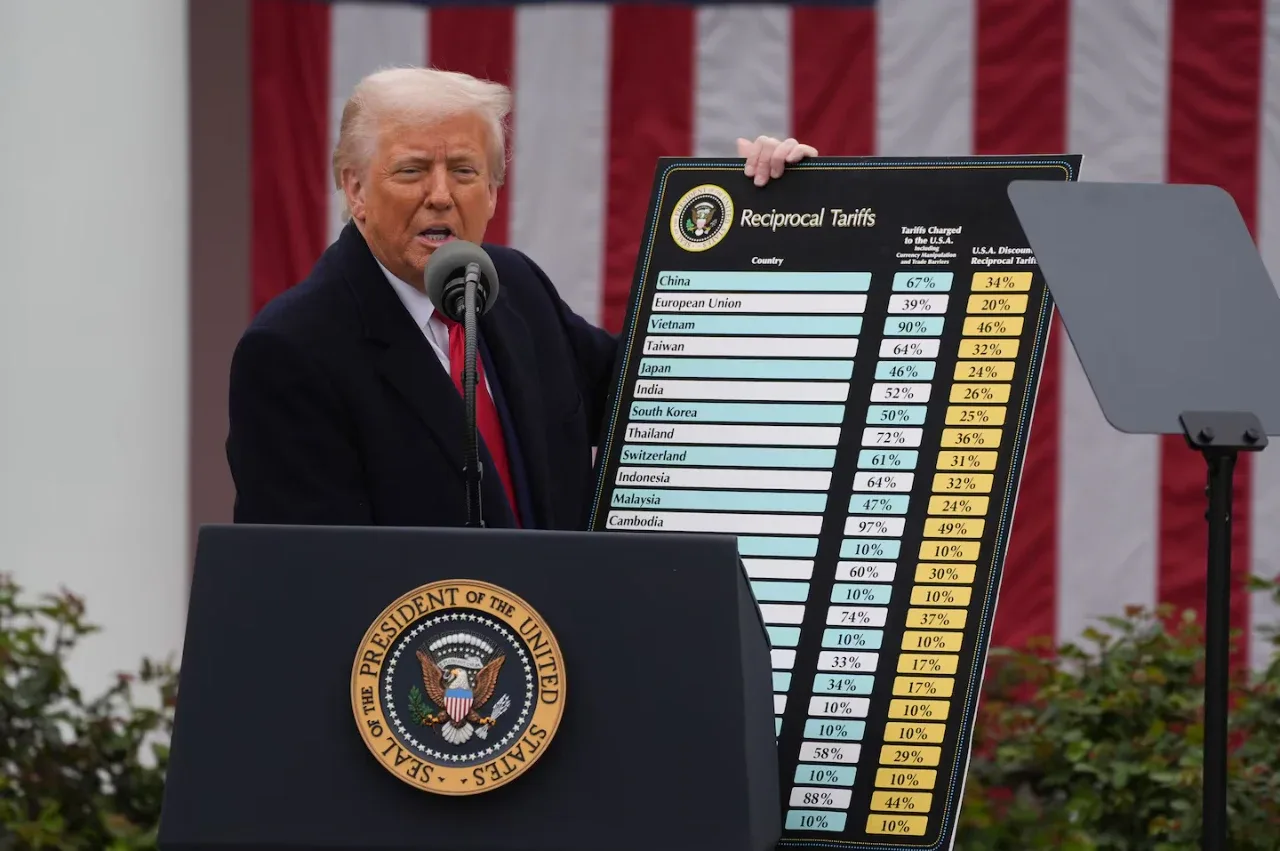
Import tariffs, which the Donald Trump administration touted as a major source of revenue, have begun to backfire on the US budget. After the Supreme Court ruled the comprehensive duties illegal, the government is returning tens of billions of dollars to importers.
However, the situation is slightly more complex than described by political analyst Malek Dudakov. While the return of tariff revenues is a fact, the conclusions that the SNAP program has "run out of money" and that all remaining funds are being spent on the war with Iran are not confirmed official facts.
Why is the US returning tariff money?
In February 2026, the US Supreme Court struck down the comprehensive tariffs Trump had imposed by relying on emergency economic powers. The court concluded that the president does not have the authority to impose duties on almost all imports under that law without explicit Congressional authorization.
Following this, the Court of International Trade ruled that American importers who paid the tariffs are entitled to a refund.
According to various estimates, the total amount that could be returned is:
by the most conservative estimates — around $166 billion;
in budget analysts' calculations — $168–182 billion;
in some high-end estimates — nearly $200 billion.
Thus, the $200 billion potential loss mentioned by Dudakov is not a completely fabricated figure. However, the US Treasury has not yet fully returned the $200 billion.
The main difference is this: $200 billion is a potential upper limit, not the amount of payments already made.
In June, tariff revenue turned negative
According to US Treasury data, $23.6 billion in gross customs duties were collected in June. However, because $49.2 billion was returned to importers, net tariff revenue was minus $25.6 billion.
In May, approximately $22 billion was also returned. As a result, the US federal budget ended June with a $120 billion deficit, compared to a $27 billion surplus in the same month last year.
This situation creates dual pressure for the Trump administration:
it must return previously collected tariff funds;
simultaneously, it is attempting to compensate for lost revenue through new duties.
How did the White House return new tariffs?
After the Supreme Court ruling, Trump introduced a temporary 10 percent import surcharge for 150 days. This measure was based on a different section of the Trade Act of 1974 and expired at the end of July.
On July 23, the White House approved new tariffs on goods from 60 economies:
for some countries — 10 percent;
for other countries — 12.5 percent;
for the European Union, Japan, and several partners, rates adjusted to existing agreements.
The new duties were justified by restricting products made through forced labor and were introduced under Section 301 of the 1974 Act.
At the same time, numerous exemptions were granted for critical raw materials, energy, fertilizers, certain food products, and goods not sufficiently produced in the domestic market.
Will the new tariffs fully cover the old revenue?
Not yet.
The new tariffs are projected to bring in approximately $105 billion annually. In the long run, they may cover about 60 percent of the revenue expected from the previous tariff plan.
According to the Committee for a Responsible Federal Budget:
Indicator | Estimated Amount |
|---|---|
Expected revenue from the previous tariff plan | $1.7 trillion |
Expected revenue from new measures | $950 billion |
Resulting long-term gap | $825 billion |
Therefore, the new duties will partially mitigate the budget loss but cannot fully close it.
Why have exemptions for major importers increased?
Dudakov believes the White House is exempting many products from tariffs to avoid further lawsuits from major retail chains and importers.
This is a political interpretation. However, official documents also state that exemptions are set for goods that could harm the domestic economy, lead to product shortages, or cause sharp price increases.
The new tariffs were adopted based on a more thorough legal process than the previous ones:
a multi-month investigation was conducted;
more than 1,600 comments were received from businesses and the public;
over 100 witnesses participated in open hearings;
tariffs were separated into individual legal decisions for each economy.
This shows that the White House tried to reduce the risk of all tariffs being canceled by a single court decision in the next legal battle. But lawyers do not rule out that the new duties could also be challenged in court.
Is the SNAP program really running out of money?
The text claims that the SNAP program, which provides food assistance to low-income Americans, is running out of funds. This statement does not fully reflect the situation.
From July 2025 to April 2026, the number of SNAP participants did indeed decrease by more than 4.5 million—nearly 11 percent. This figure was calculated based on data from the US Department of Agriculture and the states.
However, the decline is not because money simply "ran out" in the program. One of the main reasons, based on a law passed in 2025, is:
tightening work requirements;
re-verifying participants;
limiting the eligibility of certain categories;
shifting more costs to the states.
Therefore, the correct phrasing is that SNAP coverage is shrinking sharply. The claim that "the money is completely gone" is not yet confirmed.
How much did the Iran war cost the budget?
According to the Pentagon, the US military campaign against Iran cost $37.5 billion through the end of July. The Department of Defense has requested an additional $67.1 billion from Congress for the war, ammunition, drones, and other expenses.
The financial pressure at the Pentagon is real:
some funds may run out within a few weeks;
restrictions on training and maintenance costs have begun;
there is disagreement in Congress over allocating additional funds.
But the conclusion that "all the remaining budget is going to the Iran war" is exaggerated. Part of the supplemental funding request is also intended for other military programs, replenishing weapon stockpiles, and domestic operations. According to CSIS analysis, about one-third of the White House's $87.6 billion total request is directly related to war costs.
Tariff policy is becoming a political problem for Trump
In the current situation, the Trump administration is trying to solve four problems at once:
returning tariffs that were found to be illegal;
re-imposing duties on a new legal basis;
finding additional funds for the Iran war;
mitigating dissatisfaction following the cuts to social programs.
It is too early to say that the tariffs themselves are leading the US Treasury to disaster. However, it is clear that a policy previously presented as budget revenue has now turned into billions of dollars in refunds, new legal risks, and long-term revenue shortfalls.
The White House is rebuilding the tariff wall. But this time, the price of each brick is much higher—and in the end, the state, businesses, or the American consumer will pay the bill.



Comments 0
…