


US Supreme Court Overturns Trump's Citizenship Order
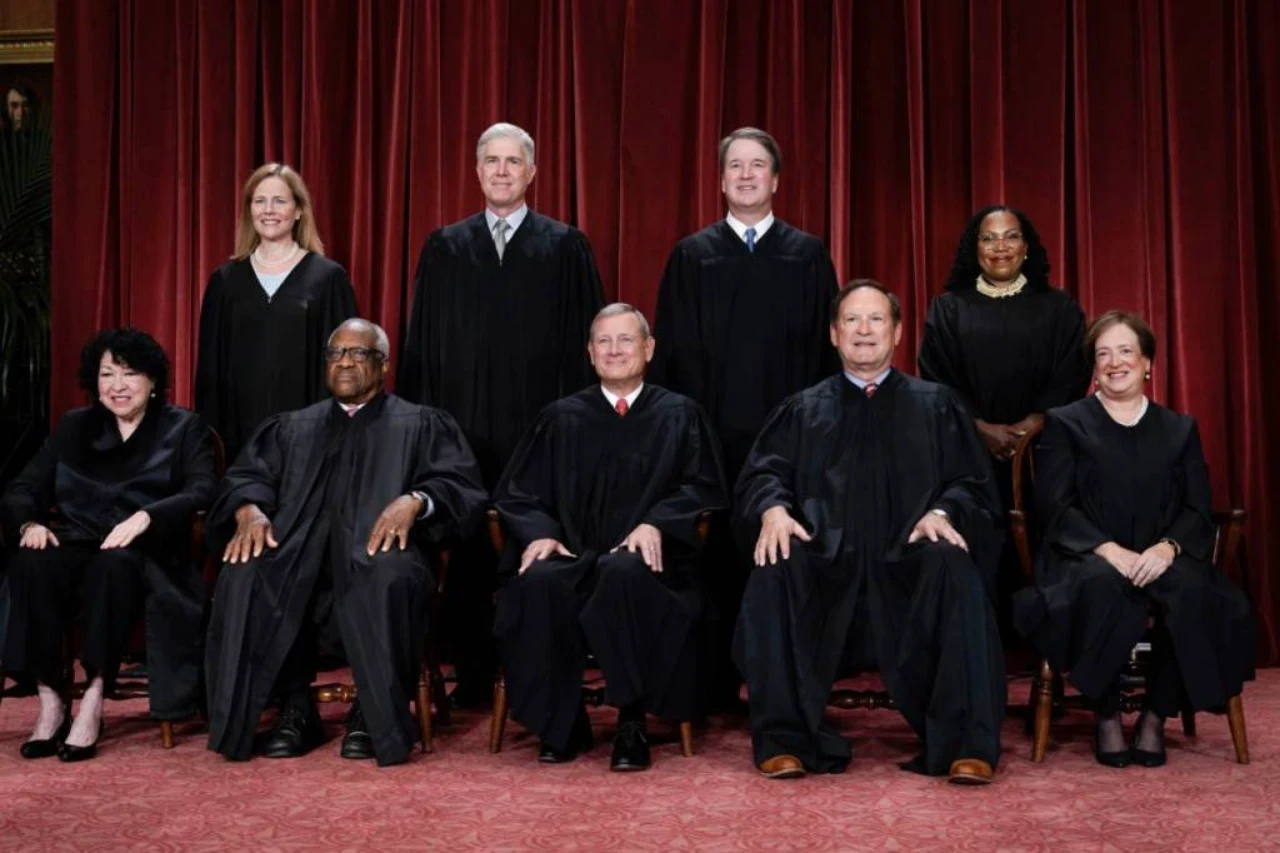
The US Supreme Court has blocked the implementation of President Donald Trump's order aimed at restricting automatic citizenship for some children born within the country's borders.
According to the decision reached on June 30, the right to obtain citizenship based on place of birth is guaranteed by the 14th Amendment to the US Constitution. The judges adopted the decision by a vote of six to three.
What did Trump's order entail?
Donald Trump signed the citizenship order after returning to the White House on January 20, 2025.
According to the document, automatic American citizenship would not be granted to children whose mother was in the US illegally or on a temporary status, and whose father was not a US citizen or permanent resident.
In other words, if neither parent was a US citizen or a 'green card' holder, the citizenship of a child born on US soil could be denied by government agencies.
However, after the initiative was signed, it was challenged in court by several states, civil rights advocates, and immigrant families.
The Supreme Court relied on the Constitution
The majority of the court emphasized that the presidential order contradicted the 14th Amendment of the US Constitution.
According to this constitutional norm, persons born in the US and subject to the jurisdiction of the country are considered US citizens. This rule has been widely applied since the end of the 19th century.
Chief Justice John Roberts wrote the opinion on behalf of the majority. The court also upheld the legal approach established in the 1898 Wong Kim Ark case. According to this, almost all children born in the US, with a few exceptions such as children of diplomats, acquire citizenship.
The decision was passed by six votes to three
Six members of the Supreme Court supported preserving the right to citizenship by birth. Three judges dissented.
Thus, one of the most controversial citizenship initiatives of the Trump administration has suffered a serious legal defeat.
Previously, in June 2025, the Supreme Court had not issued a final ruling on the substance of the order, only limiting the authority of lower courts to apply nationwide injunctions. The decision on June 30, 2026, directly addressed the substance of the right to citizenship.
What does birthright citizenship mean?
Birthright citizenship means that a person automatically becomes a citizen of a specific state at the moment they are born.
In international practice, there are two main principles for determining citizenship.
Jus Soli (Right of the Soil)
Under the 'jus soli' principle, citizenship is determined by where the child is born.
According to the system in place in the US, a child born on the country's territory is usually considered a US citizen, regardless of the parents' citizenship or migration status.
There are some exceptional cases, such as children of foreign state representatives with diplomatic immunity.
Jus Sanguinis (Right of Blood)
Under the 'jus sanguinis' principle, the primary criterion is not the child's place of birth, but the citizenship of the parents.
This approach is predominant in many European and Asian countries. If one or both parents are citizens of a particular state, the child acquires citizenship in accordance with the law.
In Uzbekistan, parental citizenship is also important in determining citizenship. Being born on the country's territory alone does not automatically grant Uzbek citizenship in all cases.
What will be the fate of Trump's initiative?
The Supreme Court's decision eliminated the possibility of implementing the presidential order. Now, a simple presidential order will not be enough to seriously change the birthright citizenship system.
This may require a much more complex political and legal process, such as passing a new law through Congress or amending the Constitution.
Thus, the practice of granting automatic citizenship to children born in the US remains unchanged for now.



Comments 0
…