


Unique 320,000-year-old findings discovered in Bostanliq
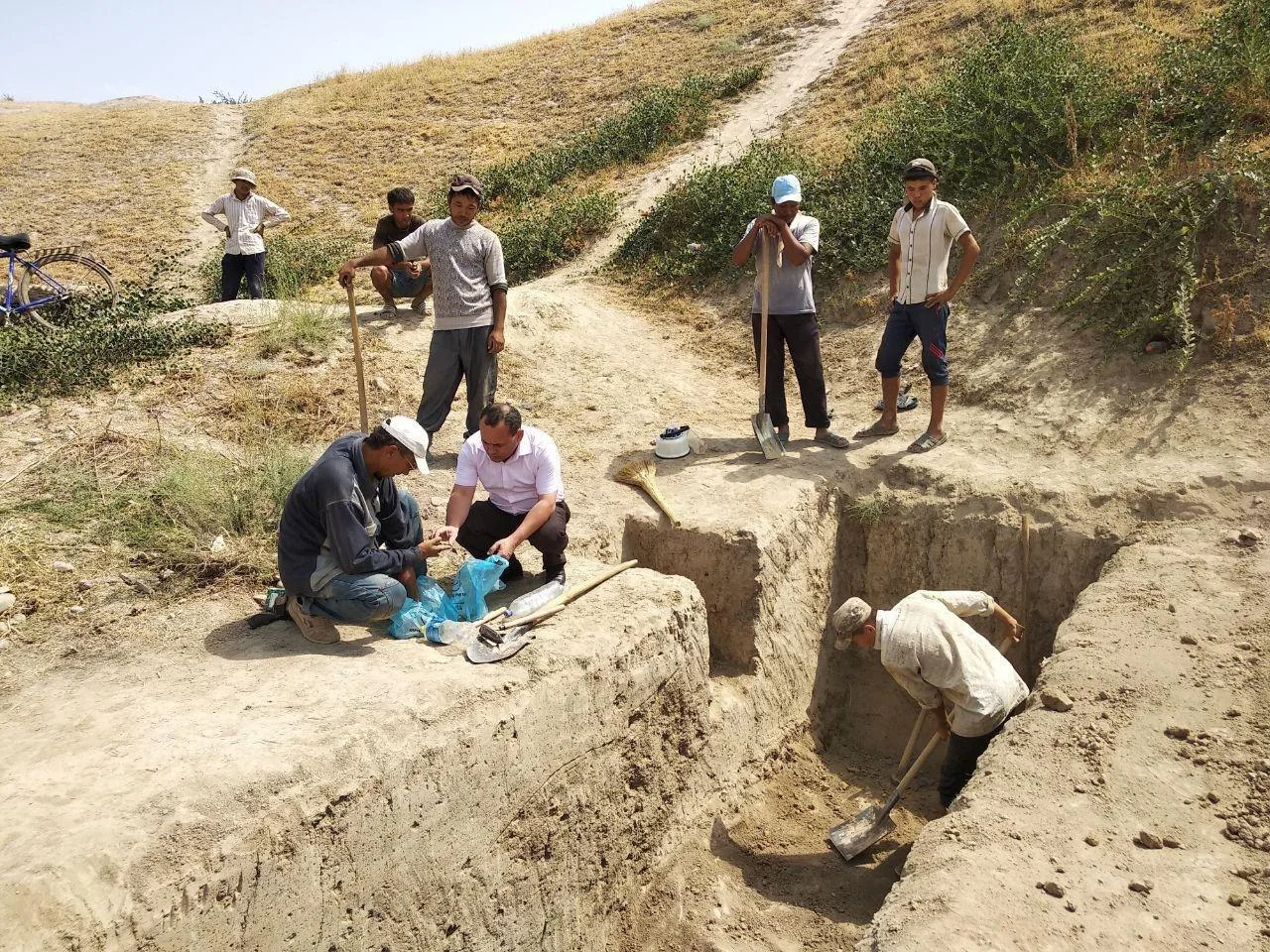
At the Arkutsoy Paleolithic site in the Bostanliq district of the Tashkent region, from a layer formed 320,000–280,000 years ago, stone tools processed by ancient humans were found. If this date is confirmed by laboratory analysis, Arkutsoy in Uzbekistancould be recognized as the oldest Paleolithic site. This was reported by the Academy of Sciences of Uzbekistan.
It is reported that the unique findings were discovered during joint research by specialists from the Institute of Anthropology of the Academy of Sciences of Uzbekistan and the Institute of Archaeology and Ethnography of the Siberian Branch of the Russian Academy of Sciences.
Targeted archaeological research on the Arkutsoy site began in 2024. Currently, excavation and observation work is being carried out in three separate areas.
During the research, stone artifacts processed by humans were found in the first, second, and third ancient soil layers of the site. This may indicate that ancient humans inhabited this area in several stages during different periods.
According to the preliminary geological and paleoclimatic assessments of the experts, the third layer was formed 320,000–280,000 years ago. formed.
During previous studies, some stone artifacts were also found in layers at depths of 20 and 40 meters. However, because their exact stratigraphic position was not sufficiently documented, it was difficult to reliably determine the period to which the findings belonged.
Scientists note that the new findings are of great importance in studying the spread of ancient humans across the Central Asia region, as well as their adaptation processes to various natural and climatic conditions.
At the same time, by studying loess and ancient soil layers together with archaeological findings, it is possible to determine the connection between ancient human activity, climate change, and landscape development.
If the 320,000–280,000-year date is confirmed by independent laboratory analysis, this will be important scientific evidence showing that ancient humans inhabited the Tashkent oasis and the territory of modern Uzbekistan as early as 320,000 years ago.


Comments 0
…