


A Turning Point: Kazakhstan and South Korea Transition from Raw Material Sales to a Complete Industrial Cycle
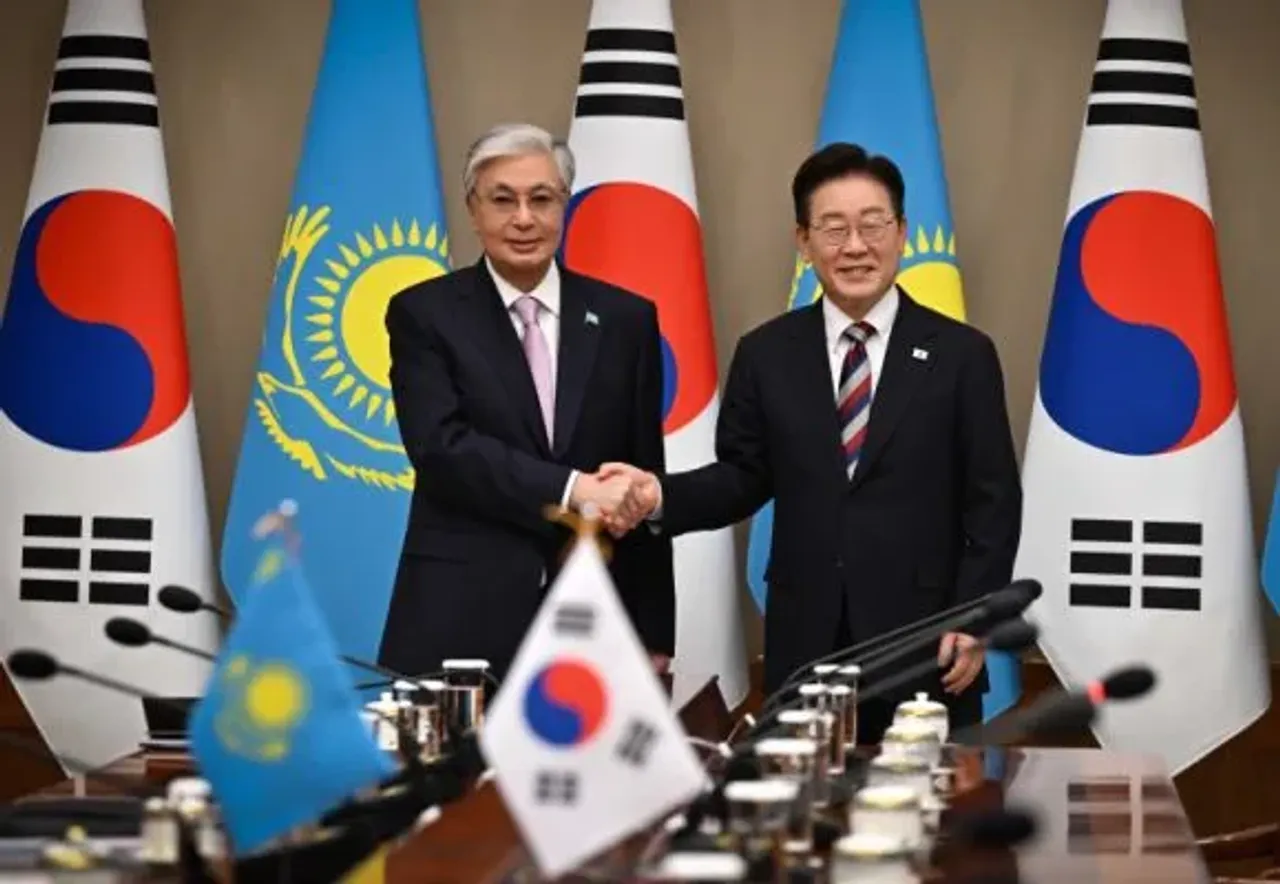
Economic ties between Central Asia and the leading nations of East Asia have entered a qualitatively new, strategic phase. Within the framework of the historic visit by President of Kazakhstan Kassym-Jomart Tokayev to South Korea, high-level negotiations held in Seoul with President Lee Jae-myung, the «Central Asia — Republic of Korea» summit, and meetings with leaders of technological giants culminated in the signing of major commercial agreements totaling nearly $19 billion.
Most importantly, bilateral relations were officially elevated to the status of a «future-oriented comprehensive strategic partnership.» Behind these figures lies a fundamental shift in the philosophy of cooperation: the parties are abandoning the simple raw material exchange model and transitioning to a format of joint production of high-value-added products and the introduction of Korea's advanced technologies into the country. Korean investments already accumulated in Kazakhstan exceed $12 billion, with over 1,000 joint ventures operating.
In accordance with the new agreements, cars will not only be assembled in Kazakhstan from now on, but components such as seats, wiring, doors, and bumpers will be fully localized. In addition, a massive $6 billion gas processing plant will be erected in Karachaganak, and deep processing of rare metals critical for semiconductors and batteries will be established.
So why is Seoul relying specifically on Kazakhstan's resources to reduce its dependence on China, how will the $19 billion investment transform Central Asia's automotive industry, and can Astana swiftly transform into a high-tech state?
«No raw materials — technology, a $6 billion gas plant, and rare metals»: 5 key points of the historic visit
The primary strategic facts from the summit and signed contracts in Seoul include:
A $19 billion package: The parties signed a record number of commercial deals in mechanical engineering, energy, and advanced technologies;
The «Resources — Technologies — Industry» formula: Proposed by President Tokayev, this model envisions not merely exporting products, but completing all production stages domestically;
Full localization in automotive manufacturing: Localization centers producing seats, wheels, doors, and bumpers for Kia and Hyundai models will open in Almaty and Kostanay;
The $6 billion Karachaganak project: A massive gas-chemical plant will be built through cooperation between QazaqGaz and Hyundai Engineering, to be commissioned by 2030;
Critical minerals and microchips base: Joint processing enterprises for all 10 types of rare metals deemed strategic in South Korea will be established in Kazakhstan, alongside a Research and Development Center in Almaty.
Kazakhstan — South Korea: Indicators of economic and technological cooperation
Current trade and new project indicators between the parties:
Criteria and Directions | Current Status and Indicators | New Goals for 2026–2030 |
Partnership Status | Strategic Partnership | Future-oriented Comprehensive Strategic Partnership |
Signed Contracts | Regular economic trade | Nearly $19 billion commercial package |
Mutual Trade Turnover | $3.17 billion in 2025 (H1 2026: $1.3 billion) | Double the volume of trade turnover |
Automotive Industry Sector | Assembly of 170k cars/year (mainly SKD assembly) | Full component localization and the new Tucson |
Rare and Noble Metals | Export of raw materials in ore form only | Production of finished components for batteries and chips |
Energy Sector | Direct oil and gas trade | $6 billion gas plant in Karachaganak (by 2030) |
Volume of Korean Investments | Accumulated funds exceeding $12 billion | Expansion of industrial clusters and smart city technologies |
Geopolitics and Industrial Expertise: Why these deals are a turning point for Central Asia
Conclusions by international economists and security experts:
Seeking alternatives to the China supply chain: South Korea was overly dependent on Beijing for rare metals necessary for microchips, semiconductors, and electric vehicles; access to Kazakhstan's resources creates an opportunity for Seoul to ensure its national security;
An opportunity to escape the «resource curse»: Astana does not want to remain merely an oil and uranium-extracting state; partnership with Korea offers the chance to directly adopt the know-how and manufacturing culture of a nation that transformed from a backward state into a global technological superpower within a single generation;
Central Asia's logistics hub: At a time when traditional routes between Europe and Asia are encountering geopolitical obstacles, Korea is interested in developing Central Asian transport corridors;
Positive spillover effect for neighboring republics: The creation of a major gas-chemical plant and a base for Korean auto components in Kazakhstan expands additional integration opportunities for the entire region, particularly the automotive and electrical engineering sectors of Uzbekistan.
This colossal $19 billion leap between Kazakhstan and South Korea boldly propels the regional economy away from raw material dependence and toward the era of high technologies.
In your opinion, can Kazakhstan become an industrial hub producing microchips and high-tech goods with the help of South Korean technologies in the coming years? How effective will Tokayev's advanced «finished products instead of raw materials» strategy be? Leave your personal thoughts in the comments and share this important analysis regarding the economic future of our region with all your friends and industry enthusiasts!



Comments 0
…