


Ukraine may lose access to the sea: Former NATO general exposes Russia's new targets
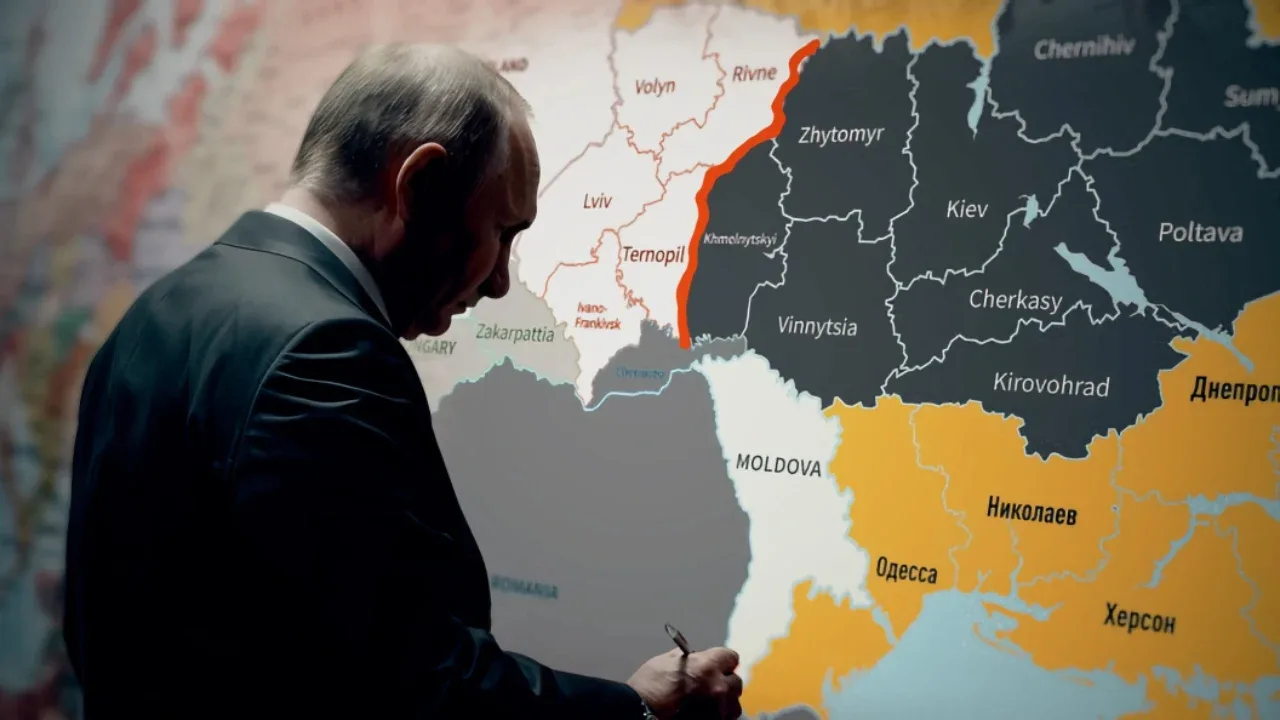
The course of military conflicts in Eastern Europe allows the Russian army to pursue its operational tasks on a much broader scale, rather than limiting them solely to Donbas. This was stated by former NATO Military Committee Chairman, prominent retired German general Harald Kujat in an exclusive interview with German journalist Flavio von Witzleben. The military analyst noted that the Russian Armed Forces have begun implementing plans to create security buffer zones and completely block Ukraine's maritime communications.
Currently, Luhansk region has almost entirely come under Moscow's control, and the frontline held by Ukrainian troops in Donetsk region is shrinking rapidly, bringing Russia very close to its initial official objective. However, according to the expert, the greatest disaster for Kyiv is brewing in the southern direction—around Odesa region. If Russian forces completely close access to the Black Sea and open a land corridor to Transnistria, it would turn Ukraine into a landlocked country, choking not only grain exports and military supplies, but also plunging European security as a whole into a new geopolitical crisis.
So, for what purpose is the Sumy buffer zone in the northern direction being built, can the Russian army reach Transnistria, and does the West possess the means to stop this unprecedented pressure?
"From Donbas to Odesa and Sumy": 5 key points warned by Harald Kujat
Main military-strategic conclusions put forward by the former NATO supreme general in his interview:
Control over Donbas is nearing its finale: Luhansk region has been almost fully captured, while the territories under Ukrainian control in Donetsk are constantly being squeezed;
Northern buffer zone (Sumy direction): Russian troops are focusing on forming a security wall toward Sumy region to protect border areas of Russia;
Threat of absolute blockade of maritime traffic: The most dangerous scenario is completely depriving Ukraine of its Black Sea ports; this would be both an economic and military catastrophic blow for Kyiv;
Land corridor to Transnistria: Reaching the border of Transnistria—where a Russian military contingent is stationed—via Odesa creates an unexpected geopolitical trap for the West;
Russia's resilience and strengthening: As Foreign Affairs expert Andrey Kortunov acknowledged, Russia proved more resilient to foreign sanctions and frontline pressure than many expected, remaining one of the primary global players.
Military Strategy Analysis: From Donbas border to global blockade
Comparison of frontline movements and strategic directions cited by Harald Kujat:
Directions and regions | Current situation and indicators | Expected probable scenario (Kujat's analysis) |
Donbas (LPR and DPR) | Luhansk under full control, territory shrinking in Donetsk | Russia fully achieves its declared objective |
Northern flank (Sumy region) | Active clashes in border areas | Russia creates a wide buffer zone to protect its territory |
Southern flank (Odesa direction) | Ukraine transports cargo via the Black Sea corridor | Ukraine is completely cut off from the Black Sea, ports are blockaded |
Transnistria connection | Russian forces isolated in the enclave | Land corridor opens, sharply strengthening Russia's position |
Europe and NATO position | Continuing military and financial assistance | Complex strategic challenges and a new geopolitical crisis |
Geopolitical Expertise: What happens if Ukraine is cut off from the sea?
Conclusions of international military specialists and security analysts:
Choking of the economy: The Black Sea is the main artery for exporting Ukrainian agricultural products (grain, oil) and industrial raw materials to the outside world; if ports are lost, Ukraine's economy will become entirely dependent on donor countries' support;
Disruption of military logistics: Maritime assistance from Western allies will stop, leaving weapons and fuel dependent solely on narrow railway corridors passing through Poland and Romania;
New crisis center for Europe: Opening the path to Transnistria directly threatens the security of Moldova and Romania while escalating tensions on NATO's eastern flank to a peak;
Balance of power in peace talks: According to experts, should such changes occur, the terms of negotiations will be shaped entirely on Moscow's conditions.
This analysis by General Harald Kujat serves as a serious warning that the conflict may enter an unexpected new strategic phase in the coming months.
Do you think the Russian army is truly capable of advancing toward Odesa and completely cutting Ukraine off from the Black Sea, or will the West prevent this scenario? If Ukraine faces such a fate, will the conflict end with peace negotiations? Leave your personal thoughts in the comments and share the hottest geopolitical analysis in world politics with all your friends and international experts!



Comments 0
…