


Scientists calculate when Earth's oxygen will run out
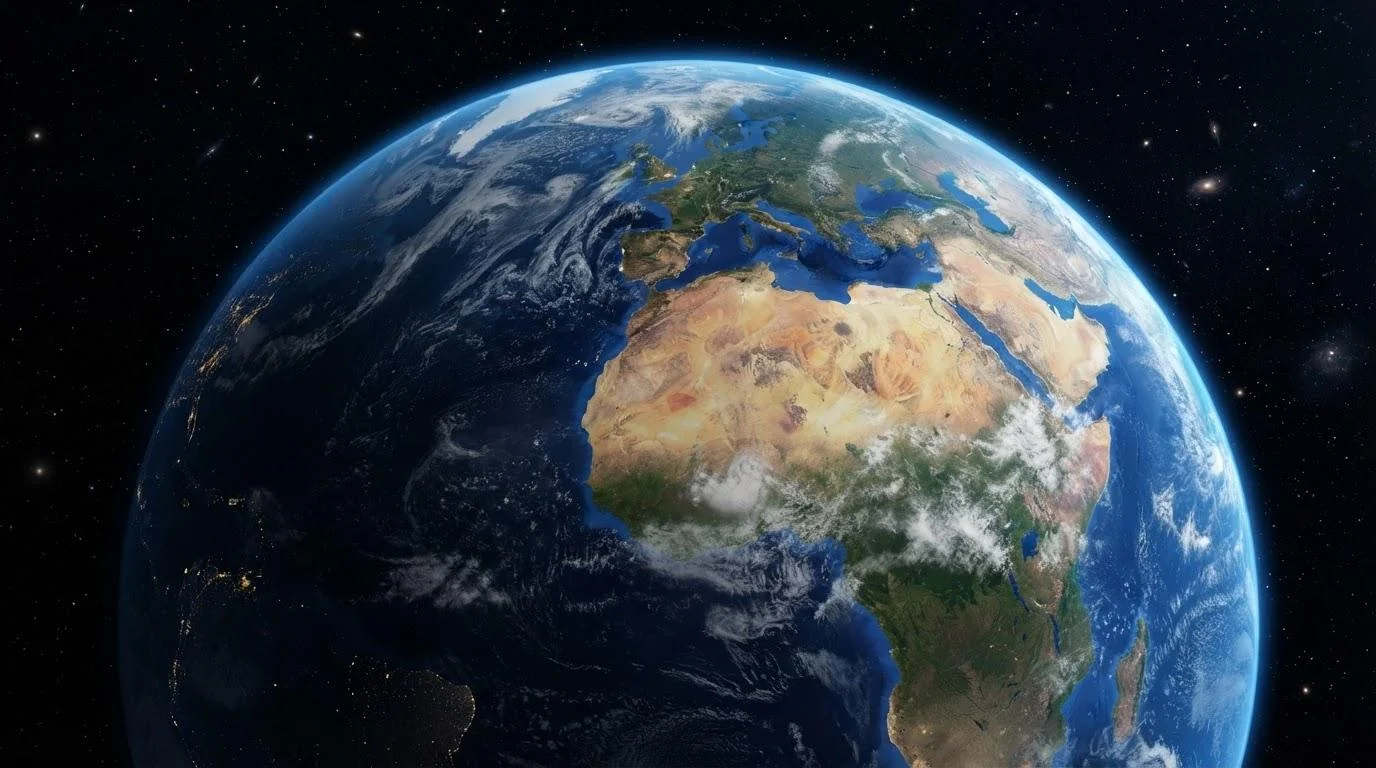
Earth's oxygen-rich atmosphere may persist for approximately another billion years, after which oxygen levels will drop sharply. According to scientific research published in the journal Nature Geoscience, our planet will eventually become uninhabitable for humans, animals, and most complex organisms. This conclusion was reached by scientist Kazumi Ozaki of Toho University and researcher Christopher Reinhard of the Georgia Institute of Technology while modeling the long-term evolution of Earth's atmosphere and biosphere. This is reported by Ixbt.com news.
It is known that modern life is inextricably linked to oxygen, and its current composition in the atmosphere did not form overnight. Approximately 2.4–2.5 billion years ago, a period known as the Great Oxidation Event began, and Earth's atmosphere gradually changed due to the activity of the first photosynthetic organisms. However, according to the researchers' calculations, the planet's current state is not permanent and will change fundamentally over time.
Solar activity and changes in the carbon cycle
Scientists created a special computer model that accounts for climate and biogeochemical processes, performing over 400,000 simulations under various initial conditions. One of the main factors for future changes is the gradual increase in solar brightness. As our star, currently a yellow dwarf, becomes increasingly bright, it will trigger climate changes and disrupt the usual balance of the global carbon cycle.As a result, the amount of carbon dioxide in the atmosphere will steadily decrease. Although CO2 is primarily associated with global warming today, it is an essential raw material for plants and other photosynthetic organisms. Over hundreds of millions of years, its concentration will drop to such a level that the process of photosynthesis will become extremely inefficient.
Sharp decline in oxygen and its consequences
The decline in the activity of photosynthetic organisms will lead to a reduction in the amount of oxygen they produce. According to the modeling results, this process will reach a critical stage in about a billion years, and the concentration of oxygen in the atmosphere will drop rapidly. After this deoxygenation process, Earth will in many ways resemble its state before the Great Oxidation Event.The atmosphere will contain very small amounts of oxygen and carbon dioxide, while methane levels will increase. At the same time, the modern ozone layer, which is linked to the presence of molecular oxygen, will disappear completely. For humans, animals, and the vast majority of modern complex organisms, such conditions will be completely incompatible with life.
Nevertheless, life itself will not disappear from the planet entirely. Anaerobic microorganisms that do not require oxygen to obtain energy can continue their activity in an oxygen-depleted environment. Although scientists previously estimated that the loss of a favorable environment for complex life would occur in about two billion years, new computer models show that this process may happen much sooner.


Comments 0
…