


Revolt of the Practitioners: America's largest giant withdraws from Bill Gates' nuclear project
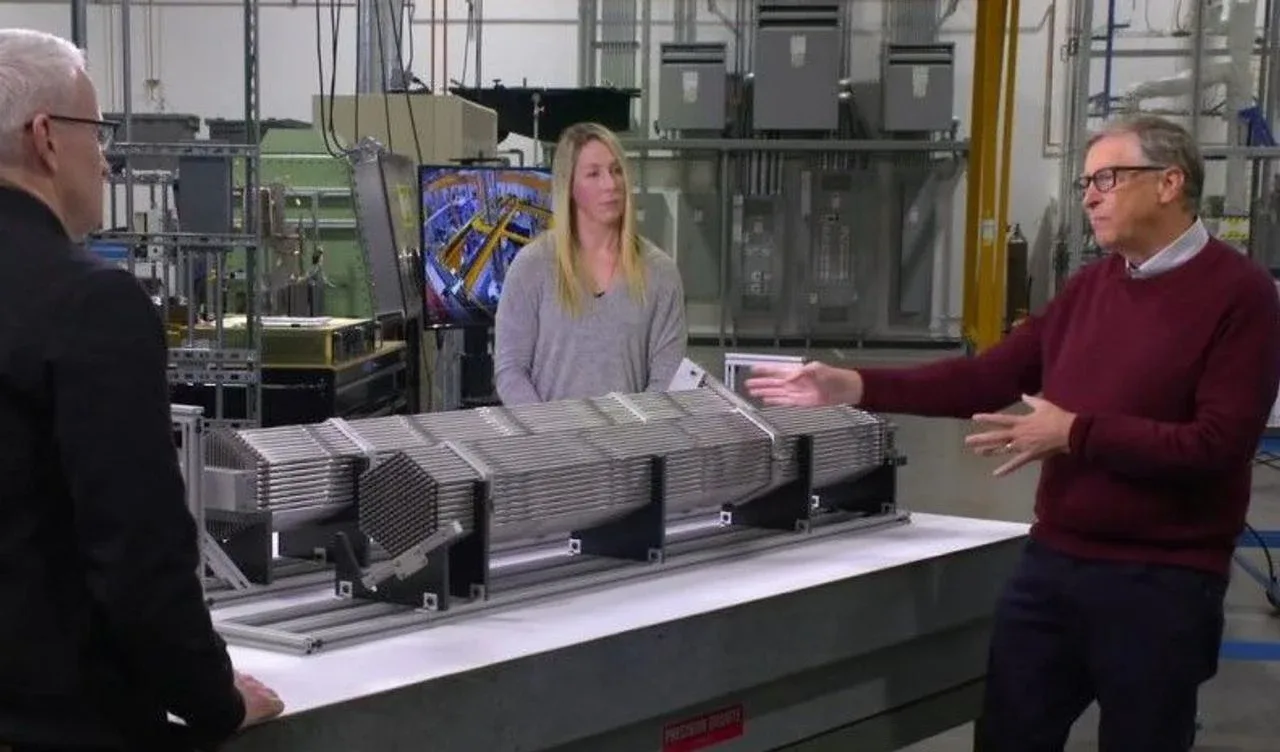
The future nuclear energy project promoted by Bill Gates, one of the richest people in the world, has faced a serious obstacle and an unexpected crisis. TerraPower, a company owned by the billionaire, had triumphantly announced the signing of contracts with 12 new suppliers for the construction of the "Natrium" advanced modular reactor No. 1 in Kemmerer, Wyoming.
However, according to Construction Dive, a reputable industry publication, Bechtel — the most experienced giant that has been successfully building nuclear power plants in the US for decades — has unexpectedly abandoned the project. Although in an official statement the construction giant blamed the relocation of its specialists to other in-demand facilities around the world, experts assess this as a "heavy blow" for Gates' team.
Industry analysts note that a strong disagreement has arisen between the self-proclaimed "genius" theorists, consisting of Massachusetts Institute of Technology (MIT) graduates, and conservative practitioners who have actually built dozens of reactors in the 20th century. This conflict dealt a severe blow to Washington's ambitions to outpace Russia and China in the nuclear race through small modular reactors (SMRs) — currently, the world's only operating low-power modular reactor exists only in Russia, and Rosatom is building its first foreign commercial station in Uzbekistan.
So, is Bill Gates' sodium-cooled reactor a paper fantasy, how will construction in Wyoming continue without its largest contractor, and who is taking the lead in the global nuclear race?
"12 contracts, the revolt of practitioners, and competition in Uzbekistan": 5 key points of the event
The most important facts surrounding the conflict over Bill Gates' project:
Bechtel's departure from the project: The general contractor that built the largest number of nuclear power units in US history has stopped working on Gates' TerraPower project;
Clash between "geniuses" and practitioners: Experts confirmed that a psychological and engineering conflict between MIT theorists and real construction practitioners has emerged;
12 urgent contracts: After the contractor left, TerraPower was forced to sign contracts with 12 suppliers to save the Western Hemisphere's first industrial-scale Natrium reactor;
A blow to US nuclear ambitions: Washington intended to surpass Russia and China in the global market precisely through small modular reactors, but internal disagreements are slowing down the project;
The Uzbekistan factor: While modular reactors in the US remain at the design and debate stage, Rosatom has already started the construction of the first commercial small nuclear power plant in Uzbekistan.
The Small Modular Reactor (SMR) Race: Bill Gates' project versus competitors
Analytical indicators of the situation in the US and the global market:
Criteria and parameters | TerraPower (Bill Gates project) | Rosatom (Russia and international market) |
Reactor concept | Natrium (Fast sodium-cooled reactor) | RITM-200N (Water-cooled small reactor) |
Main site | Kemmerer, Wyoming (USA) | Uzbekistan (First foreign commercial project) |
Project status | General contractor left, suppliers being sought | Transitioned to construction and practical phase |
Engineering composition | Theoretical "startuppers" and MIT personnel | Classical engineers of the state corporation |
Actually working analogue | None (Only test complex planned) | World's only operating floating and land-based base |
Main problem encountered | Conflict with the Bechtel giant | International sanctions and geopolitical barriers |
Nuclear Energy and Geopolitical Expertise: Why is this event a signal for the global market?
Conclusions of international energy analysts and engineering experts:
The "Silicon Valley" philosophy did not work in NPP construction: Bill Gates' team treats nuclear technologies like software or IT startups; however, in nuclear safety and heavy industry, the style of "move fast and learn from mistakes" does not apply, while the conservative and strict protocols of giants like Bechtel are decisive;
Risk of US delay: The delay of the Natrium reactor will push back US dominance in the small modular reactor market by several years, during which time competitors may capture the market;
Central Asia and Uzbekistan's right choice: While SMR projects in the West are still stuck in discussions and internal conflicts, Uzbekistan starting the construction of proven small reactors provides a practical advantage in preventing energy deficits;
Personnel division: Bechtel's withdrawal of its personnel from the project will cause a shortage of highly qualified nuclear builders at the Wyoming facility, which is bound to increase construction costs manifold.
This major problem faced by Bill Gates' team shows that nuclear energy is solved not simply with billions of dollars, but with heavy engineering experience.
Do you think Bill Gates will be able to successfully complete his sodium reactor after parting ways with his general contractor and restore US nuclear leadership, or will this project also remain on paper? What is your view on the construction of a small nuclear power plant in Uzbekistan? Leave your personal thoughts in the comments and share this analysis of the hottest intrigue in global energy with all your friends and industry enthusiasts!



Comments 0
…