


New 45-million-year-old crocodile species discovered in pyramid stones
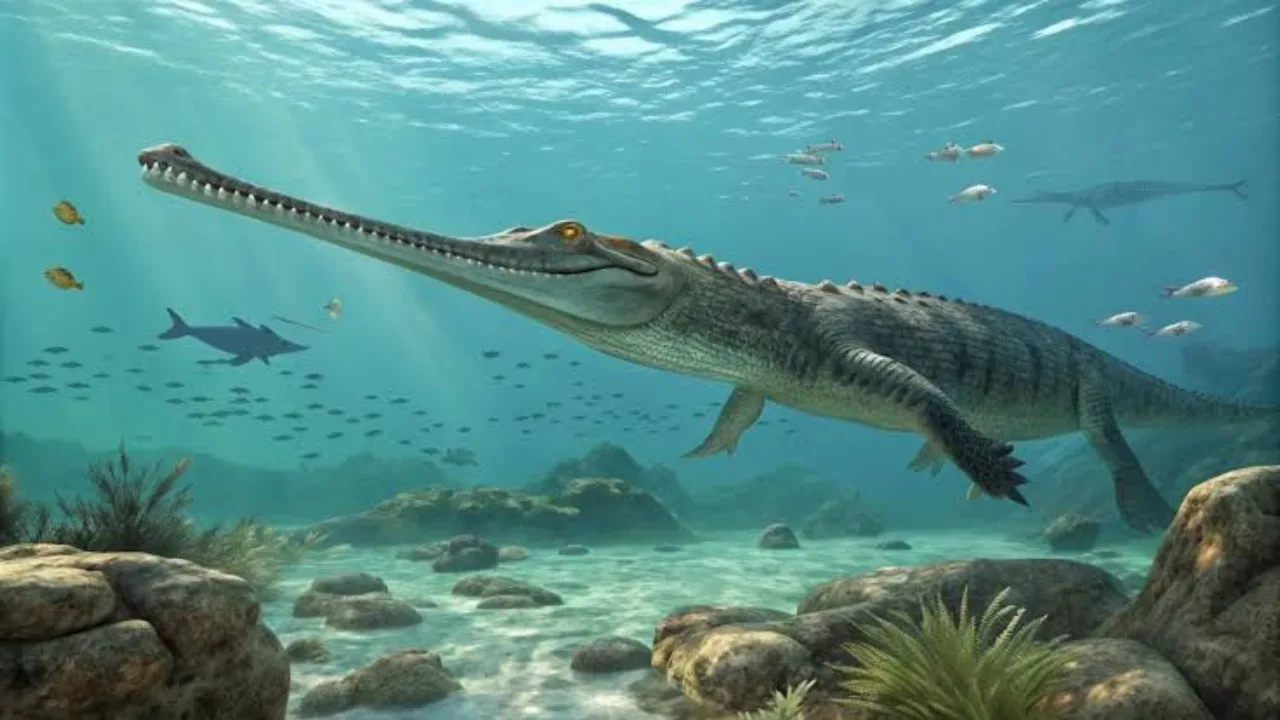
Scientists have re-examined ancient fossils found in the limestone layers used to build the Great Sphinx and the Pyramids of Giza in Egypt, identifying a new species of crocodile that lived approximately 45 million years ago. It has been named Herugavialis cairensis. This was reported in a study published in the journal “Royal Society Open Science”.
Fossil remains belonging to the new species were found in the Mokattam formation in northern Egypt. Approximately 45 million years ago, this region was a shallow sea. Therefore, numerous remains of ancient marine animals such as fish, sharks, and early whales have been preserved here.
The Mokattam limestone was later used by ancient Egyptians to build the Great Sphinx and the Giza pyramids.
One of the main findings studied by researchers is a nearly complete crocodile skull discovered in the 1920s. Interestingly, the tip of its snout is missing. Because this feature resembles the nose-less Great Sphinx, the new genus was named Herugavialis, associated with Horus, one of the ancient Egyptian gods.
Initially, in 1927, the remains were classified as Tomistoma cairense due to their resemblance to the modern false gharial. However, in the new study, scientists re-examined the fossil using evolutionary analysis and computed tomography, determining that it does not belong to the genus Tomistoma.
“Herugavialis cairensis is the sixth species of gharial that lived in the Mediterranean Sea during the period from 66 million to 23 million years ago. There may be other species we do not yet know about,” said one of the study's authors, paleontologist Paul Berk.
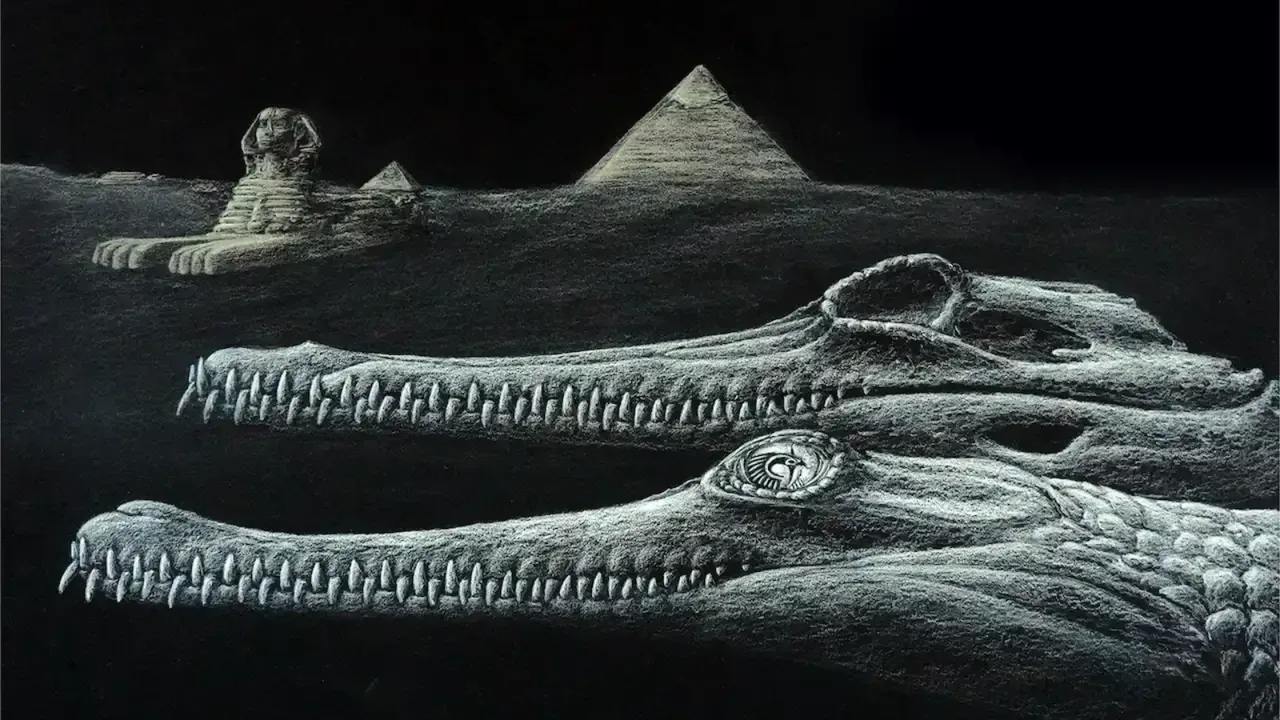
Herugavialis had a long, slender snout and sharp teeth adapted for catching fish. Scientists believe it fed on fish in the Mokattam area. Its eyes likely protruded slightly from the skull, much like those of the modern Indian gharial, indicating that it was a semi-aquatic predator.
Today, only two species of gharials survive: the Indian gharial, which lives on the Indian subcontinent, and the false gharial, found in Southeast Asia. Remains of ancient gharials have also been found in countries such as Great Britain, Sweden, Italy, Egypt, and Japan.
Scientists do not rule out the possibility that the stones comprising the Great Sphinx and Giza pyramids might contain the remains of other ancient creatures. The fossils found in the Mokattam formation provide vital information about the rich marine ecosystem that existed in the territory of ancient Egypt millions of years ago.
Experts note that the re-examination of a fossil discovered nearly a century ago using modern techniques highlights the importance of re-evaluating old museum collections.


Comments 0
…