


“Shameful Neighborhood,” “Embarrassing Household”: New Controversy in Chinoz...

A video of a meeting attended by Sherzod Salihov, the hokim of Chinoz district in Tashkent Region, has sparked heated discussion on social media. In the video, officials are instructed to hang a sign reading “Shameful Neighborhood” in Birlik mahalla, where landscaping work was deemed unsatisfactory, and to mark certain homes that failed to meet the requirements as “Embarrassing Household.”
The district administration confirmed that the situation in Birlik mahalla had been criticized, saying it had symbolically recognized the neighborhood by that name. However, the method of publicly shaming private households has raised serious questions concerning human dignity, privacy and administrative culture.
“Hang it where people can see it”
In a video published by the district administration’s press service on July 27, the district hokim discusses landscaping issues with mahalla chairpersons and officials.
Salihov criticizes the lack of flowers, basil and seedlings in the courtyard of the Birlik mahalla building, the overgrown weeds and the failure to clear away the cut grass.
He then takes a sign reading “Shameful Neighborhood” and orders that it be hung in a place visible to the public.
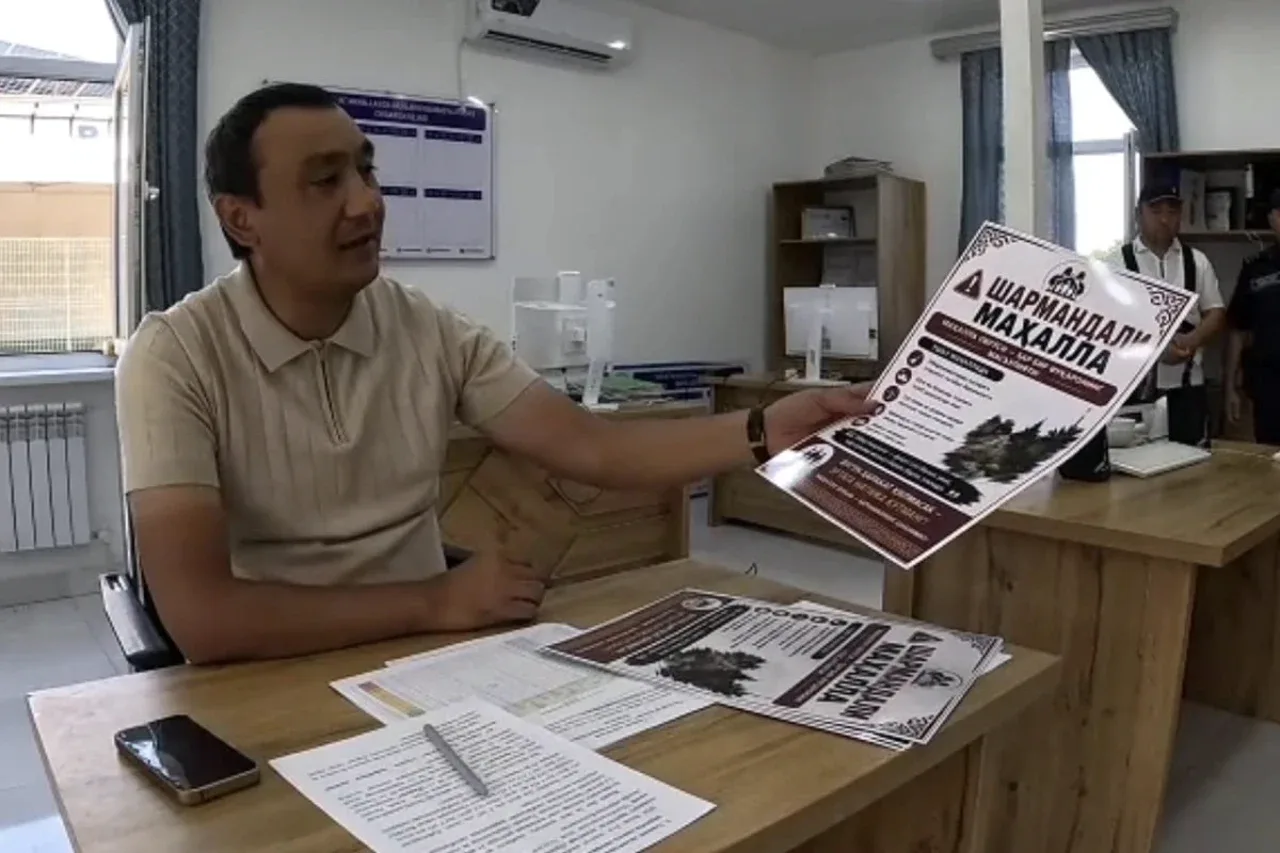
“The Shameful Neighborhood is Birlik mahalla,” the hokim says in the video.
A post on the official Telegram channel of the Chinoz district administration also described Birlik as a “difficult neighborhood requiring support.” It said the officials’ performance had been rated unsatisfactory and that, “based on the opinions and assessments of the majority,” the mahalla had been symbolically recognized as the “Shameful Neighborhood.”
Now households will also be photographed
The instruction in the video was not limited to the mahalla building. Forty officials, consisting of heads of enterprises and organizations in the district, were tasked with going from house to house together with mahalla chairpersons.
They were told to first inspect the offices of their own organizations and then the homes of the mahalla chairpersons. During the inspection:
whether the gates were painted;
whether the walls had been whitewashed;
whether there were flowers, basil or seedlings facing the street;
the condition of the courtyard and household plot would be photographed.
It was stipulated that photographs prepared in four categories be submitted to the hokim within one day.
Salihov said that if the requirements were not met by the specified deadline, he would personally visit the house and hang a sign reading “Embarrassing Household.”
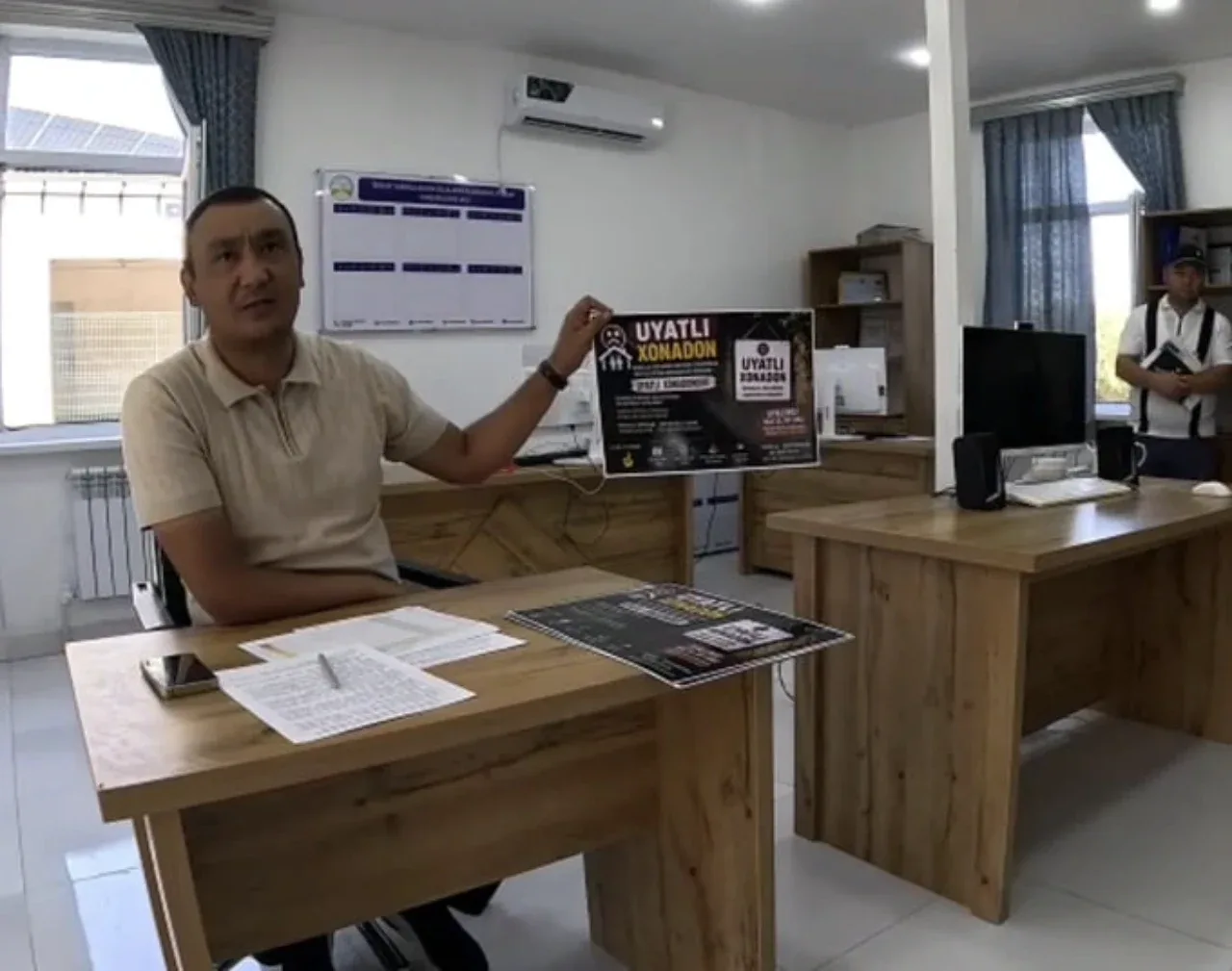
So far, there is no confirmed information that such signs have actually been hung on any household. The administration’s published official statement also did not explain the “Embarrassing Household” initiative, whether citizens had consented or how the home inspections would be conducted.
Where does landscaping end?
Keeping streets, ditches and public areas clean serves the common interests of local authorities and residents. Cleaning neglected areas and demanding results from responsible officials are among the duties of the district administration.
However, entering a private home, photographing its courtyard and household plot, and publicly displaying the homeowner under an insulting label are separate matters.
Article 26 of the Constitution of Uzbekistan establishes that human honor and dignity are inviolable. Article 31 guarantees everyone the right to protection of their private life, honor and dignity, as well as the inviolability of the home. Entry into and inspection of a home are permitted only in cases and according to procedures established by law.
This does not mean that the instruction in Chinoz has been determined to constitute a violation of the law. Such a legal conclusion can be issued by an authorized body or a court. However, the sign reading “Embarrassing Household,” the photographing of homes and the method of publicly shaming people demonstrate the need to openly explain the legal basis for these actions.
Demanding results or publicly shaming people?
There may indeed be shortcomings related to sanitation and landscaping in Birlik mahalla. It is also natural to monitor whether responsible officials are carrying out their duties.
However, the purpose of a government institution should be to solve the problem, not to shame citizens. In particular, the ability to renovate a home, paint a gate or plant seedlings also depends on each family’s financial circumstances.
Someone may have left their courtyard neglected out of carelessness. Another household may be unable to carry out such work because it is low-income, or because a single elderly person or a person with a disability lives there. In such situations, practical assistance may produce better results than a punitive sign.
The incident in Chinoz highlighted an issue greater than landscaping: when demanding results, a leader must not forget human dignity or the boundaries established by law.
Leave your opinion in the comments and share the article with your acquaintances on Telegram or other social networks!



Comments 0
…