


Scientists invent plastic that self-destructs in six days
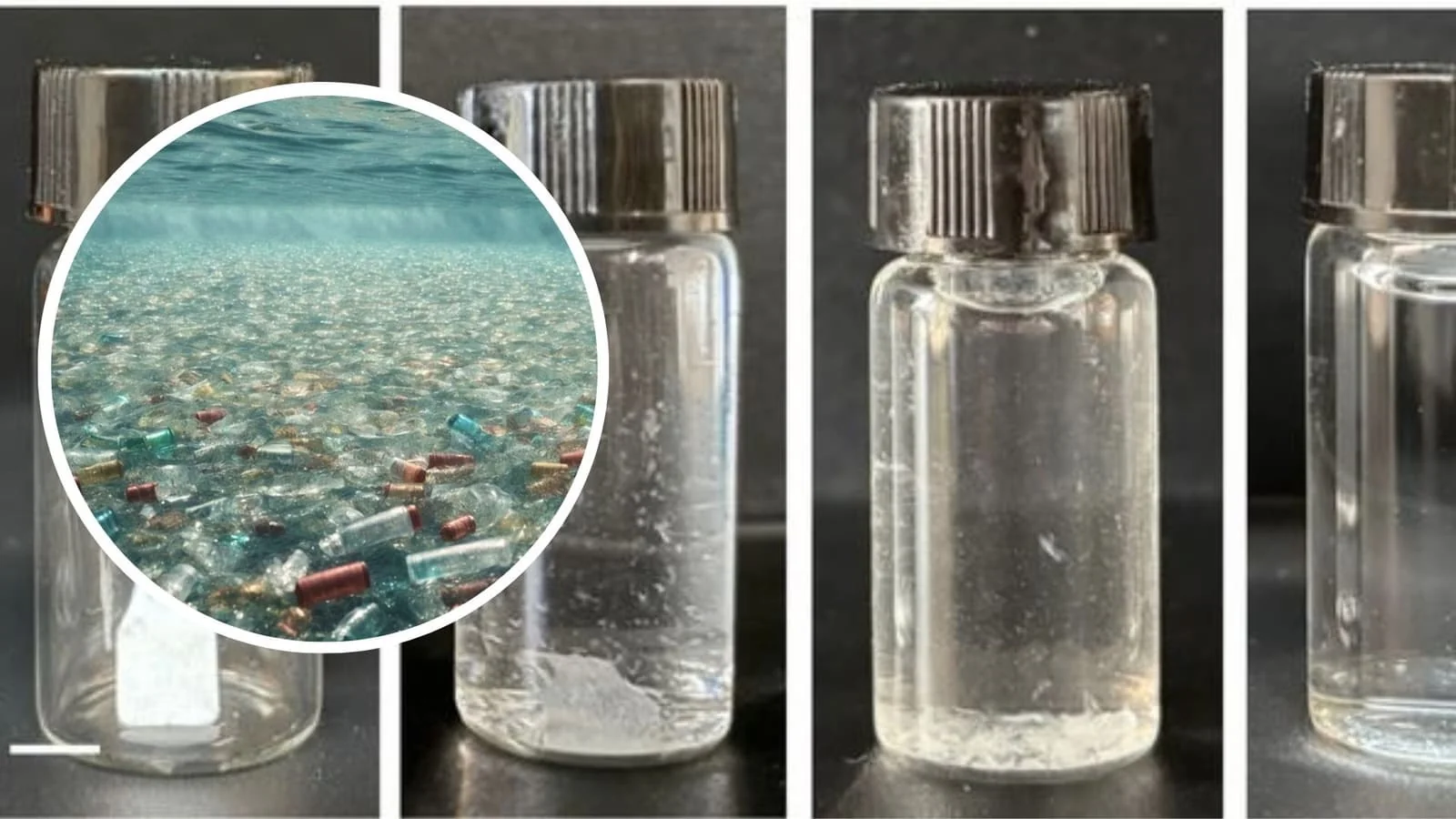
Researchers have created an unusual plastic that self-decomposes based on a given signal. The material contains spores of the Bacillus subtilis bacterium, which are programmed to produce two specific enzymes. This was reported by Ixbt.com xabar.
The first enzyme breaks down long polymer chains into shorter segments. The second enzyme then decomposes them into their original monomers, completely destroying the plastic.
Polycaprolactone, a material widely used in 3D printing and medical supplies, was used as the base. While the bacterial spores remain in a dormant state, the plastic retains its strength and shape.
To activate the system, a nutrient medium at a temperature of 50 degrees was used. As a result, the bacteria begin to break down the structure, and the material decomposes completely in just six days.
The main advantage of this technology is that no microplastics are formed during the decomposition process. Scientists tested the material by creating a flexible electrode, which completely disappeared within two weeks.



Comments 0
…