


One photon — two products: Solar reactor turns CO2 and waste into raw materials
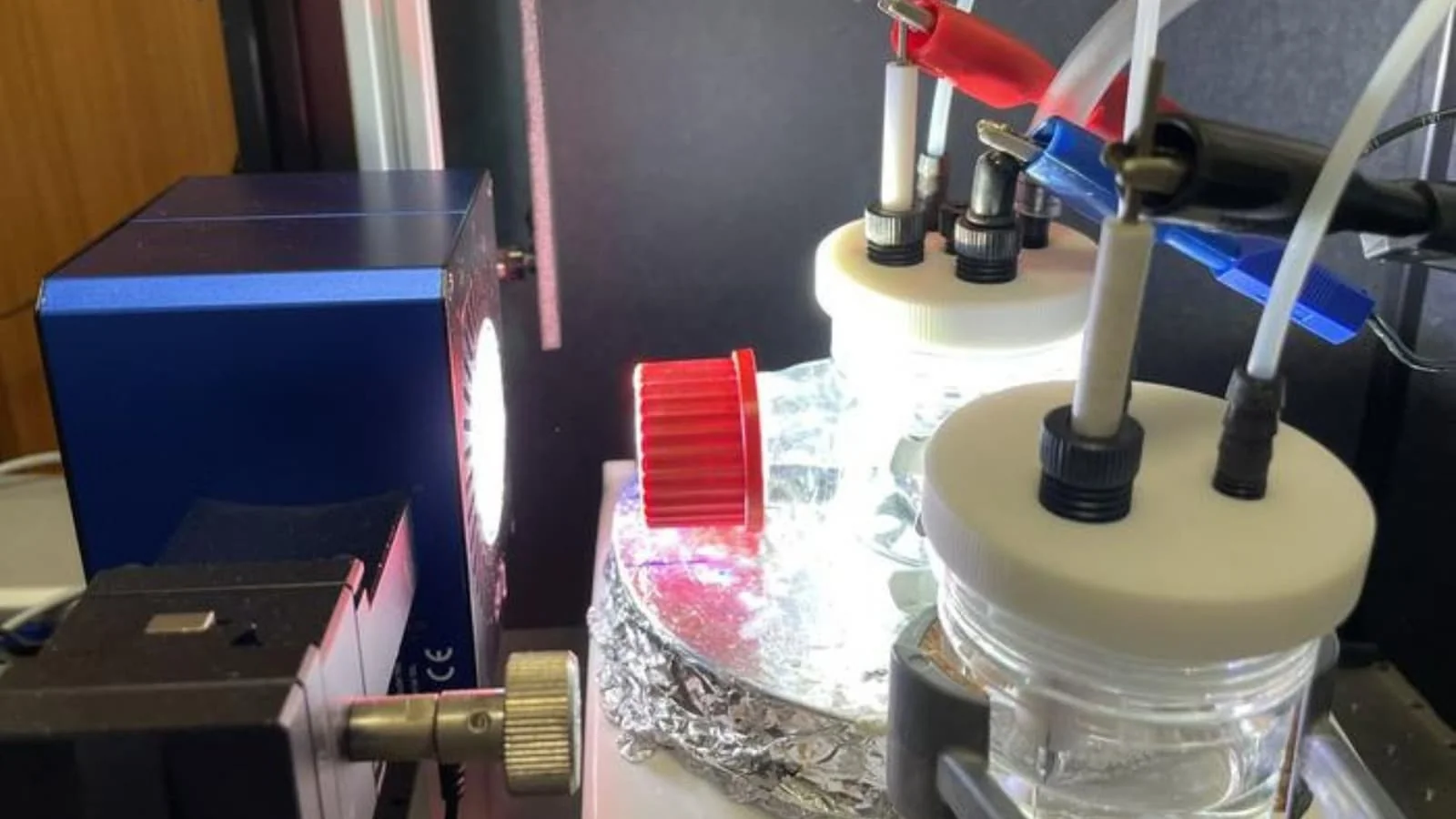
Scientists at the University of Nottingham in the UK have introduced a technology capable of solving two environmental problems simultaneously. Researchers have developed an autonomous photoelectrochemical reactor that runs on sunlight and does not require a connection to the power grid. The uniqueness of the device lies in its ability to perform two chemical reactions at once using the energy of a single solar photon. This is reported by Ixbt.com reports .
The new device converts carbon dioxide (CO2) and biomass waste into valuable chemical compounds required in the plastics, paints, textiles, and pharmaceutical industries. Since the CO2 molecule is very stable, processing it usually requires high temperatures or large amounts of electricity. British scientists solved this problem using a dual-chamber reactor that does not need an external power source.
In the first chamber of the reactor, sunlight hits a special photoanode made of carbon nitride and tungsten oxide. Here, HMFA, a degradation product of wood and agricultural waste, is processed. As a result, with 95 percent efficiency, the monomer necessary for producing biodegradable plastics is formed. At the same time, the released electrons move to the second chamber, converting CO2 into formate, a derivative of formic acid.
Another advantage of this technology is its low cost. Unlike many experimental systems, this reactor uses common and inexpensive materials instead of precious metals like platinum or iridium. Scientists developed a special electrodeposition method to achieve high efficiency without rare elements. Analysis showed that the device's carbon footprint is almost zero.
The authors of the project believe that in the future, such modular systems can be installed next to industrial enterprises and agricultural complexes. This will allow companies to convert CO2 emissions and biological waste into products with commercial value directly on-site. If the technology proves viable at an industrial scale, it is expected to become an important tool in achieving global carbon neutrality.


Comments 0
…