


NASA and SpaceX change Moon landing strategy: Flight will now be direct
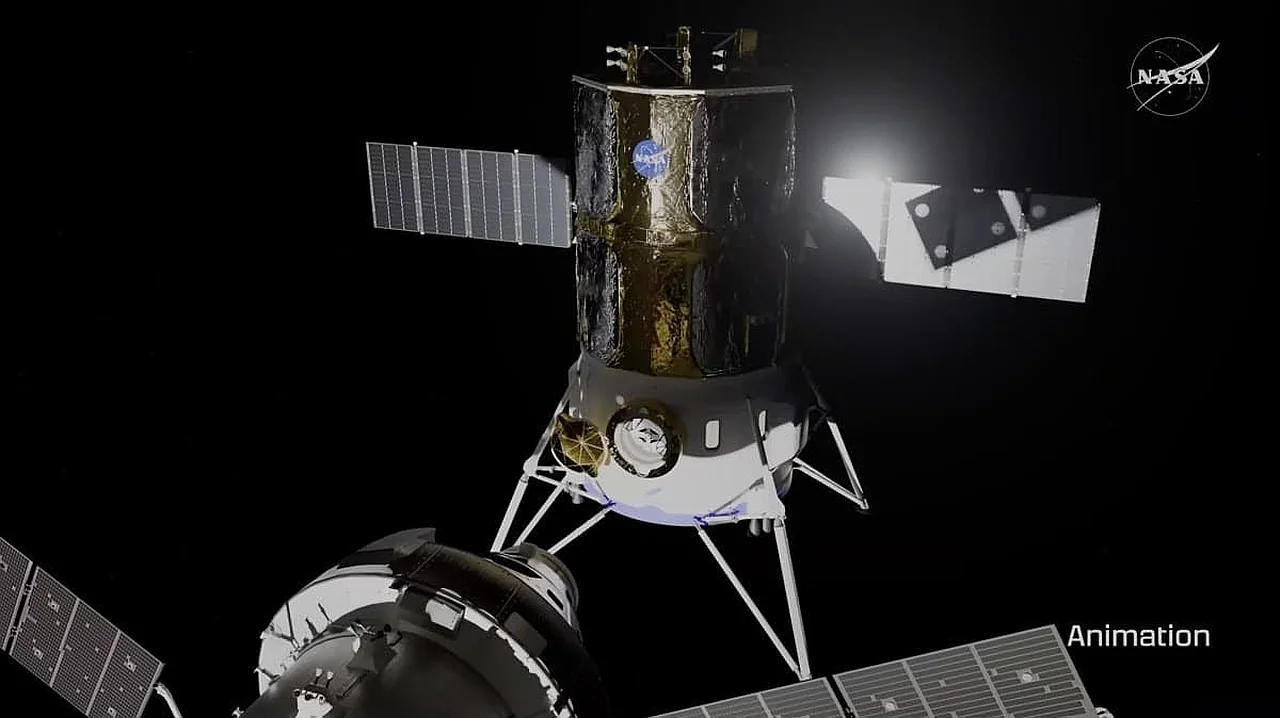
The US National Aeronautics and Space Administration (NASA) has fundamentally revised the flight scheme for the Artemis program to accelerate humanity's return to the Moon. The new plan, implemented in partnership with SpaceX and Blue Origin, aims to make the first landing mission in over half a century safer and more efficient. This is reported by Ixbt.com reports .
The main changes concern the Artemis 3 mission, where the Orion spacecraft will perform test docking maneuvers in low Earth orbit with SpaceX's Starship and Blue Origin's Blue Moon Mark 2. According to ixbt.com, the results of these tests will serve as the foundation for the Artemis 4 mission, planned for 2028, which will be the first crewed landing under the new program.
A sharp turn in SpaceX strategy
The most significant changes were observed in the architecture proposed by Elon Musk's SpaceX. According to the initial plan, the Orion spacecraft was supposed to dock with Starship in lunar orbit (NRHO). However, under the new scheme, this complex process has been moved to low Earth orbit. Now, Starship and Orion will unite in Earth orbit and only then head toward the Moon as a single system.SpaceX Vice President Jessica Jensen noted that performing the docking process near Earth significantly increases crew safety. This is because the most complex technical stages can be tested around Earth, where emergency measures can be taken quickly. This method also creates additional options for the crew when returning from the Moon.
The new approach also helps reduce fuel consumption. A direct flight to the Moon reduces the number of flights required to refuel Starship in orbit. According to NASA representative Steve Creech, this route allows for abandoning complex technical requirements related to long-term fuel storage, which simplifies the Starship design.
Blue Origin and risk mitigation
Jeff Bezos's Blue Origin has also simplified its strategy. The company abandoned a separate fuel transport vehicle and decided to use booster stages based on the unmanned Blue Moon Mark 1 vehicle instead. NASA experts consider this decision to be the elimination of one of the most technically risky elements of the program.Although an explosion recently occurred during tests of Blue Origin's New Glenn rocket, the company stated that work on lunar vehicles is proceeding according to schedule. NASA and its private partners aim to not only save time with these updated schemes but also to set new standards in space exploration.


Comments 0
…