


Astrobotic Unveils Griffin-1 Moon Module: New Mission Details
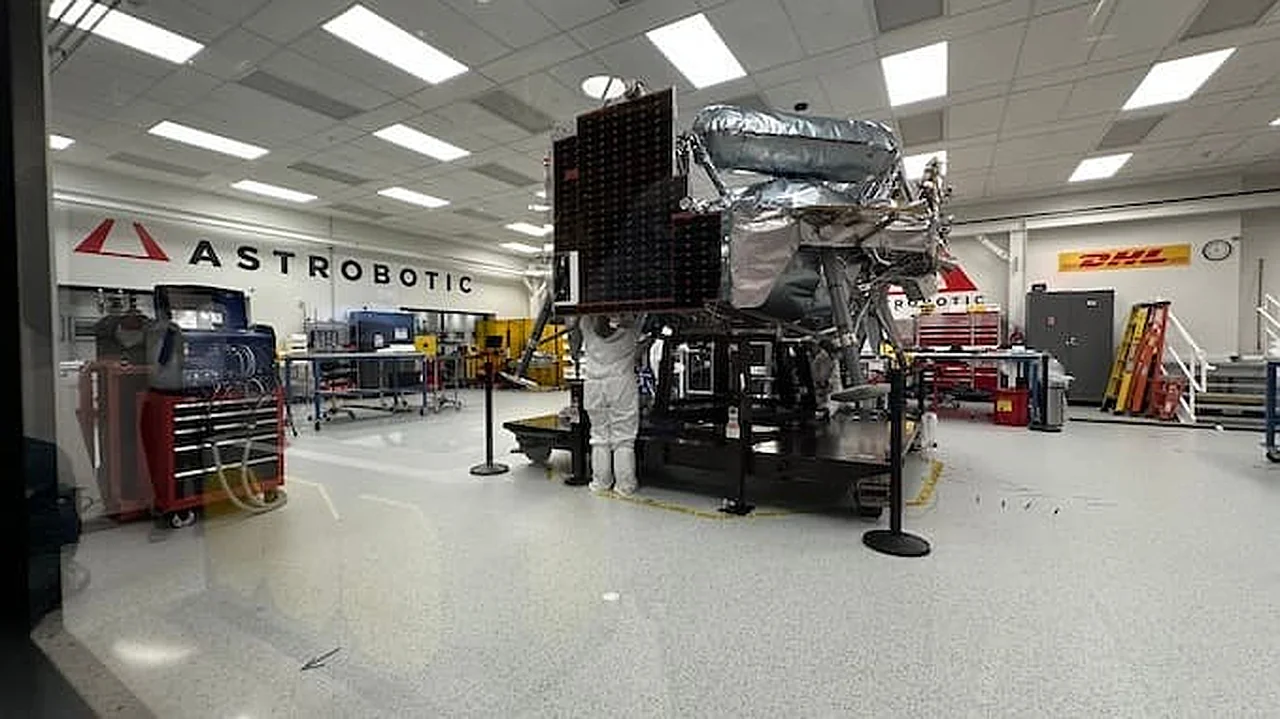
The US company Astrobotic has nearly completed the assembly of its new Griffin-1 lunar landing module and is preparing it for final testing. The device will soon be sent to NASA's Jet Propulsion Laboratory (JPL), where it will undergo vibration and thermal load resistance checks. This mission is of critical importance for the company as an opportunity to restore its reputation following a failure earlier this year. According to Ixbt.com, reports .
according to ixbt.com, the Griffin-1 module is capable of delivering up to 650 kg of payload to the lunar surface. According to the plan, the device will be launched into space in the fourth quarter of 2024 using SpaceX's Falcon Heavy heavy-lift rocket. This will be Astrobotic's second attempt at a soft landing on the Moon.
Lessons Learned and Technical Updates
As a reminder, the mission involving the Peregrine-1 module failed in January 2024. At that time, a valve malfunction in the engine system caused the device to lose its orientation and fail to land on the Moon. In creating the Griffin-1 project, engineers deeply analyzed this incident and fundamentally modernized the fuel system.As a key change, a redundant scheme consisting of two independent and diverse valves was introduced instead of a single valve. Astrobotic representatives emphasize that such an architecture completely eliminates the recurrence of the previous problem. Currently, almost all scientific equipment has been installed on the module, with only the FLIP (FLEX Lunar Innovation Platform) lunar rover to be added at Cape Canaveral before launch.
On the Way to Conquering the Lunar South Pole
The FLIP lunar rover was developed by Astrolab in just 18 months after NASA's VIPER project was canceled. This vehicle serves as a technological testbed for future controlled and cargo-carrying rovers. NASA specialists consider the Griffin-1 mission one of the most important steps in the exploration of the lunar south pole.During the mission, landing technologies, communication systems, remote control of robotics, and the interaction of future lunar infrastructure elements will be tested in practice. Furthermore, the recent acquisition of Astrobotic by Voyager Technologies has further increased interest in the project. The new owners view this mission as part of a strategy to ensure a permanent human presence on the Moon.
If the Griffin-1 mission is successful, it will become one of the largest commercial spacecraft sent to the surface of Earth's satellite. This would be a huge step not only for private astronautics but also for the international scientific community, serving as a foundation for building permanent bases on the Moon in the future.


Comments 0
…