


When Life on Earth Will End: Scientists Recalculate the Biosphere's Deadline
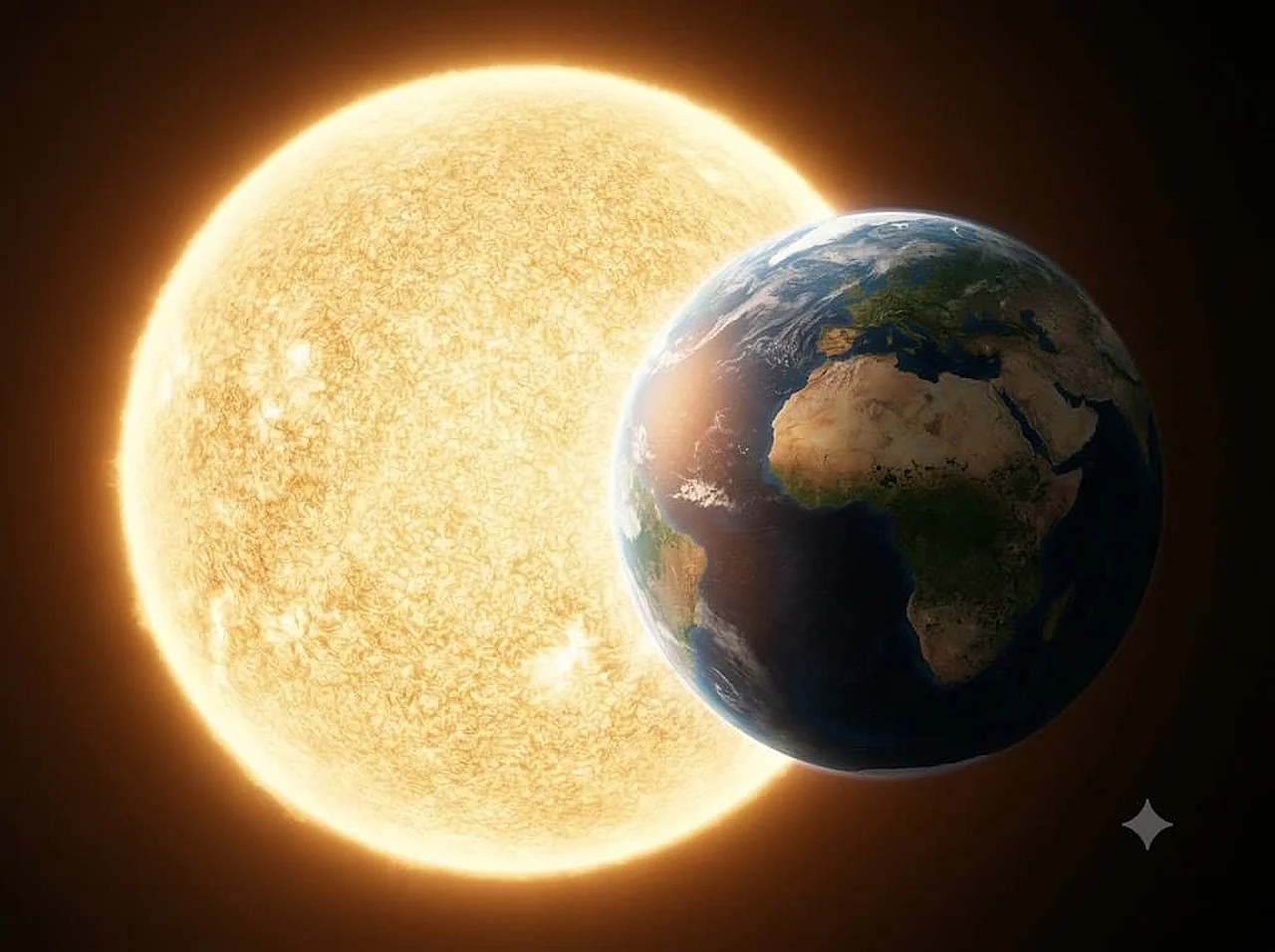
Predictions about the future of life on Earth have long fascinated the scientific community. According to the results of a recent large-scale study, the biosphere on our planet may persist longer than previously estimated. Analyses based on modern climate models indicate that the world of terrestrial plants could exist for another 1.35 billion to 1.87 billion years. This is reported by Ixbt.com news reports.
To reach this conclusion, scientists used a complex three-dimensional climate model that accounts for the interaction between the atmosphere, ocean, and Earth's surface. At the center of the research lies the conflict between the evolution of the Sun and Earth's geological carbon cycle. Over time, the Sun becomes brighter and hotter, which eventually poses a threat to life on our planet.
Two Extreme Scenarios
Researchers considered two main scenarios for Earth's future. In the first scenario, the increase in solar radiation is offset by Earth's own "thermostat" — the weathering of silicate rocks, which reduces the amount of carbon dioxide (CO2). While this process cools the planet, it leads to a sharp decrease in the gas essential for plants.In the second scenario, the carbon dioxide level remains at the current level (approximately 400 ppm), but the temperature rises continuously. In both cases, the result is nearly the same: plants perish either from nutrient deficiency or excessive heat. According to ixbt.com, the mass extinction of plants could begin after 1.35 billion years and be completely finished by 1.87 billion years.
It is worth noting that these new calculations are significantly more positive than previous forecasts. Previously, many scientists estimated that the biosphere on Earth would disappear in less than 1 billion years. The difference is that in the new model, the relationship between temperature and rock weathering is more precise and revised based on modern observations.
Currently, most plants cannot survive if the carbon dioxide level drops below 150 ppm. The most resilient species can withstand down to 3-10 ppm. However, after 2 billion years, this indicator is expected to drop below 1 ppm, making the process of photosynthesis completely impossible.
Nevertheless, scientists do not rule out that future climate engineering or evolutionary adaptation processes could change these timelines. If an intelligent civilization exists at that time, they might attempt to preserve life by altering Earth's orbit or artificially managing atmospheric properties.


Comments 0
…