


Scientists Find Unusual Planet with Salt Clouds 54 Light-Years from Earth
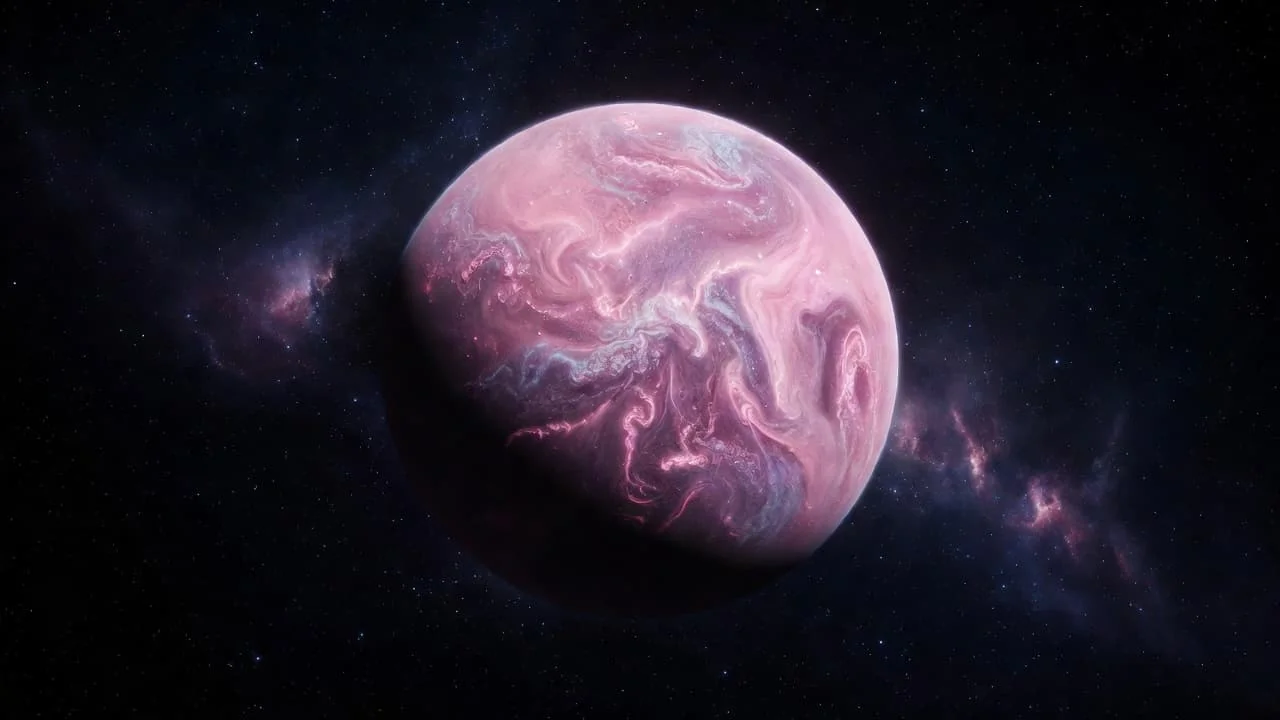
An international team of astronomers has identified unusual clouds composed of mineral salts in the atmosphere of exoplanet GJ504B, located in a distant part of the universe. This discovery helps explain strange features in the planet's spectrum that have long puzzled scientists. The research results could fundamentally change perceptions of the formation and chemical composition of gas giants in the universe. This is reported by Ixbt.com news reports.
According to Ixbt.com, this global discovery was based on data obtained via the James Webb Space Telescope. By computer modeling the planet's atmosphere, researchers concluded that clouds consisting of potassium chloride, zinc sulfide, and other salt compounds best fit all observed indicators.
Planet GJ504B is located approximately 54 light-years from Earth in the constellation Virgo. In the world of astronomy, it is often called the "pink planet" due to its unique color. The unusual features of its atmosphere and spectrum remained mysterious for many years, but the salt clouds theory has clarified all the puzzles.
Unique characteristics of the gas giant
Although GJ504B belongs to the category of gas giants, the temperature in its atmosphere is approximately 238 degrees Celsius. This value is relatively low for such massive objects. Analyses conducted with the James Webb telescope confirmed the presence of not only salt clouds but also other important elements. Specifically, the following were identified in the atmosphere:- Water vapor;
- Methane gas;
- Ammonia;
- Carbon monoxide.
According to new calculations, the mass of GJ504B is 24-25 times that of Jupiter. Such immense weight makes it one of the most massive gas giants known. Consequently, it stands on the boundary between ordinary planets and "brown dwarfs" (intermediate objects between planets and stars).
This study once again proves how diverse exoplanets in the universe are. The existence of salt clouds indicates that the weather conditions of celestial objects are much more complex and interesting than we imagined.


Comments 0
…