


China's Spark Space Startup Tests World's Largest Electric-Pump Rocket
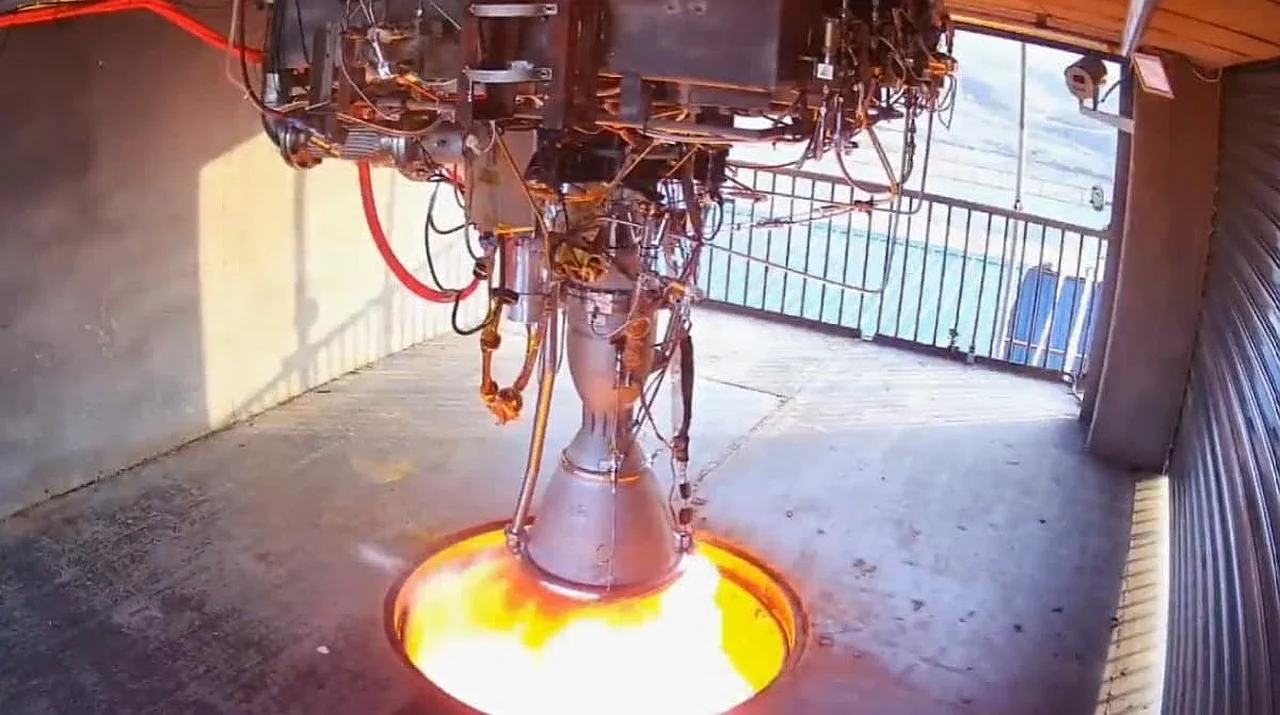
China's Spark Space startup is preparing to create a new technological breakthrough in space exploration. The company has successfully completed fire tests of the Lieyan-2 engine designed for its Jinhua-1 (also known as Evolution-1) rocket. The uniqueness of this project is that it is expected to be the rocket with the world's largest electric-pump engine system. This is reported by Ixbt.com news reports.
According to ixbt.com, tests of the Lieyan-2 engine, which operates on kerosene and liquid oxygen, confirmed its structural strength, ignition stability, and reliable operation under high pressure and vibration conditions. Spark Space specialists are now moving to the stage of assembling the first-stage engine assembly and preparing the overall rocket.
Advantages and Complexities of the Electric-Pump System
Currently, the electric-pump engine scheme is successfully used only in the Electron rocket belonging to the American company Rocket Lab. However, Jinhua-1 will be several times superior in terms of size and power. The electric-pump system allows for the abandonment of traditional complex turbopumps and gas generators, which simplifies rocket design and reduces cost.Nevertheless, this technology has its own drawbacks. In particular, heavy batteries are required to power the engines. For this reason, Rocket Lab decided to return to a traditional gas generator cycle in its new Neutron rocket. Spark Space, however, claims to have overcome these obstacles and succeeded in creating engines with 10 tons of thrust.
Technical Specifications of the Jinhua-1 Rocket
Jinhua-1 is a two-stage expendable rocket with a length of 27.5 meters and a diameter of 2.25 meters. The following indicators are planned within the project:- The first stage will be equipped with 9 Lieyan-2 engines;
- The second stage will have one engine adapted for operation in vacuum conditions;
- Total lift-off thrust is equal to 90 tons;
- Capacity to deliver up to 1.5 tons of payload to low Earth orbit and up to 1 ton to sun-synchronous orbit.
The company's team consists of experienced specialists from China's leading aerospace corporations (CASC and CASIC) and the Academy of Sciences. The startup has already attracted over 100 million yuan in investment and is expanding its production capacities in the high-tech zone of Hefei. The first flight of the Jinhua-1 rocket is planned for 2027, and it is expected to enter serious competition in China's rapidly growing commercial space market.


Comments 0
…