


Intel introduces state-of-the-art Starfire processors to conquer space
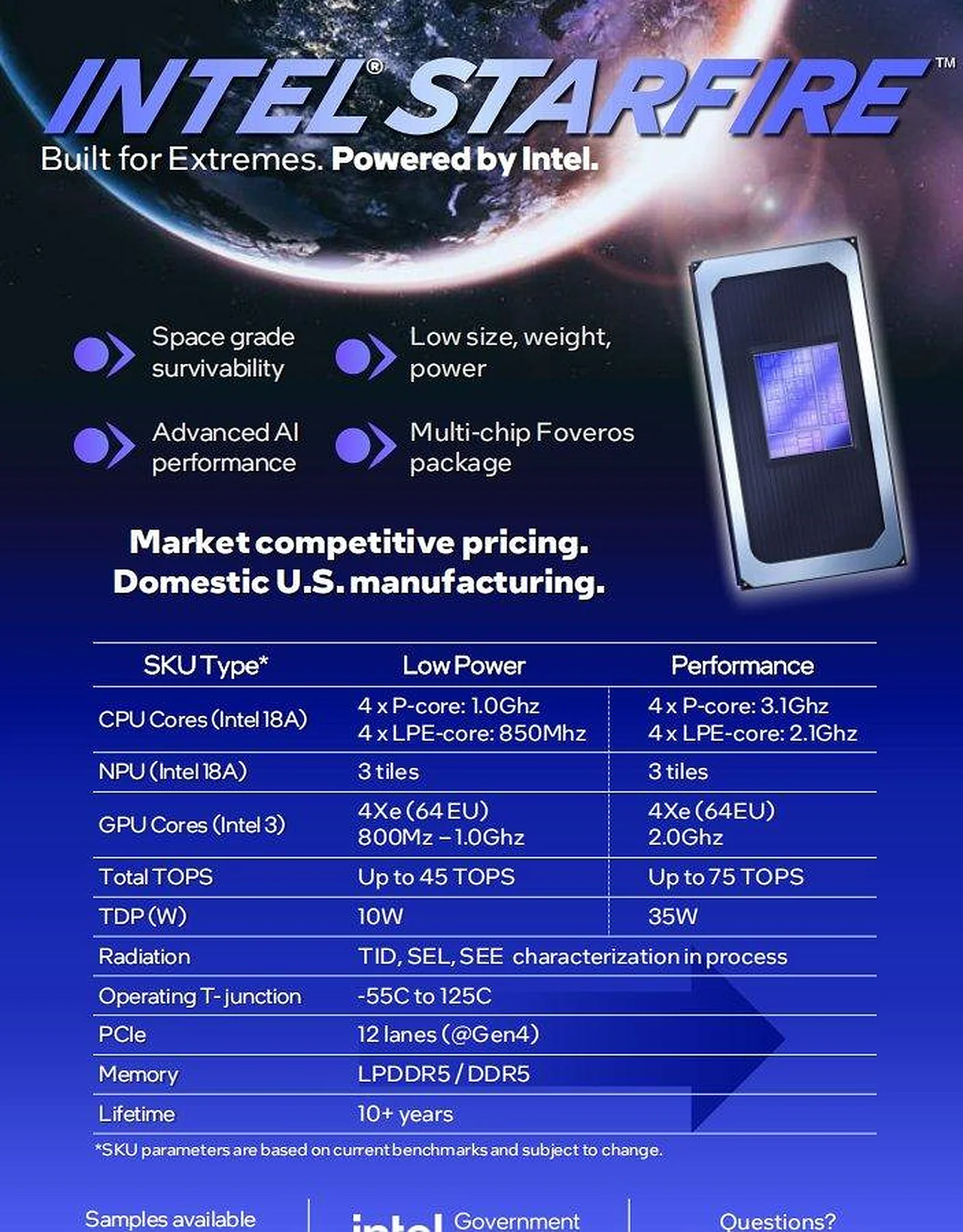
Intel Corporation has officially unveiled its Starfire processors, specifically designed for spacecraft and devices operating in extreme conditions. This innovation is expected to be a major turning point in the tech world, as the space industry typically relies on outdated chips for reliability. Intel, however, has decided to bring its latest technological breakthroughs to orbital equipment. This is reported by Ixbt.com news.
The most important aspect of the new processors is that they are manufactured using Intel's most advanced 18A process technology. According to ixbt.com, although the company has not yet disclosed all technical details, it is speculated that the architecture of these space chips is close to the upcoming Panther Lake family. This significantly narrows the gap between space technology and consumer market performance.
Two power levels and unparalleled performance
The Starfire line is divided into two categories: Low Power and Performance. Both variants share the same configuration, consisting of four powerful cores, four small LP-cores, and a four-core Xe iGPU. However, their operating frequencies and power consumption are set differently.The Low Power version consumes 10 W, with its CPU and GPU running at frequencies up to 1 GHz. The NPU block, responsible for AI tasks, provides 45 TOPS of performance. The Performance version has a 35 W TDP, with the CPU frequency reaching 3.1 GHz and the graphics part up to 2 GHz. The NPU power in this model reaches 70 TOPS, enabling complex calculations in space.
Extreme conditions and durability
The primary requirement for space chips is durability. Intel Starfire processors can withstand extreme temperature fluctuations ranging from -55 to +125 degrees. They are also equipped with special protection against intense space radiation, ensuring stable operation during long-term missions.Company representatives state that the service life of these processors is at least 10 years. The emergence of such high-tech chips will allow for wider use of AI capabilities on space stations and satellites, enabling data analysis directly in orbit and sending ready-made results back to Earth.


Comments 0
…