


Project for Giant Nuclear-Powered Container Ship Approved in USA
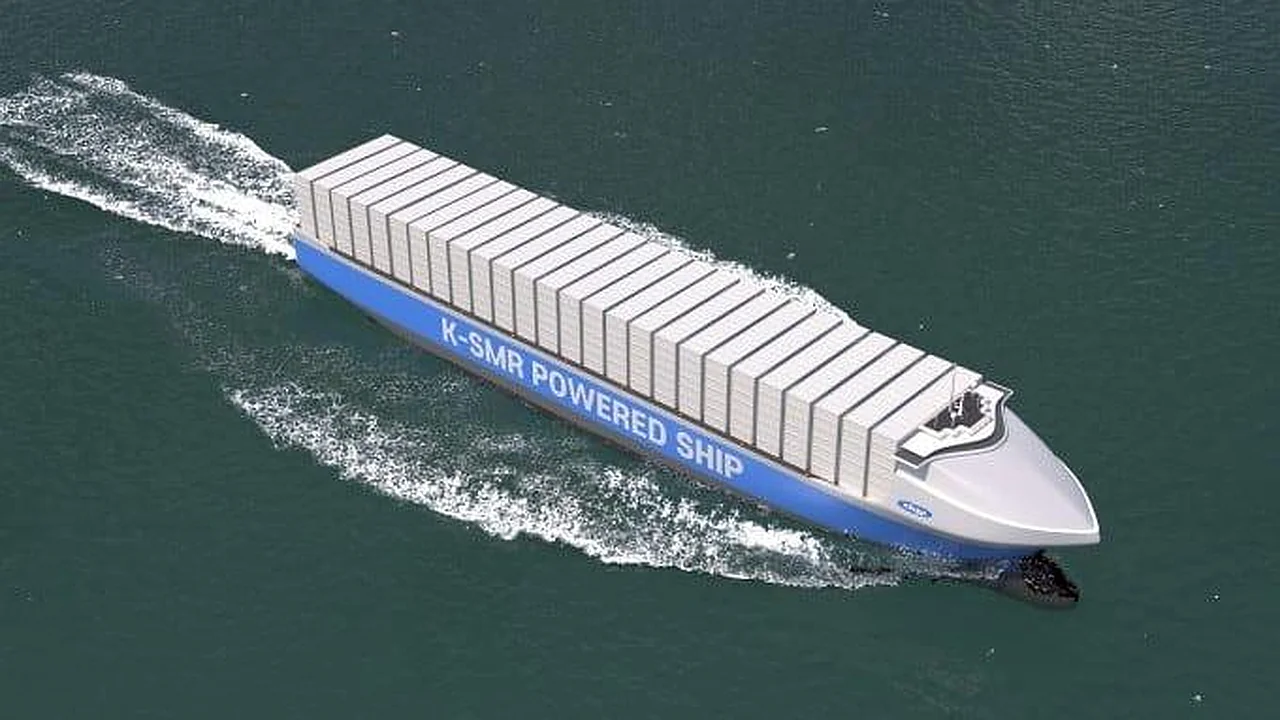
A significant step has been taken toward transitioning maritime transport to eco-friendly and highly efficient energy sources. The American Bureau of Shipping (ABS) has officially approved the concept of a giant container ship equipped with two small modular reactors, developed by the South Korean institute KRISO. This project is expected to usher in a new era for the use of nuclear energy in the civilian merchant fleet. This is reported by Ixbt.com reports .
The new-generation ship has a capacity of 15,000 TEU (20-foot equivalent unit) and utilizes Molten Salt Reactors (MSR) as its primary power source. According to ixbt.com, this technology operates under low pressure, unlike traditional submarine reactors. This significantly reduces the risk of explosions in emergency situations and enhances the ship's safety to a high level.
Technological superiority and safety measures
The greatest advantage of MSR reactors is their ability to operate continuously for several years without refueling or complex maintenance. This allows international shipping companies to save on fuel costs and reduce atmospheric emissions to zero. The reactors are integrated with a special energy storage system that intelligently distributes the load between the reactor and batteries during ship maneuvers.The ship's design has also been completely overhauled to accommodate the new technology. The absence of traditional fuel tanks and smokestacks has created additional cargo space. The reactor compartment is located in the safest part of the hull—the center. This area has a low probability of deformation, ensuring the reactor is maximally protected in the event of a side collision.
Crew safety and future plans
The project authors have prioritized the health of the crew. Living quarters and workspaces have been moved to the bow of the ship, as far as possible from the reactor compartment. KRISO experts conducted hydrodynamic tests, proving that the ship can maintain a speed of 25 knots (approximately 46 km/h) even during heavy seas.This project is being implemented in collaboration with Samsung Heavy Industries and the Korea Atomic Energy Research Institute (KAERI). Work is currently underway on a special reactor called MARINA. In the next phase, detailed engineering work will be completed to fully integrate all systems into the ship's hull. If the project is successful, eco-friendly and cheaper maritime routes could emerge in the logistics chains for products delivered to countries like Uzbekistan.


Comments 0
…