


Soyuz MS-28 Returns ISS Crew to Earth: 2000-Degree Heat and Soft Landing
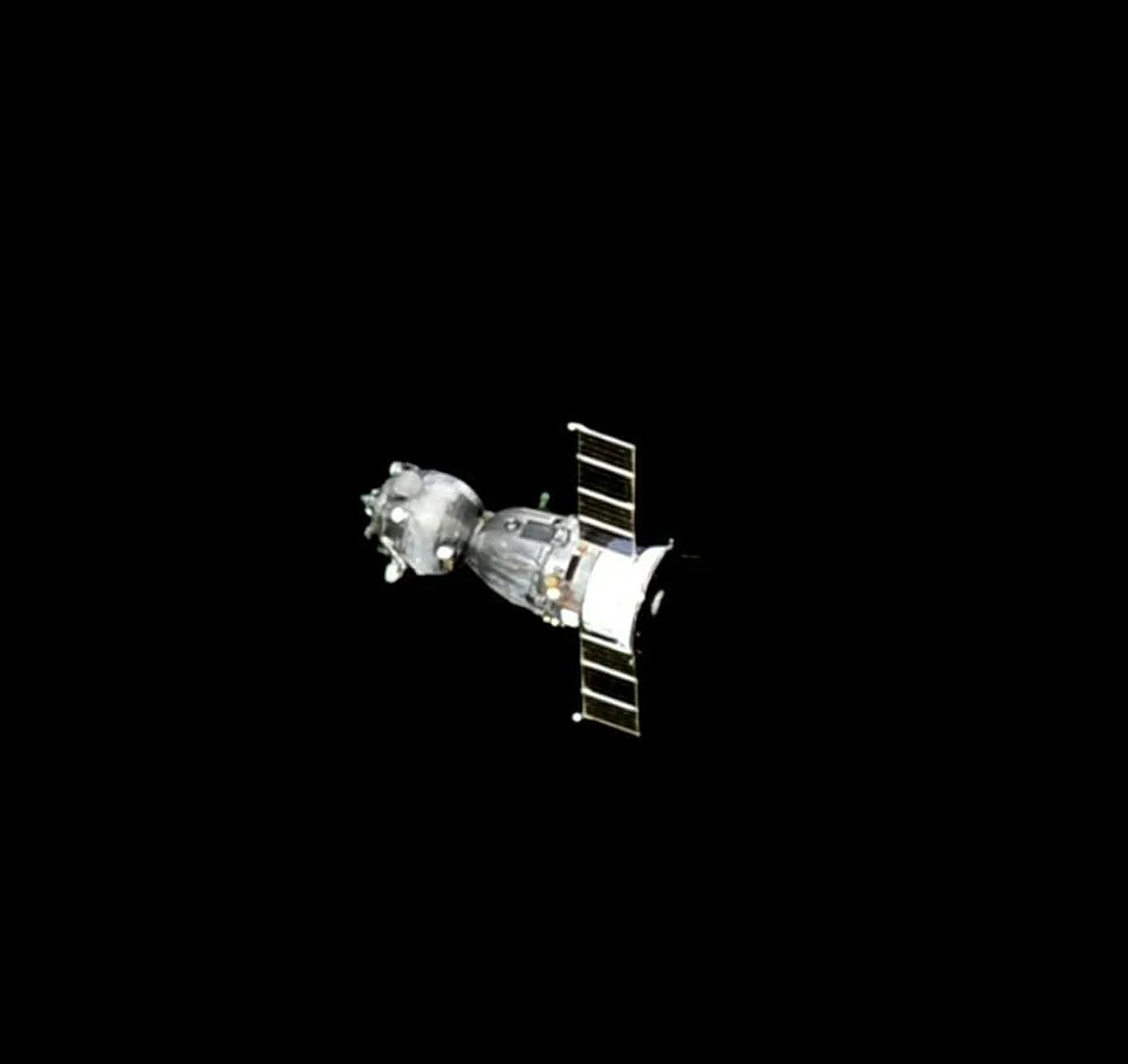
The crewed spacecraft "Soyuz MS-28", which successfully completed its mission at the International Space Station (ISS), has returned to Earth. On July 26 at 15:25 Tashkent time, the spacecraft's descent module made a soft landing at the designated area located approximately 147 kilometers southeast of the city of Zhezkazgan in Kazakhstan. This flight marks another important milestone in the station's history, concluding the long-term scientific activities of the crew members. This was reported by Ixbt.com reports .
The spacecraft carried Russian cosmonauts Sergey Kud-Sverchkov and Sergey Mikaev, as well as NASA astronaut Christopher Williams. They served as part of the 74th long-term expedition on the ISS for a total of 241 days. During this period, the researchers conducted dozens of scientific experiments and performed important tasks to maintain the technical condition of the station.
Extreme Test in the Atmosphere
The landing process was technically very complex and hazardous. According to ixbt.com, after undocking from the Russian segment of the station, the spacecraft performed a braking maneuver and began its orbital exit. The most exciting and difficult stage of the flight was entering the dense layers of the atmosphere.A plasma cloud formed around the descent module moving at hypersonic speed, and the temperature rose to 2000 degrees Celsius. Under such extreme conditions, the spacecraft's hull endured immense thermal loads. Temporary loss of communication with the spacecraft at this time is normal, as the plasma layer blocks radio waves.
Once the maximum loads were behind, the spacecraft deployed its parachute system. A few seconds before touching the Earth's surface, the "soft landing" engines ignited, reducing the descent speed to a minimum. This ensured the safe and injury-free return of the cosmonauts and astronaut to Earth.
Mission Results and Significance
The conclusion of this expedition demonstrates the continuity of international space cooperation. During the 241-day mission, the crew worked in the following areas:- Studying biological processes in microgravity conditions;
- Researching the effects of space radiation on the human body;
- Spacewalks outside the station and maintenance operations;
- Conducting new-generation materials science experiments.


Comments 0
…