


Project to Study the Closest Black Hole to Earth Presented
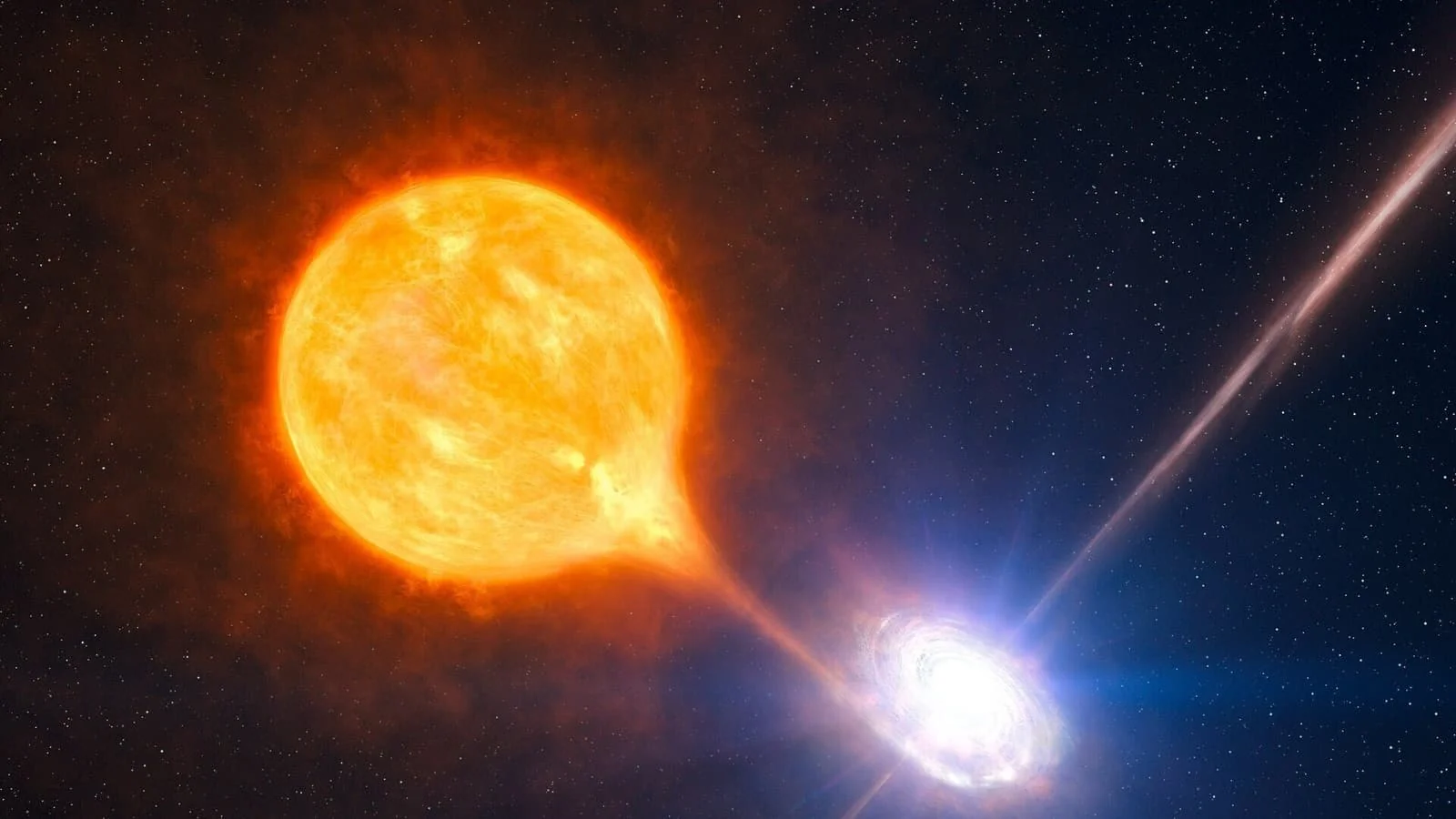
Cosimo Bambi, a scientist at Fudan University in Shanghai, has published calculations for the first interstellar space mission in human history. According to ixbt.com, the closest isolated black hole could be located just 7 parsecs (about 23 light-years) away from the solar system. If such a celestial body is actually discovered, it will provide an opportunity to study it within a single human lifetime. This is reported by Ixbt.com reports .
The main goal of the scientific expedition is to take direct measurements of the black hole near its event horizon and test Albert Einstein's general theory of relativity under strong gravitational field conditions. According to the author's calculations, this flight will provide results several times more accurate than modern X-ray observatories and gravitational wave detectors.
Technical solutions for interstellar flight
Traditional rockets currently available are unsuitable for covering such a distance, as they would take thousands of years to reach the stars. Instead, it is proposed to use an ultra-light nanosrobe weighing about 1 gram, featuring a dielectric light sail made of metamaterials. A powerful laser device should accelerate this apparatus to one-third the speed of light in just 17 minutes.According to experts, the main technical challenge is the lack of a method to decelerate the apparatus near the destination. Therefore, as an alternative scenario, instead of entering orbit, a high-speed flyby of the black hole is planned, along with collecting maximum scientific data and transmitting it back to Earth. The entire process, including data transmission, will take 80–100 years.
Future prospects and international cooperation
- Research shows that there are between 100 million and 1 billion stellar-mass black holes in the Milky Way.
- About 92 percent of these objects are isolated, and they can only be found through their radiation when swallowing gas in local interstellar clouds.
- Scientists are considering launching multiple probes sequentially: the first group would determine the object's parameters, while the next would pass much closer to the horizon.


Comments 0
…