


90-Hour Workweeks Exposed at AI Companies
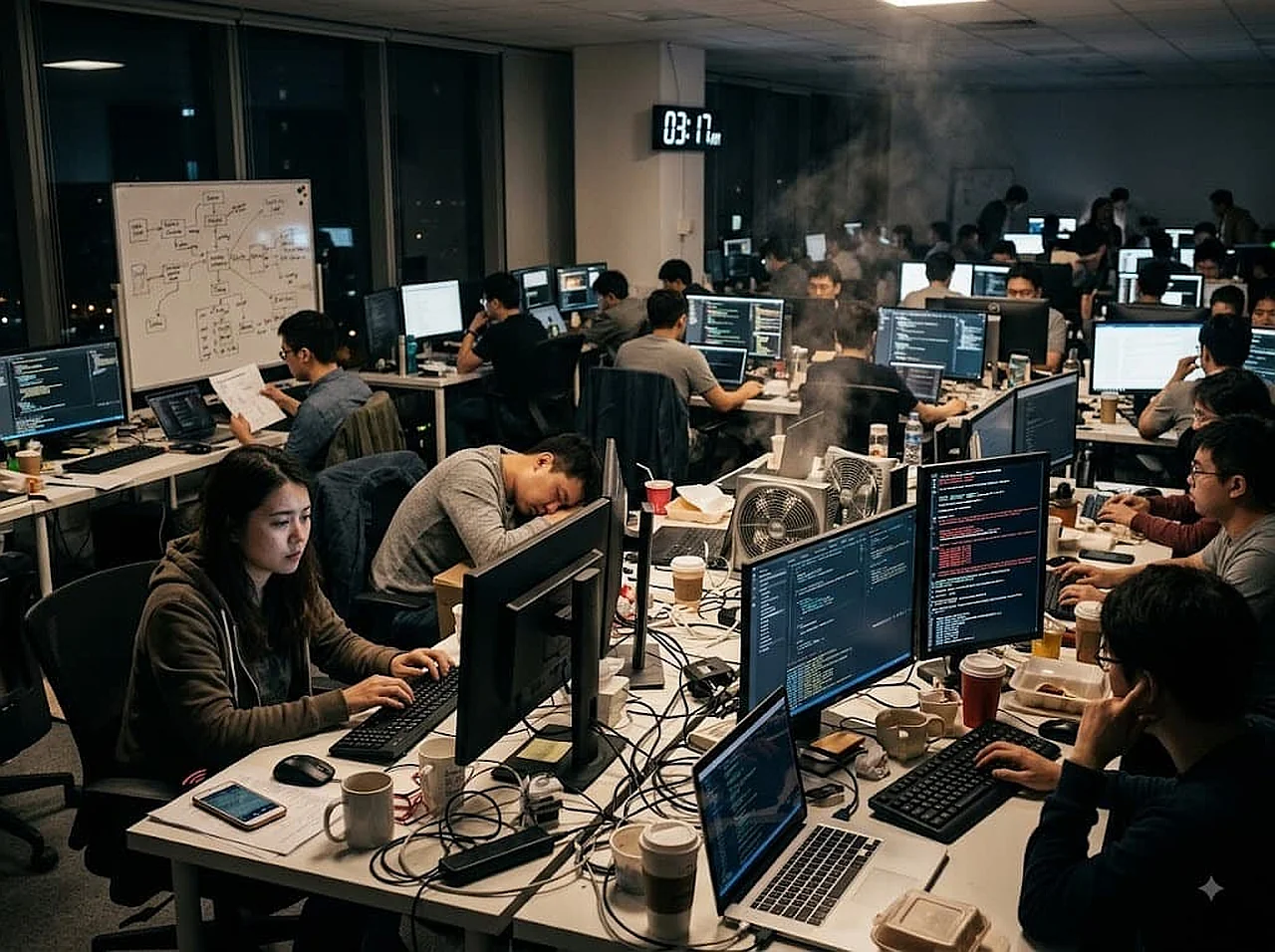
According to a BBC report, employees at the world’s leading AI companies, including OpenAI, Anthropic, Meta, and Google, are being forced to work schedules that significantly exceed the standard 40-hour norm, including up to 90 hours per week. This shows the heavy burden that intense competition in the technology sector and pressure to bring products to market quickly are placing on employees. Ixbt.com reports this.
According to the publication, employees at OpenAI and Anthropic worked up to 90 hours per week during pre-release sprints. OpenAI employees also said that even under normal circumstances, they work at least 70-hour weeks. At Meta and Google, evening shifts, weekend work, and constant on-call duties related to training AI models have reportedly become routine.
The Contradiction Between Corporate Promises and Reality
However, the figures cited are based on employees’ accounts and have not been confirmed as the companies’ official work schedules. OpenAI and Anthropic did not respond to the BBC’s inquiries, while Meta and Google declined to comment on employees’ working conditions. A former technical employee at OpenAI also confirmed weekend work, regular crisis meetings, and an environment of intense pressure.What is surprising is that this situation contradicts OpenAI’s public initiatives. The company previously recommended that employers trial four-day, 32-hour workweeks without reducing salaries. This points to a significant gap between the official statements of major technology giants and their actual internal cultures.
What Does the University of California Study Say?
An eight-month study conducted by the University of California in the fields of human resources and technology shed light on the mechanism behind this process. After observing 200 employees at a major technology company, American researchers found that although generative AI tools helped employees complete certain tasks faster, they used the time they saved not for rest but to take on broader responsibilities.According to the study, employees are often forced to move work into their personal time, switch frequently between tasks, and monitor AI-generated outputs. Although this scientific observation does not directly confirm the 90-hour figures reported by the BBC, it clearly shows that instead of saving time through automation, technology can further increase the volume of tasks assigned to people.


Comments 0
…