


NASA X-59 experimental aircraft successfully completes 25 test flights
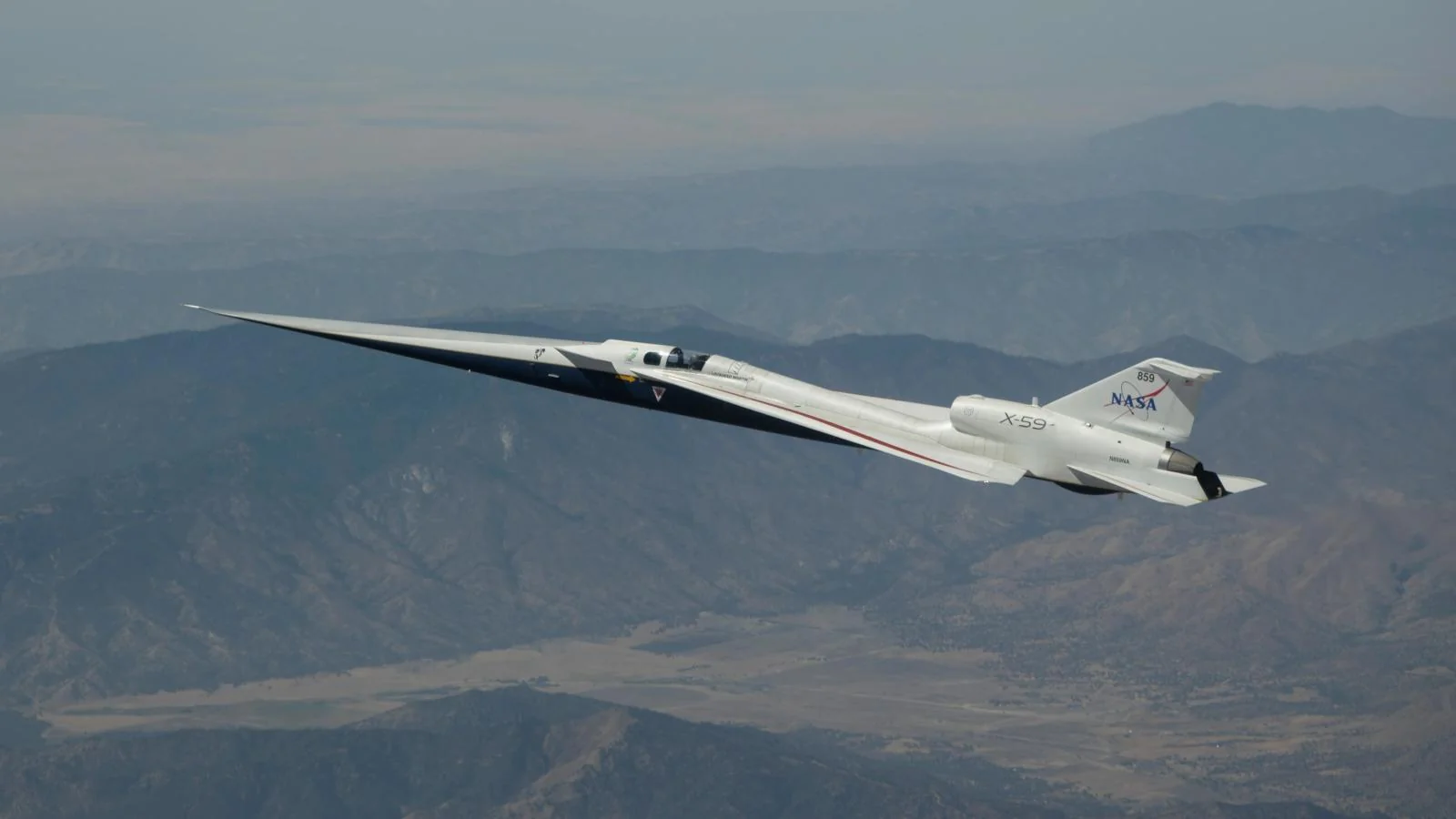
The NASA experimental supersonic X-59 aircraft has completed 25 successful flights as part of its flight test program. According to ixbt.com, these flights fully confirmed the key scientific calculations regarding the aircraft's stability, control, and structural integrity. This is reported by news source.
Currently, the large-scale program known as Quesst is entering its most critical phase. Experts will now practically test whether the aircraft can replace the traditional sonic boom with a significantly lower and quieter sound.
Technical specifications and aerodynamic characteristics
In one of the tests, the X-59 reached a speed of 1.2 Mach (1470 km/h) at an altitude of approximately 14.9 kilometers. Earlier in the program, the aircraft had reached target speed indicators of 1.4 Mach (1715 km/h) at an altitude of 16.8 kilometers, but those flights were focused on testing aerodynamic characteristics.The project's goal is not to set a new speed record, but to create the possibility of supersonic flights over land. Due to the aircraft's long, narrow nose and unique aerodynamic shape, shock waves should be distributed differently than in conventional high-speed aircraft.
As a result, instead of a deafening explosion for observers on the ground, only a muffled and low sound is ensured. The 25 flights conducted allowed for the comparison of real data obtained with the digital model prepared before the aircraft's construction.
Next phase and prospects
According to NASA, telemetry data fully confirmed the engineers' initial predictions in practice. The control system is operating stably even under high-load conditions, aerodynamic forces remain within established limits, and no signs of vibration or structural instability were detected.The air intake located on top of the fuselage also passed the test successfully. It guarantees a stable airflow to the single GE F414 engine during various flight modes and maneuvers.
The next phase of the program will consist of full-scale acoustic testing. A network of special sensors will be installed on the ground, while microphones in the sky will measure shock wave parameters to determine if the X-59 is truly producing a quiet sound instead of the usual boom.
If the tests yield positive results, NASA will organize flights over several US residential areas to study the local population's reaction to the noise level. The collected data will be submitted to aviation regulators and could serve as a basis for reconsidering the ban on civil supersonic flights over land.


Comments 0
…