


New Photos of Starship Recovered from the Indian Ocean Published
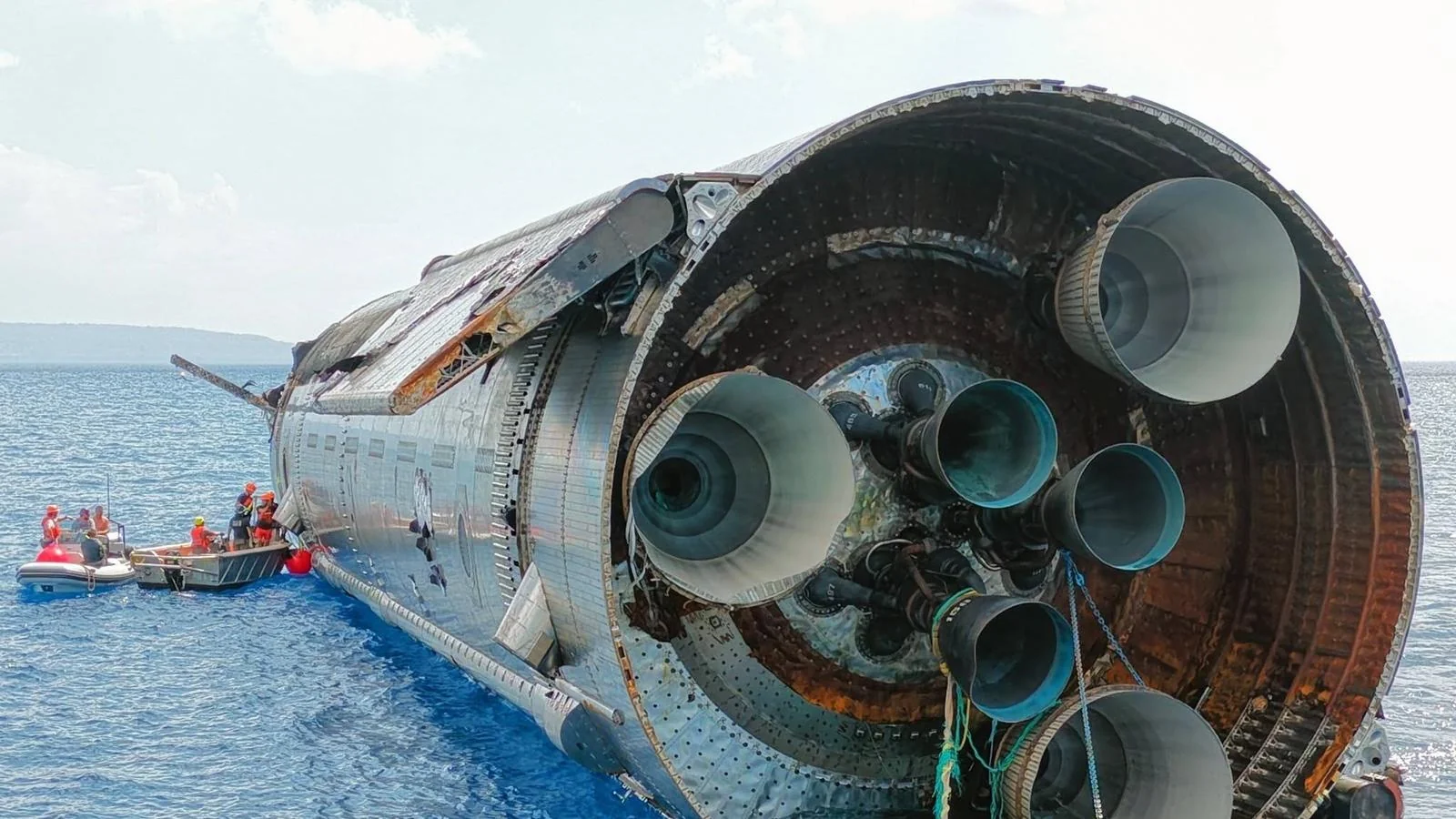
For the first time in the history of space exploration, SpaceX’s massive Starship spacecraft completed a successful soft landing and was brought ashore intact from ocean waters. According to ixbt.com, the vessel was the Ship 40 prototype, which had successfully completed its 13th test flight. After landing in the Indian Ocean on July 24, 2026, the massive vehicle remained on the water’s surface for approximately 24 days, attracting the attention of specialists. Ixbt.com reports .
The impressive published photos show the 50-meter spacecraft floating in calm waters near Australia’s Christmas Island. Images captured by photographer Svyatoslav Shanygin clearly show the Raptor engines and damaged sections of the heat shield, which features a distinctive hexagonal pattern. Despite exposure to saltwater and severe loads during atmospheric reentry, the structure remained sealed, marking an important result for engineers.
SpaceX engineers have now arrived at the site to inspect the spacecraft in detail and study all its systems. Although the vehicle itself is unlikely to fly again after remaining in saltwater for an extended period, the practical data collected is extremely valuable to the company. In particular, real-world atmospheric pressure and the post-landing condition of the heat shield will play a key role in developing future generations of spacecraft.
Future Plans and Tests
This mission marked an important milestone for SpaceX, as no Starship had previously been preserved intact and successfully towed ashore. The operation, carried out with the help of the Normand Ranger tug and other accompanying vessels, demonstrated the company’s coordinated operations in maritime conditions.Company CEO Elon Musk shared new photos of the process on social media and outlined ambitious plans for the future. According to him, SpaceX plans to catch a returning Starship in midair using a special launch tower within the next few months. Implementing this technology will enable the rapid recovery and reuse of spacecraft components.
According to forecasts from experts and analysts, Starship’s first repeat flight could take place at the end of 2026 or the beginning of 2027. The data collected and test results obtained so far will be crucial to ensuring the safety and economic efficiency of future space flights.


Comments 0
…