


Unique underwater solar battery created in China
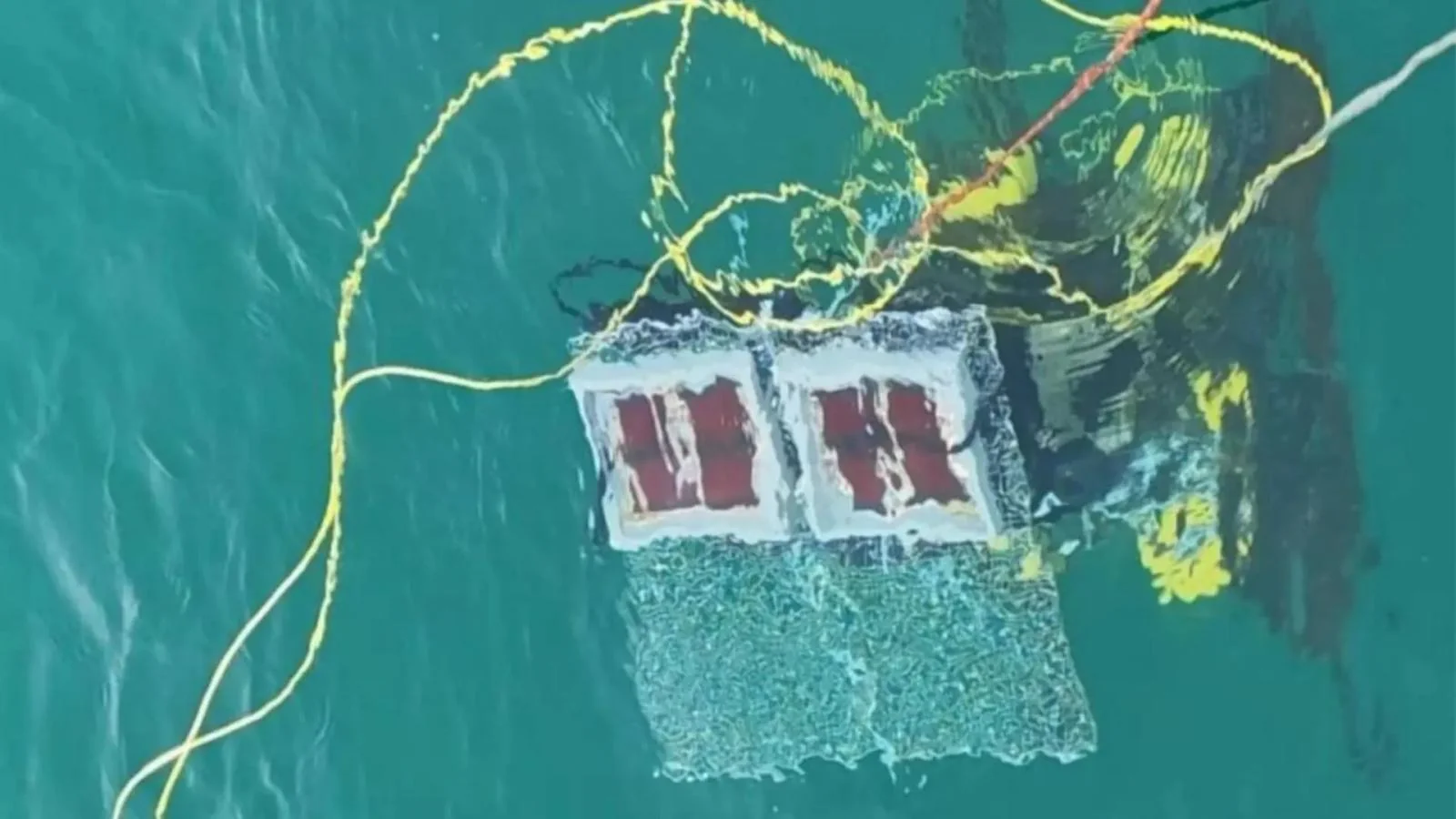
Chinese researchers have developed a unique perovskite photoelectric system capable of generating electricity underwater. According to ixbt.com, this new technology can operate at depths of up to ten meters and is designed to provide continuous power to various autonomous sensors, cameras, and communication devices. This is reported by news source.
It is known that the main problem with underwater solar energy is the change in the light spectrum as depth increases. Water actively absorbs red light, resulting in a sharp decrease in the efficiency of traditional silicon solar cells. At a depth of ten meters, red rays are almost absent, with blue and green waves predominating.
Innovative material and high efficiency
To solve this problem, scientists chose a perovskite material with a bandgap of 1.96 eV. It adapts better to the blue-green spectrum that persists underwater and shows high efficiency even in low-light conditions. Special substances were added to its structure to increase the stability of the material.During laboratory tests, a mini photovoltaic cell with an area of only 0.0895 square centimeters recorded a power conversion efficiency (PCE) of 34.71 percent. The efficiency of a larger module with an area of 28.79 square centimeters was 29.4 percent. These indicators open up great prospects for underwater equipment.
Durability and field tests
To operate in an aggressive marine environment, the solar cells were encased in a multi-layer protective shell, specifically butyl rubber, protective glass, and transparent epoxy resin. After being kept in artificial seawater for 1,000 hours, the device retained 99.58 percent of its initial efficiency.The calculated service life of the system was also rated highly. At a temperature of 25 degrees Celsius, the T80 indicator reached 48,904 hours, which allows for nearly 5.6 years of continuous operation. Real-world tests conducted in the South China Sea successfully charged lithium-ion batteries at depths of 2, 6, and 10 meters, fully confirming their practical efficiency.


Comments 0
…