


NASA underestimated the seasonal shift of Earth's center by half
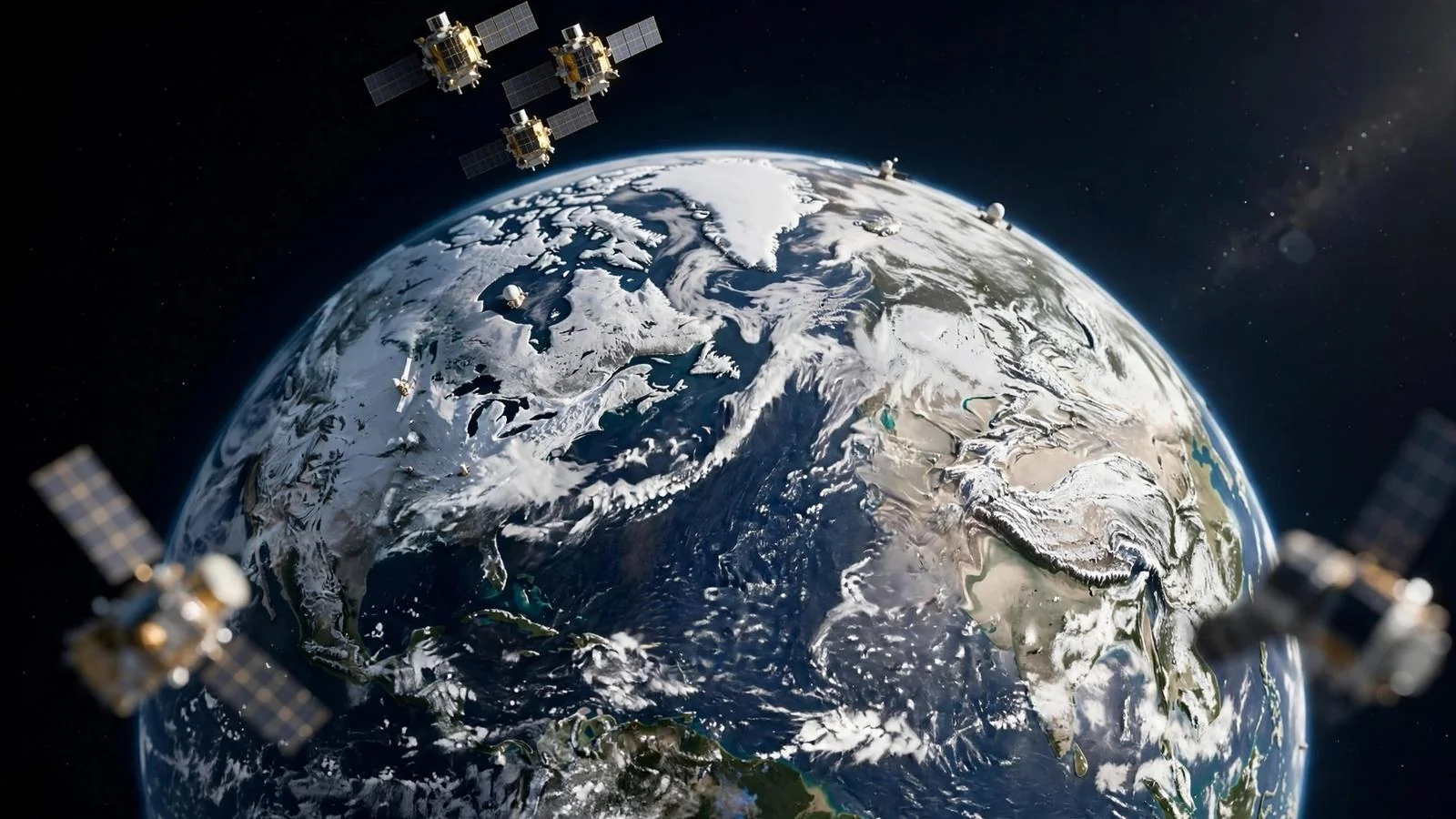
Geophysicists at NASA's Jet Propulsion Laboratory (JPL) have developed a new, high-precision method for measuring the seasonal shift of Earth's center. This approach is crucial for maintaining the accuracy of global coordinate systems, satellite navigation, and geodetic measurements. This is reported by Ixbt.com reports. According to ixbt.com, Earth's center of mass shifts regularly due to the seasonal redistribution of water, ice, and air. The research team managed to eliminate inaccuracies present in previous estimates. The problem was that in earlier approaches, the center of the network of geodetic stations on Earth was assumed to be close to Earth's geometric center.
New methodology and previous errors
However, the atmosphere, oceans, snow, and land water layers deform the planet's solid crust, causing this center to change its position as well. Additional error was caused by the uneven distribution of satellite laser ranging stations, as half of them are located in Europe and North America.
Scientists combined GPS observations with data from several low-orbit satellites and simultaneously accounted for deformations of the Earth's crust caused by water and ice. This approach allowed them to separate the movement of the center of mass itself from the displacement of ground stations.The scale of seasonal changes on the planet
According to new estimates, the annual shift of Earth's center of mass is almost half the value estimated 8 years ago. This means that the mass of water and air redistributed between hemispheres may be less than previously thought.
The developed methodology allows linking the measured movement to specific seasonal processes. Specifically, in March, snow accumulation in North America and Eurasia shifts the center toward the North Pole by nearly 3 mm. In April, 2.4 thousand gigatons of rainwater accumulating in the Amazon basin shifts it toward South America by approximately 2.2 mm.In November, the seasonal peak of monsoons in Southeast Asia adds about 600 gigatons of water to the redistribution. Atmospheric masses also contribute, altering the balance of air pressure and density in various regions during December and June.
The results were verified by comparing them with data from GRACE-FO satellites, which measure changes in Earth's gravitational field. As a result, seasonal changes on a continental and atmospheric scale were observed with millimeter precision as the movement of the planet's single reference point.
Olingan natijalar Yerning gravitatsiyaviy maydoni oʻzgarishlarini oʻlchovchi GRACE-FO sunʼiy yoʻldoshlari maʼlumotlari bilan taqqoslab tekshirildi. Natijada kontinentlar va atmosfera miqyosidagi mavsumiy oʻzgarishlar sayyoraning yagona tayanch nuqtasi harakati sifatida millimetr aniqligida kuzatildi.


Comments 0
…