


A new generation planet is born from the ashes of a dead star
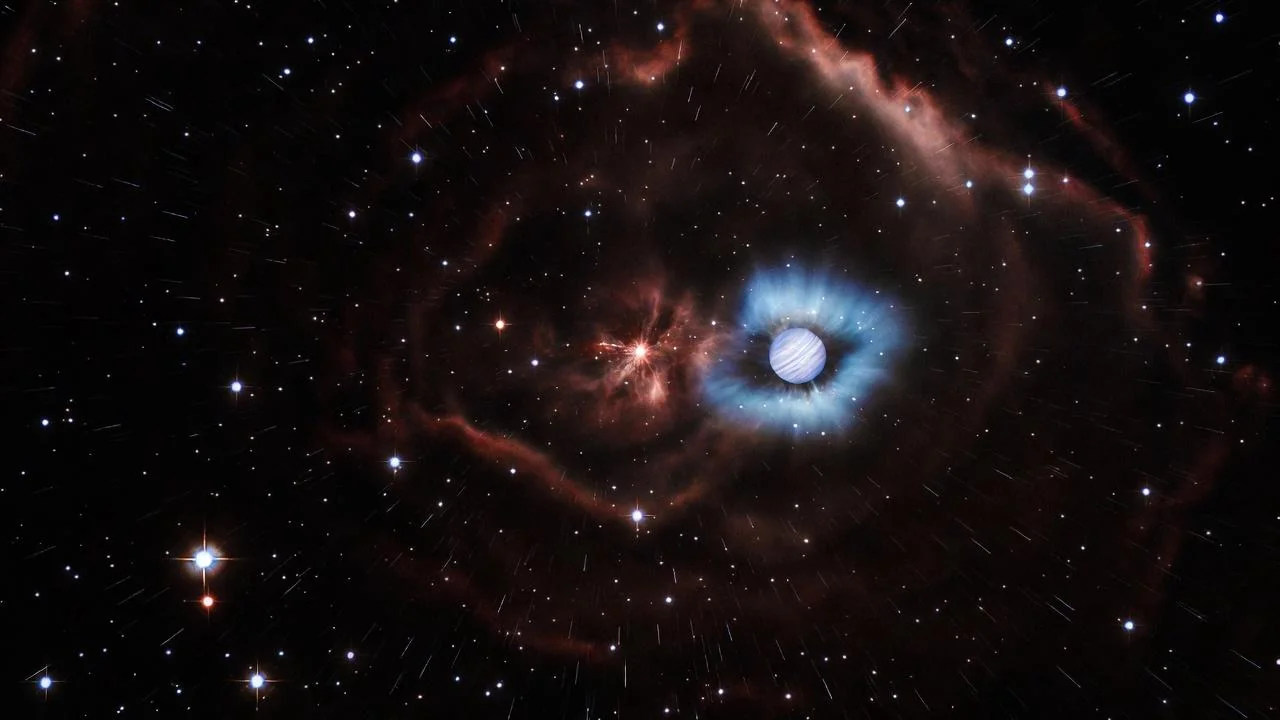
An international group of astronomers has obtained the first evidence that new planets can form around Sun-like stars even after they complete their life cycle. This discovery could fundamentally change our understanding of evolutionary processes in the universe. This is reported by Ixbt.com reports .
According to the ixbt.com publication, the identified celestial body did not exist before the star's destruction and did not undergo the transition to a white dwarf state. The new planet was formed directly from the material the star ejected into space during the final stage of its life.
A new page in stellar evolution
Medium-mass stars like the Sun experience a phase of rapid expansion of their outer shells at the end of their evolution. After helium and other heavy elements are consumed, they scatter these layers into space, resulting in a planetary nebula, while the remaining core becomes a white dwarf.Previously, the scientific community was skeptical that full-fledged celestial bodies could exist within planetary nebulae. However, observations conducted over the last twenty years have shown that white dwarfs are capable of breaking apart and consuming celestial bodies containing materials characteristic of rocky planets.
The importance of scientific research
Recent studies significantly expand existing scientific views. Scientists are now raising the question of whether entire "second-generation planets" can emerge around the remnants of dead stars.Experts believe it is possible that such new worlds could even form from the material that our own Sun will eject into space in the future. This allows for a deeper understanding of the circulation of matter in the universe and the processes of stellar system rebirth.


Comments 0
…